I. Introduction: Blooming on Scorched Earth
Recently, something extraordinary happened in the Cape winelands mountain area of South Africa: after a recent mountain fire, the entire mountain was burned to look like the surface of the moon—gray, bare, and desolate.
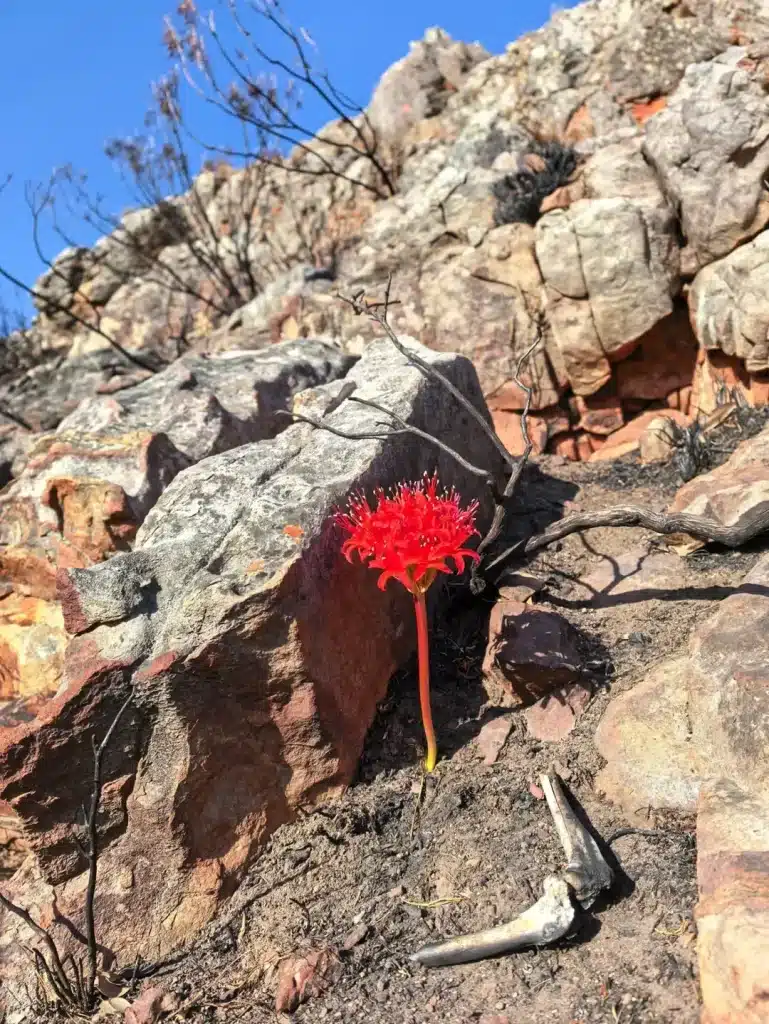
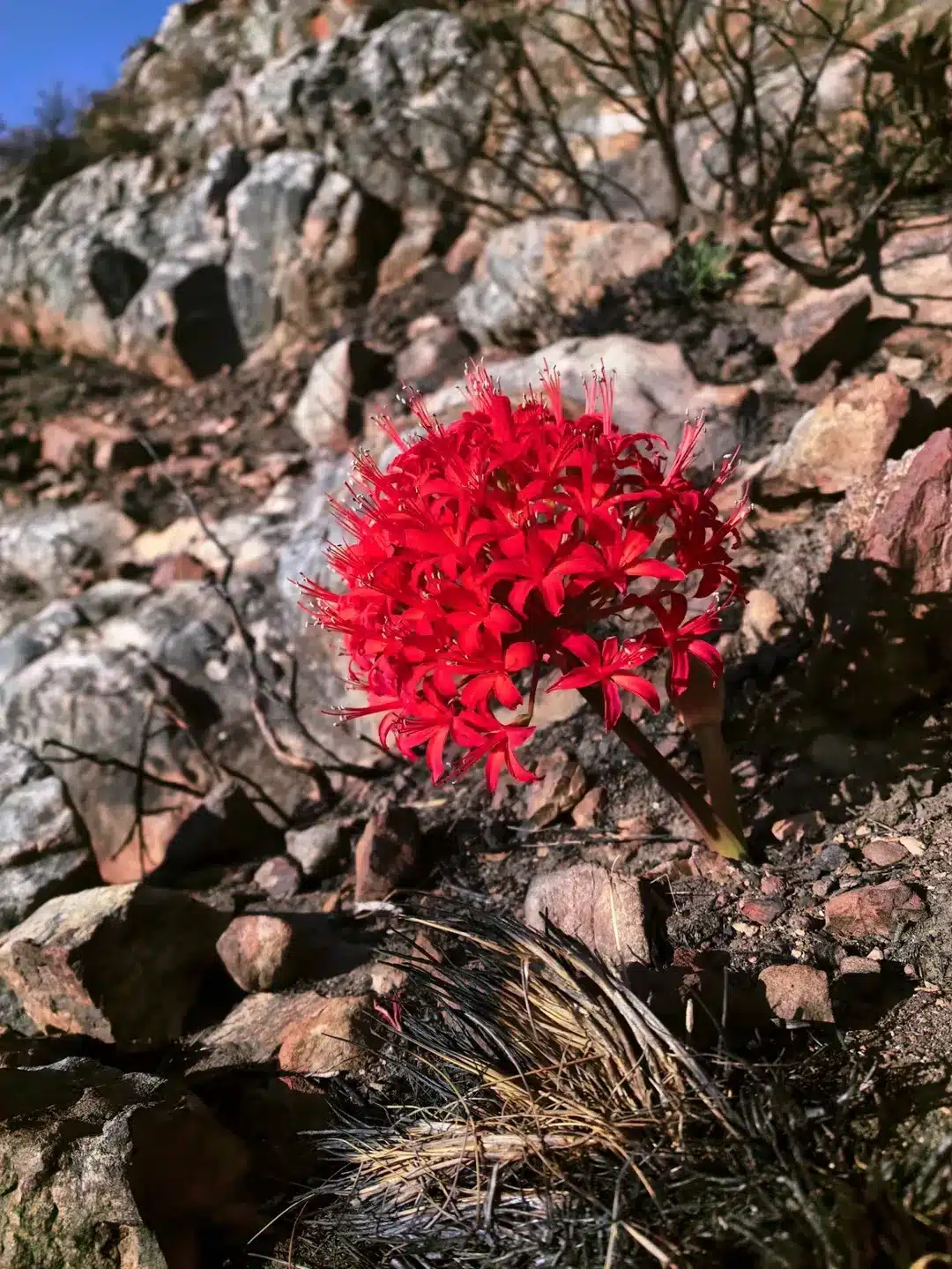
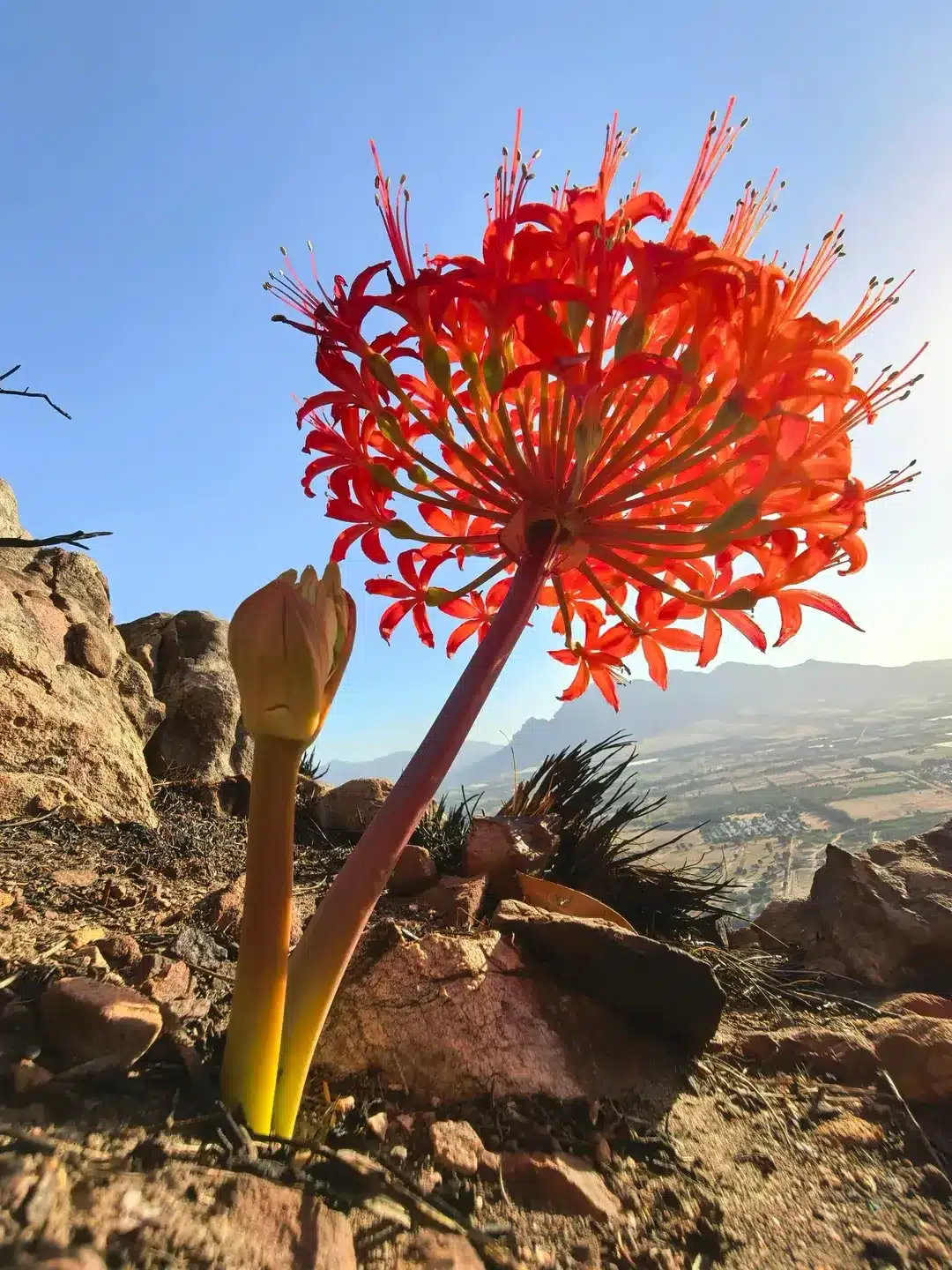
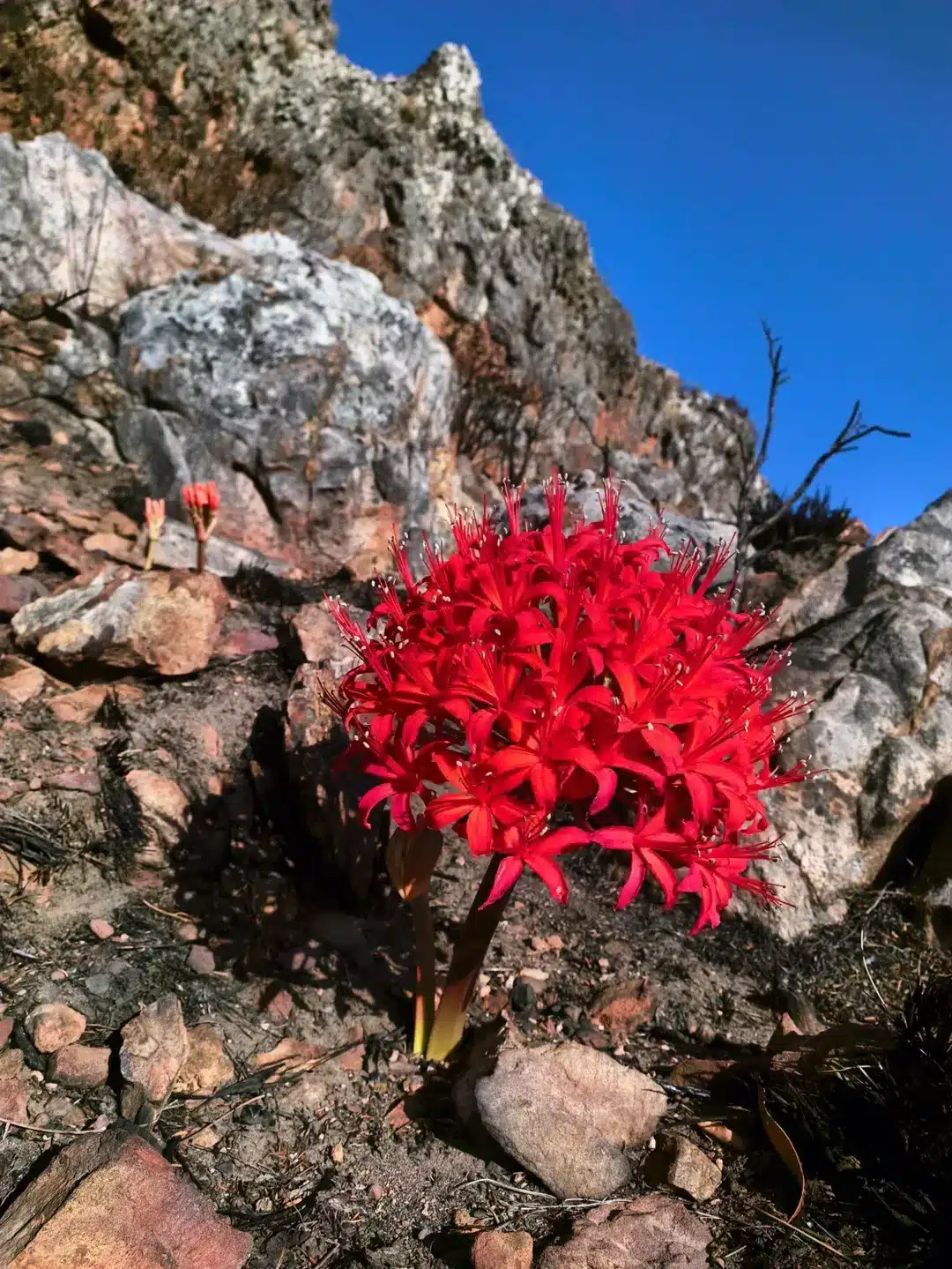
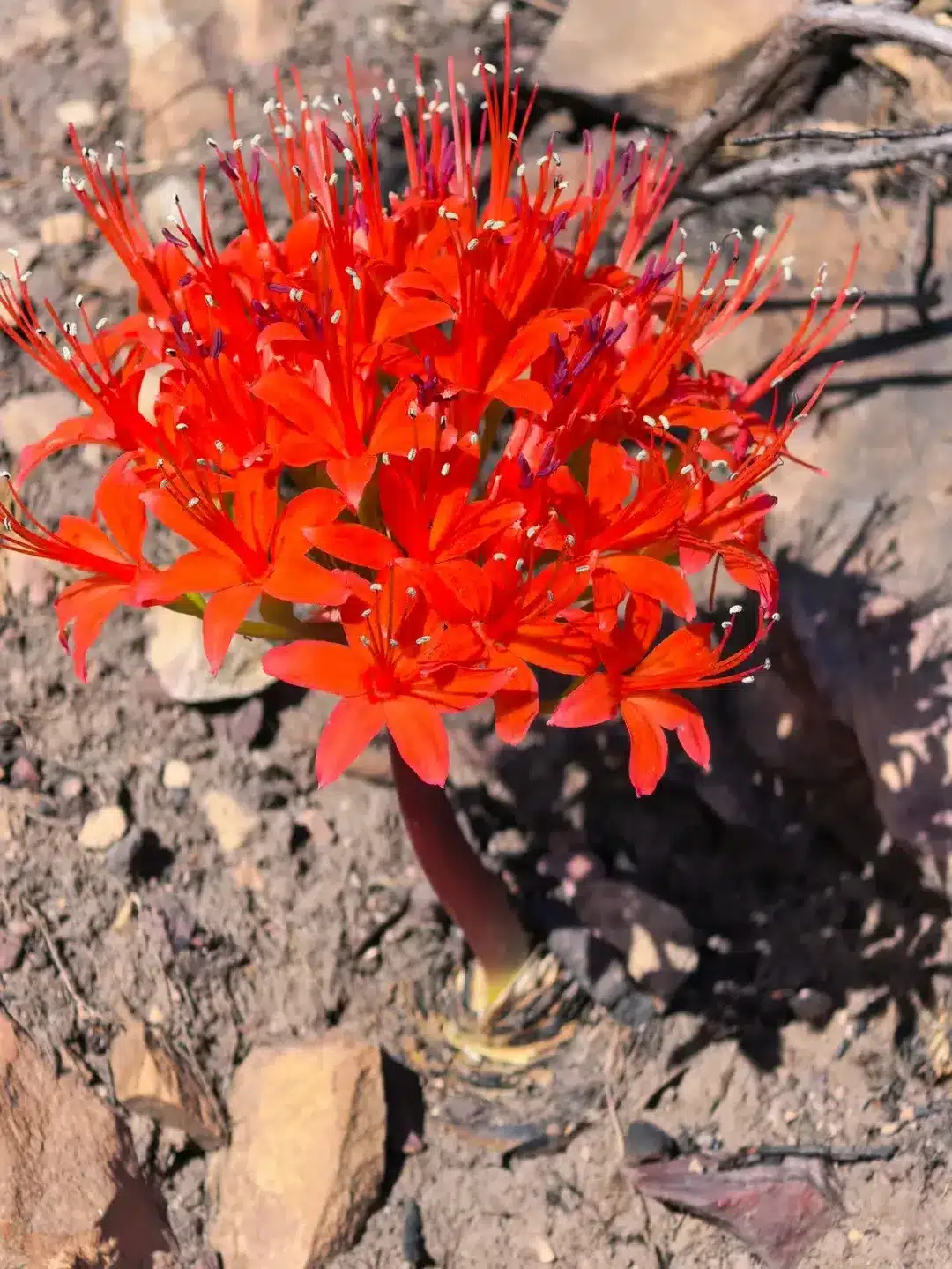
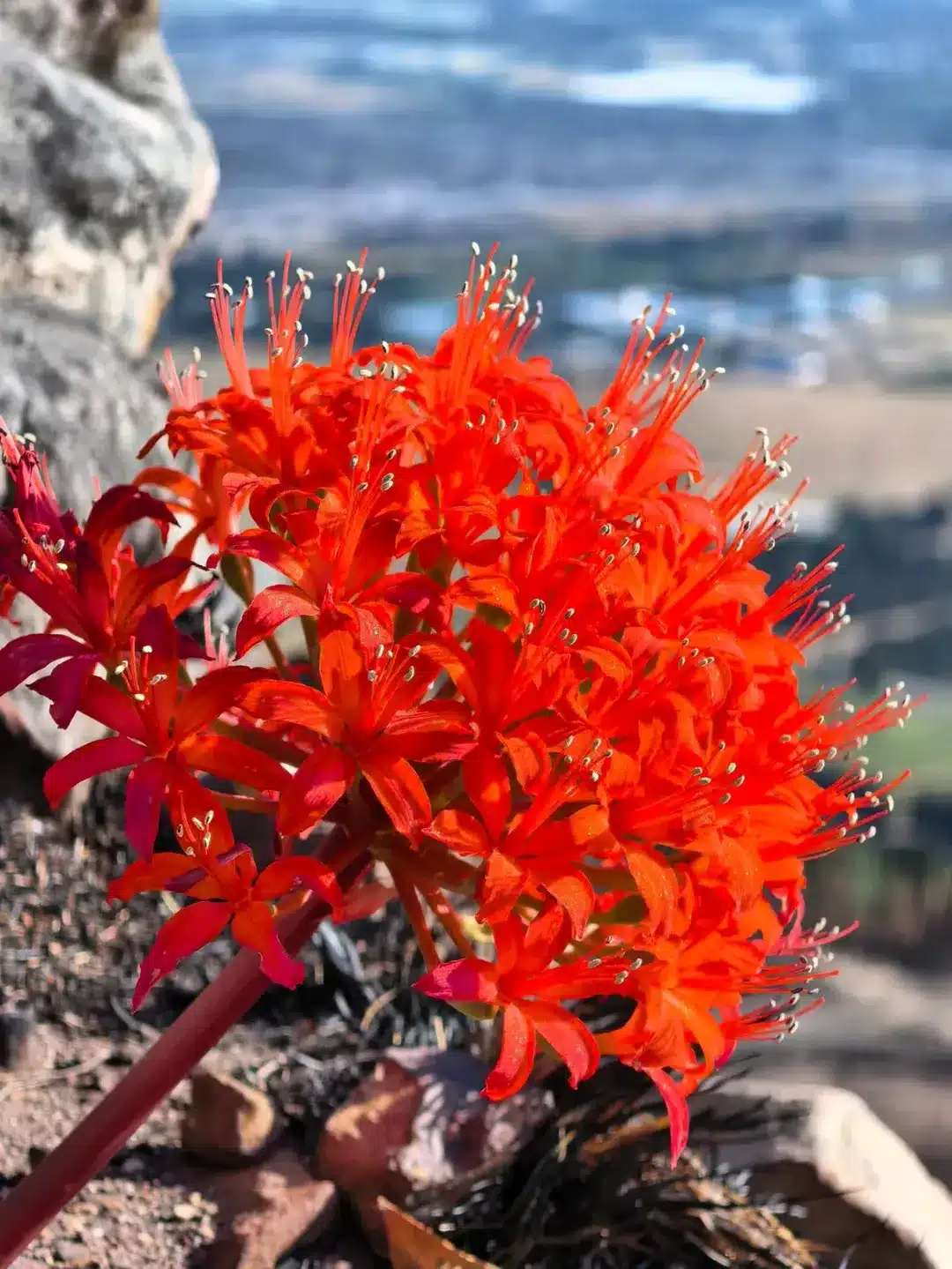
But right on this scorched earth, Brunsvigia marginata stubbornly stubbornly burst into full, brilliant bloom, defying all odds.
What kind of magical plant is this, blooming so magnificently right after a great fire? It’s almost unbelievable!
After a quick search, I found its Chinese name is “Dengtai Baihe” (Lantern Lily), a species endemic to South Africa. Despite its name, it is neither a lily nor a lampstand, but a perennial bulbous plant belonging to the Amaryllidaceae family.
II. Botanical Characteristics and Native Habitat
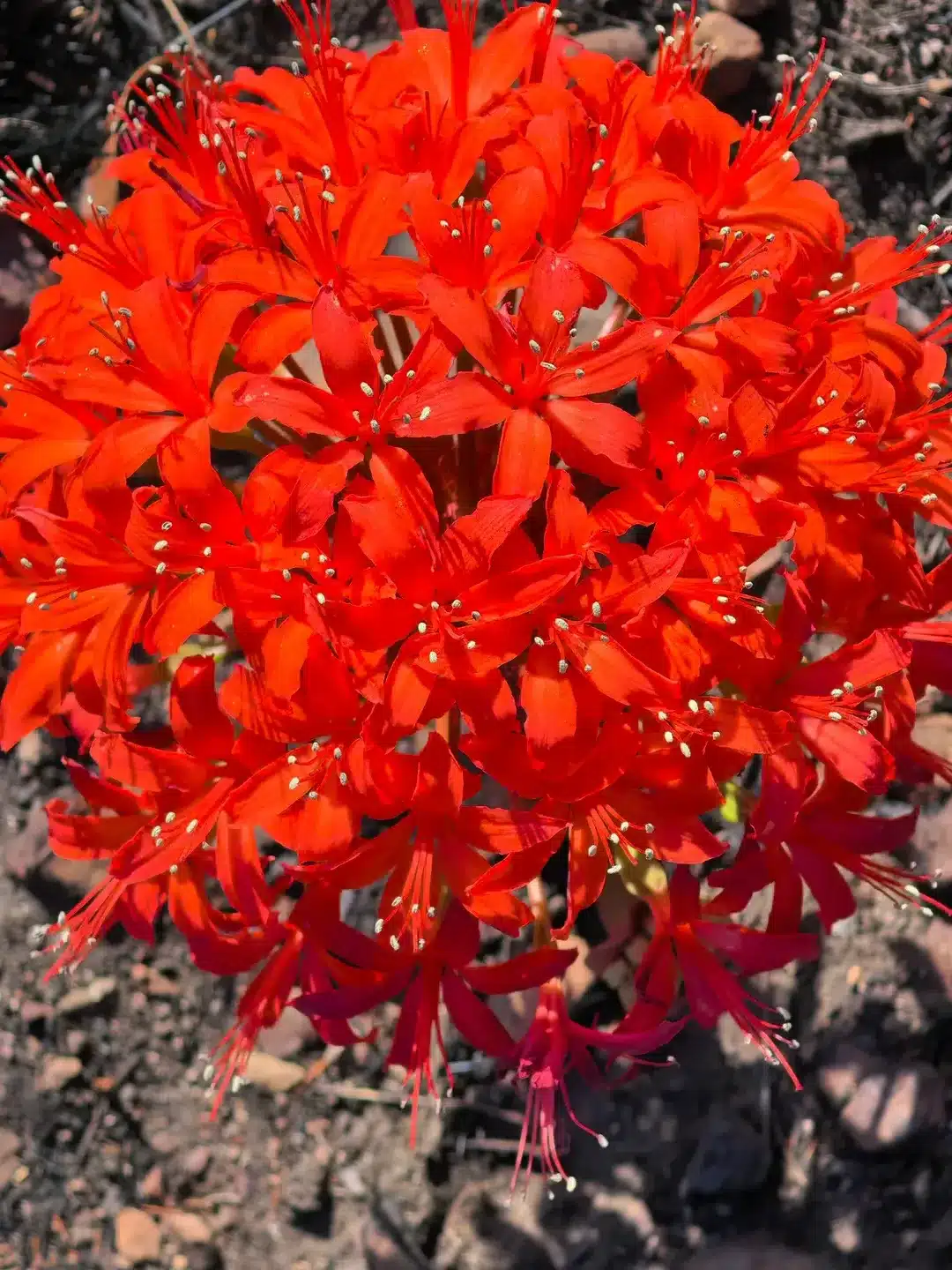
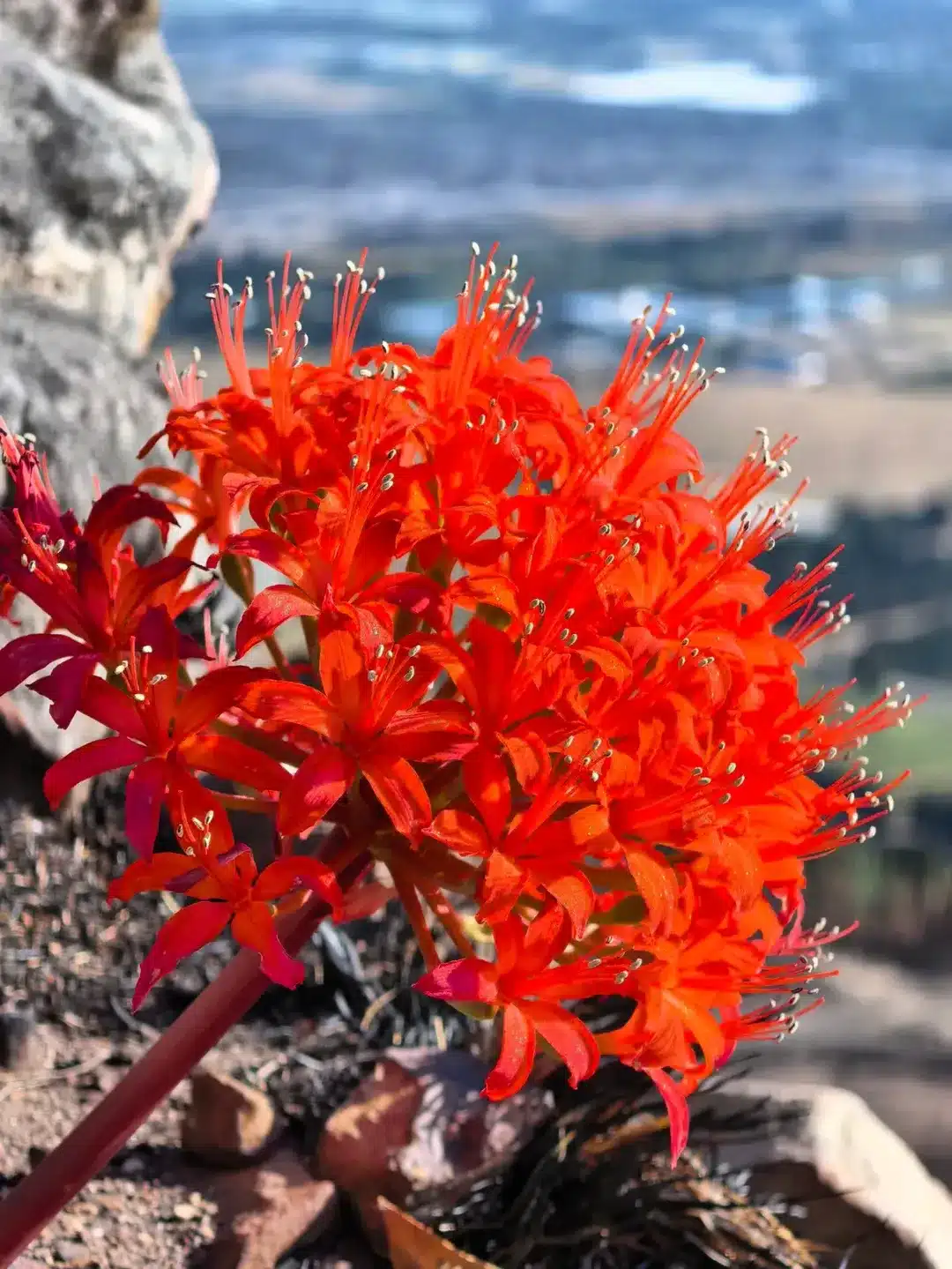
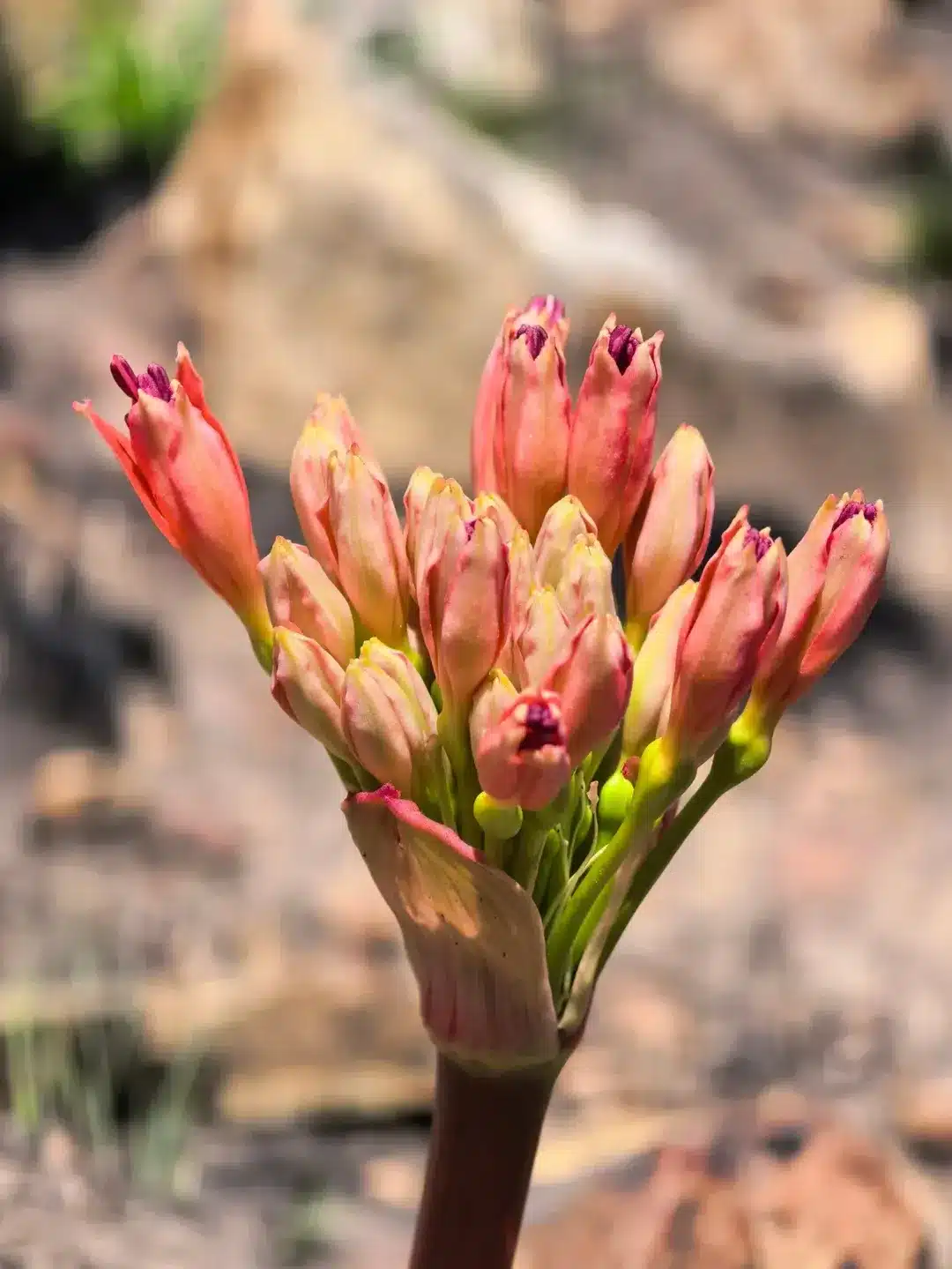
It is currently autumn in South Africa, and this plant is a winter-growing type, so it has just ended its summer dormancy and is entering its flowering period. Notice the fiery red flowers, with not a single green leaf to accompany them—so it is also a plant that flowers before the leaves appear.
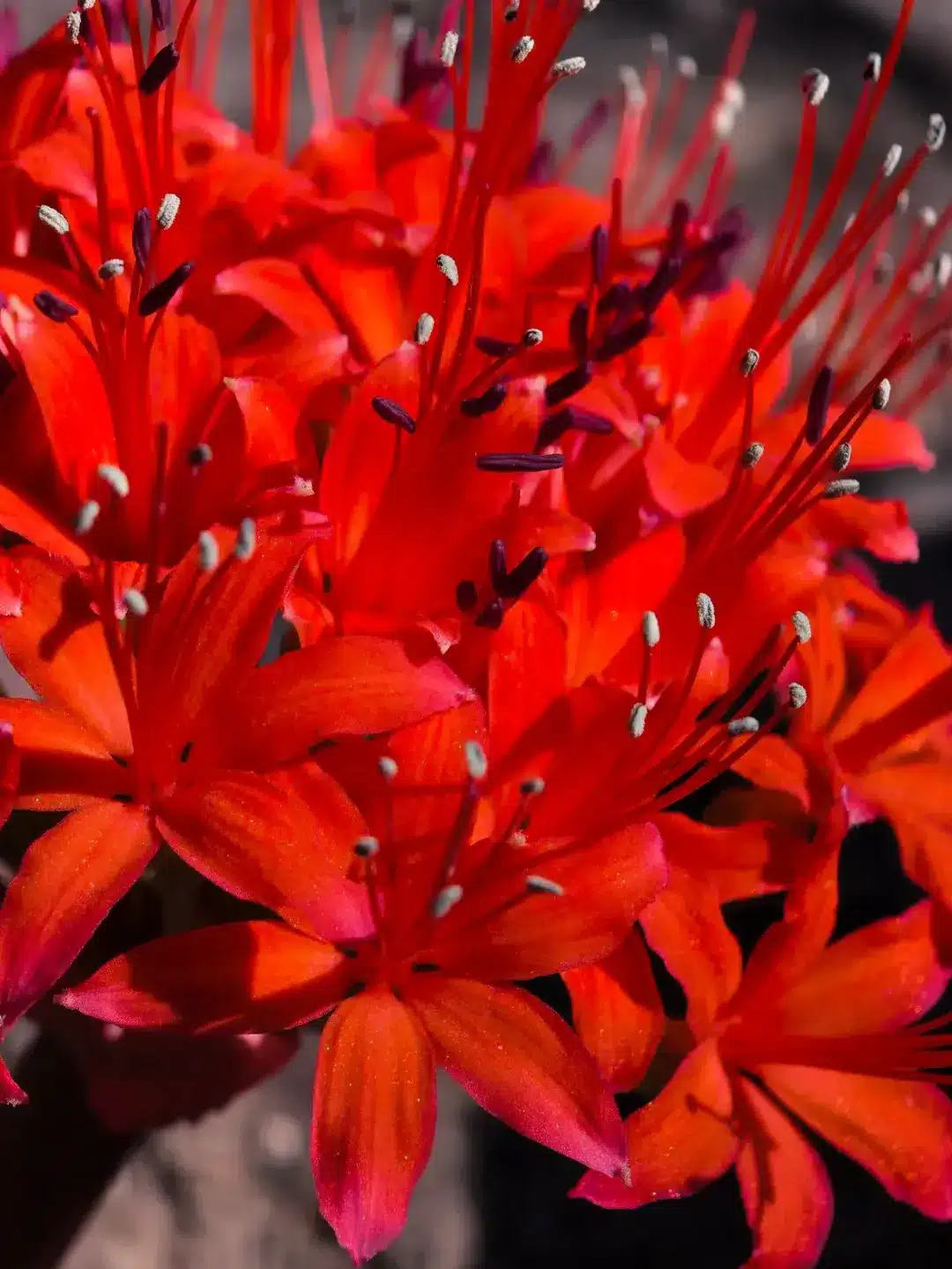
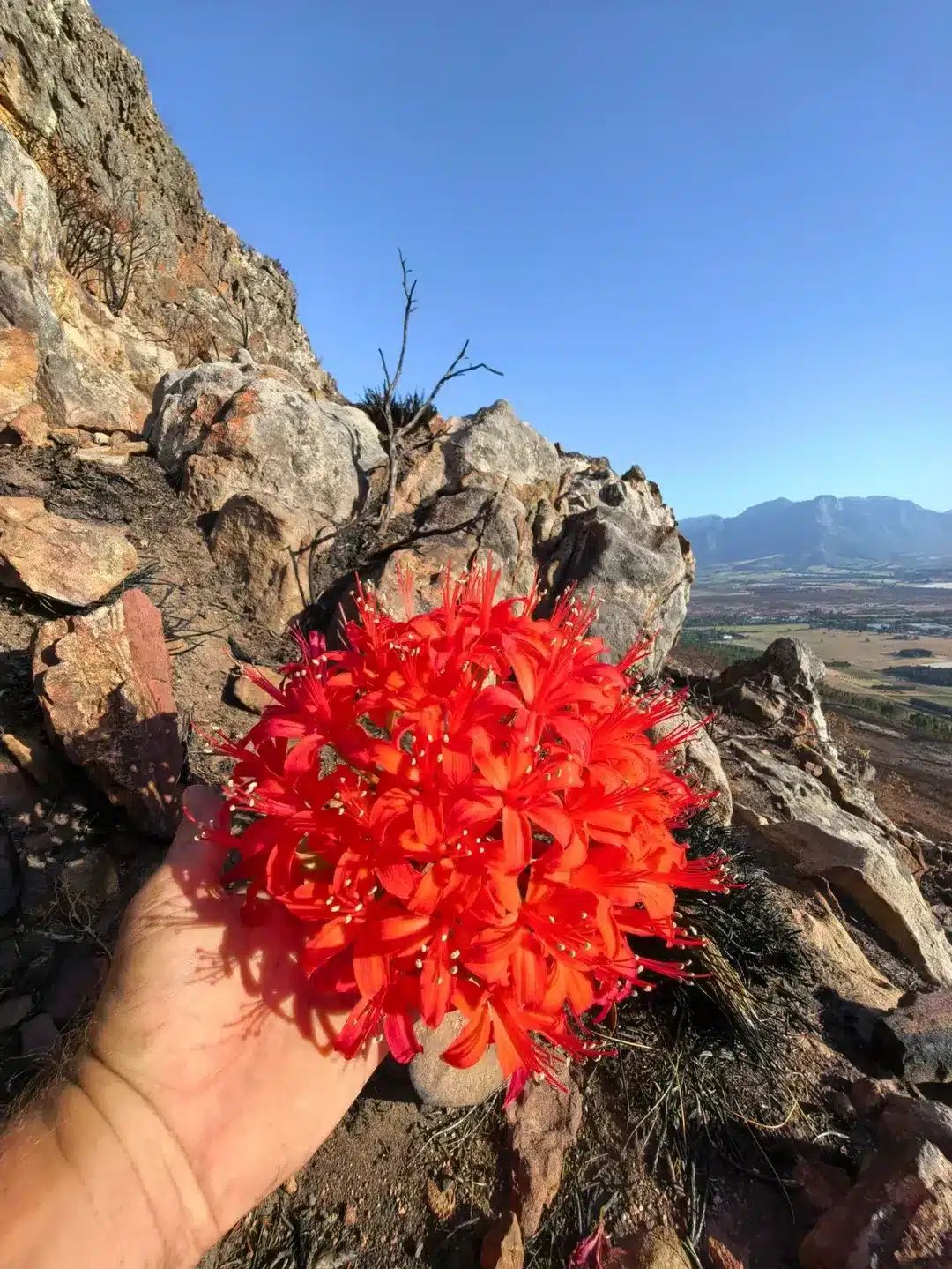
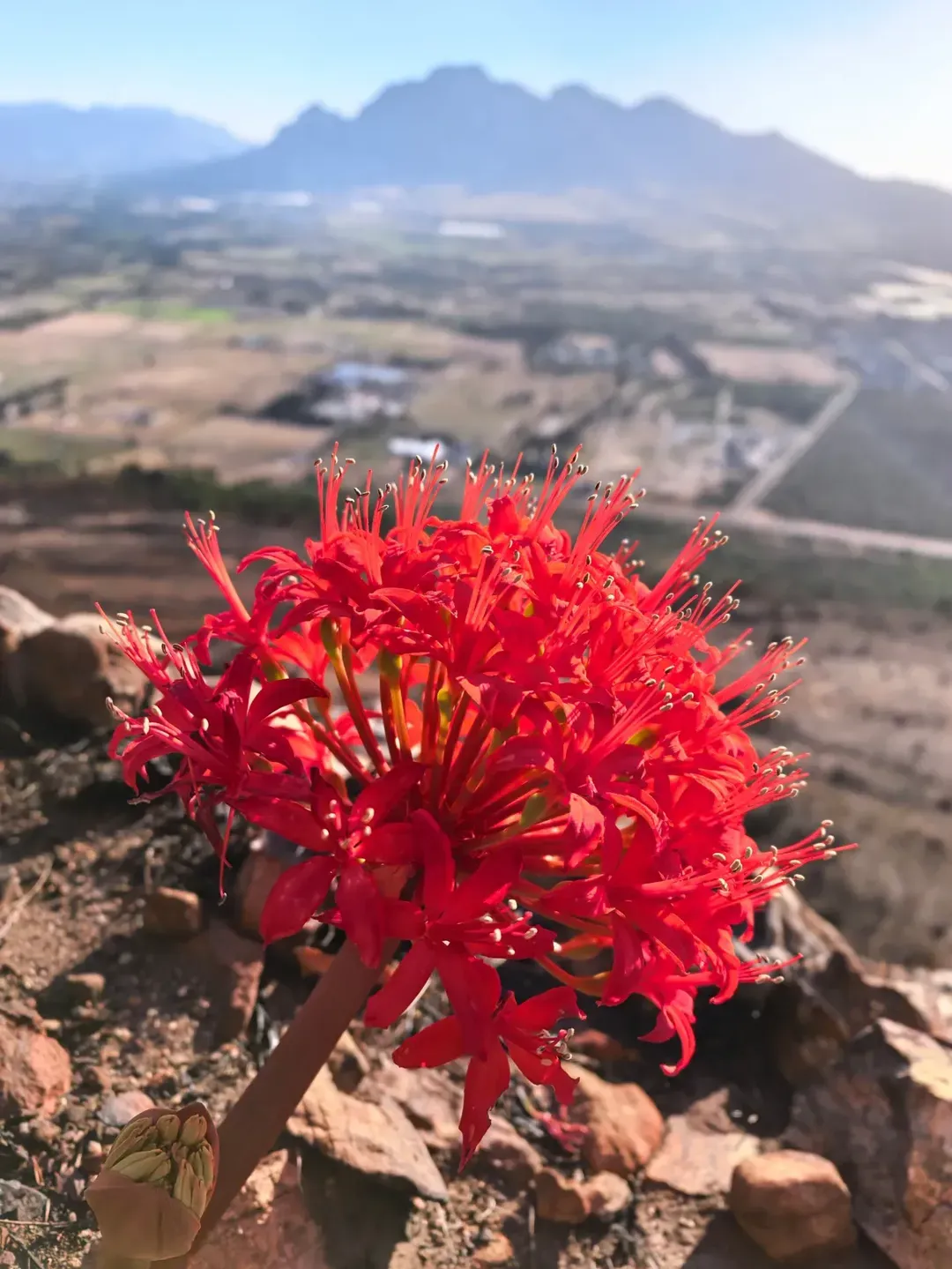
Calling it a “flame flower” is no exaggeration. Its flowers are a rich, deep red, with glossy, shiny petals as if coated with a layer of high-gloss varnish.
This isn’t just for show—it’s a “survival strategy”: to reflect sunlight to the maximum extent, making itself “visible” against the blackened, gray scorched earth, waiting specifically for a certain type of butterfly.
This butterfly happens to be particularly attracted to red. When hiking, you need to keep an eye out: often the flowers bloom vibrantly on shale cliffs, while the butterflies may be circling hundreds of meters below. To encounter such a scene—a small flock of red butterflies darting toward red flowers in the middle of desolate burnt land—is definitely the most rewarding part of the hike.
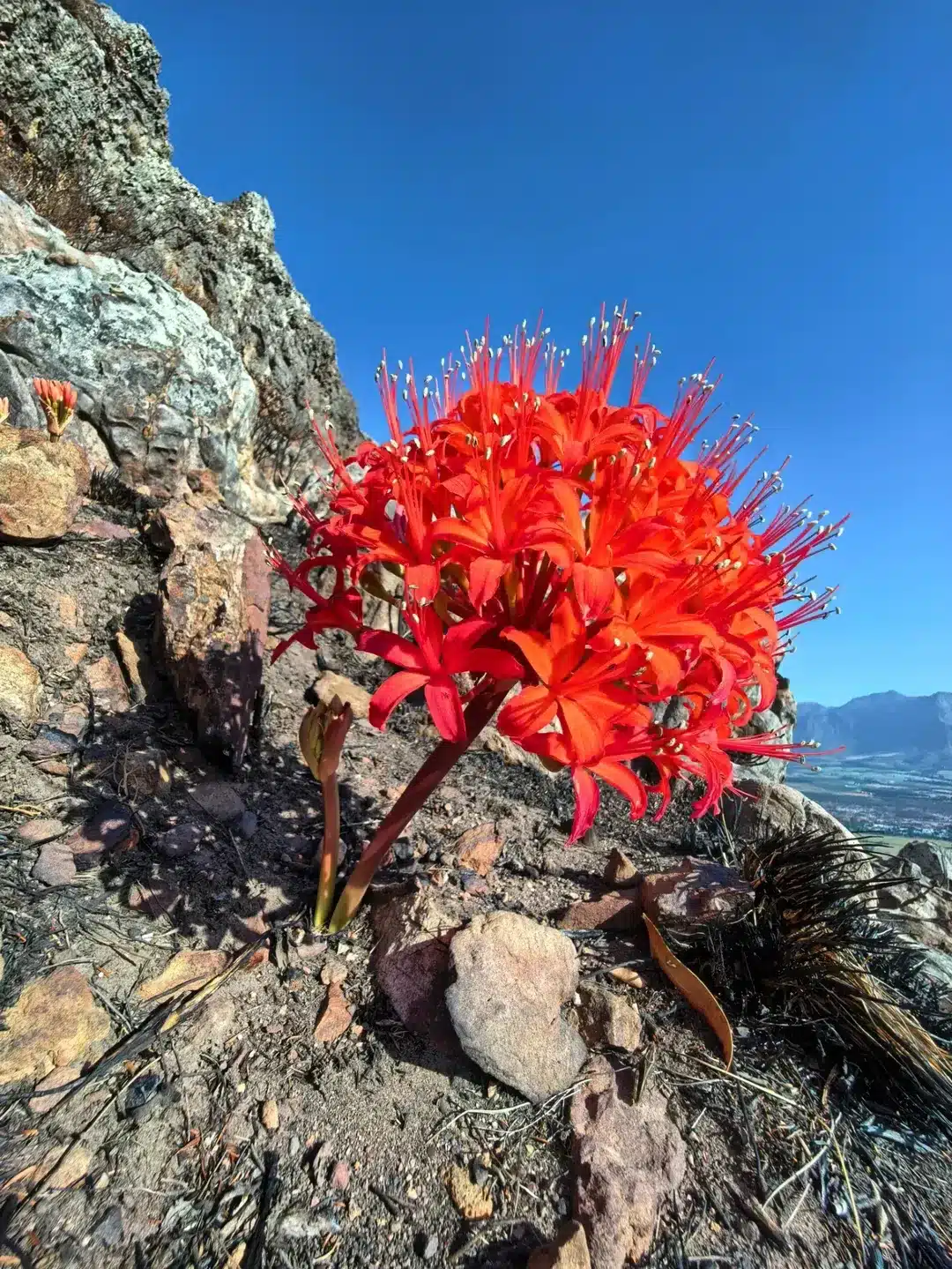
The Lantern Lily blooms delicately, but the places it grows are truly “hardcore.” It takes root in the arid slopes and rocky areas of the Western Cape, choosing to grow on exposed hillsides as if deliberately choosing the hottest, sunniest, most unsheltered spots to prove its vitality.
III. The Underground “Life Insurance Vault”
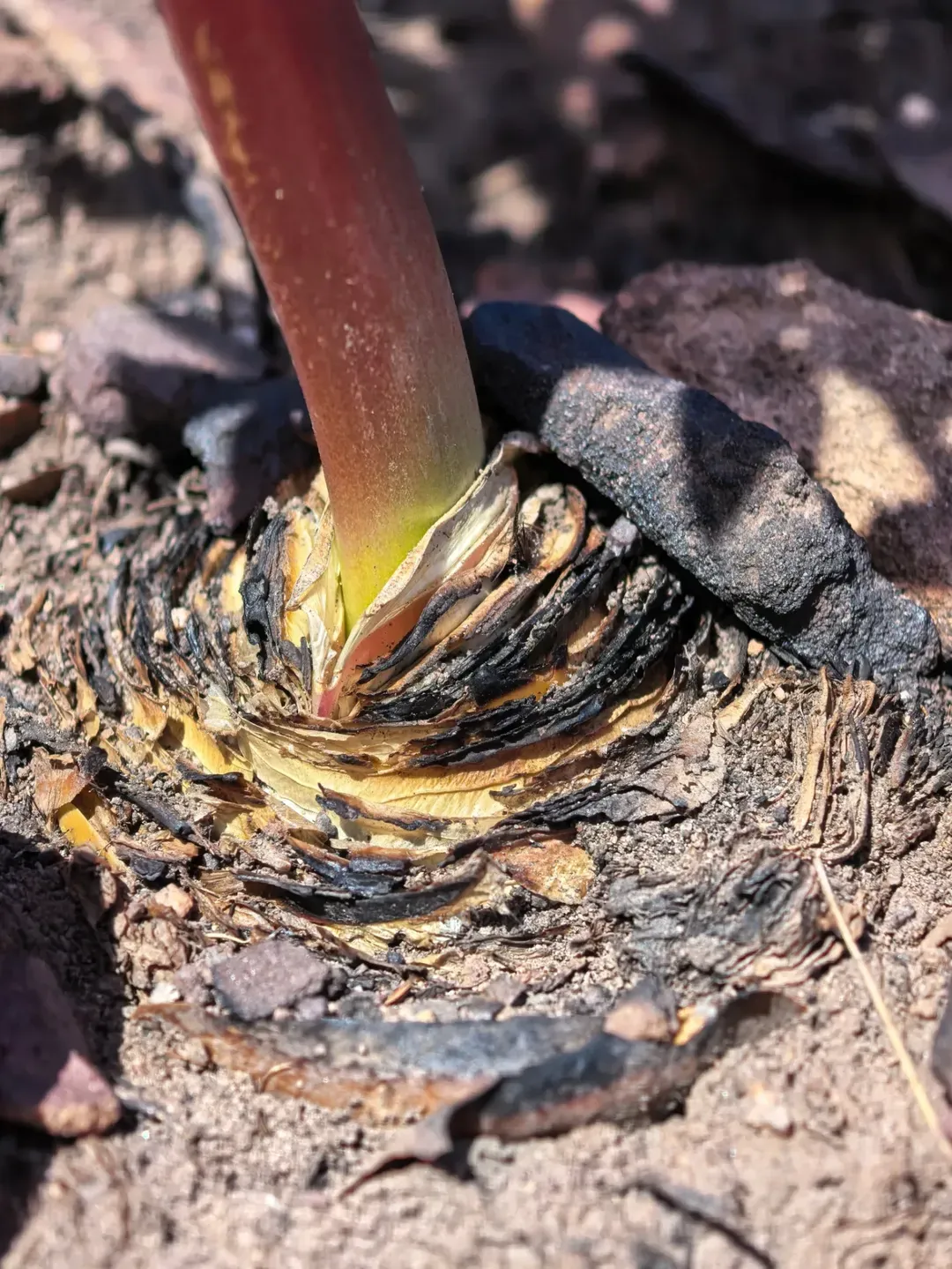
Moreover, it possesses a large underground bulb—commonly known as a caudex—which serves as a “life insurance vault” for storing water and nutrients.
- Bulb Size: About 4–5 cm long and about 4 cm in diameter.
- Protection: Covered with dark brown papery bulb scales that effectively protect its internal tissues during dry seasons.
As a member of the Amaryllidaceae, the Lantern Lily has long figured out the temperament of the Cape region—rainy winters, dry summers, and frequent fires.
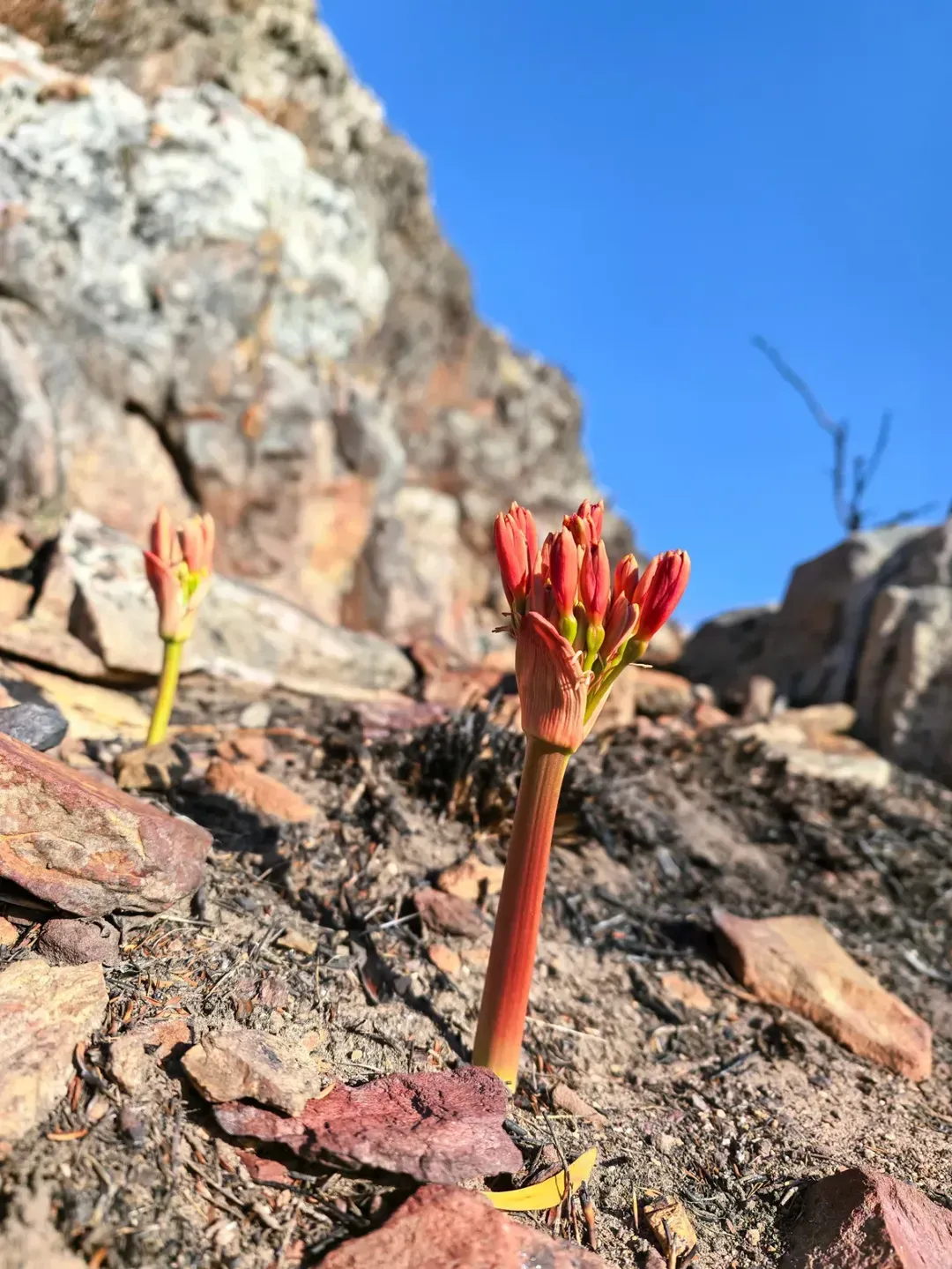
Its bulb quietly hibernates underground, and as soon as the fire is over and the autumn rain arrives, the flower stalk immediately breaks through the soil, ready to bloom—as if saying, “The fire may destroy the vegetation, but it cannot burn away my flowering season.”
The flowers are not only dazzling but also remarkably large—an adult would need both hands to hold one, which reminds me of a bridal bouquet.
Even more interestingly, its leaves only emerge quietly when the flowers are about to wither, spreading flat on the ground; when the dry summer arrives, they wither early, channeling all their nutrients back to the underground bulb. When the next fire comes, it will once again appear on time with that deep red hue, continuing its life miracle on the scorched soil.
IV. Tumbleweed Dispersal: How It Reproduces
And how does it reproduce? As mentioned at the beginning of the article—it uses a “tumbleweed” style of dispersal.
Although I recognize each word individually, putting them together I wasn’t quite sure what it meant.
According to the information:
- After the flowering period ends, the inflorescence gradually dries out and becomes woody.
- It forms a lightweight spherical structure that contains mature seeds inside.
- The connection between the flower ball and the underground bulb becomes very fragile. Under the force of the wind, it easily breaks off, detaching the entire dried inflorescence ball from the plant.
- Once detached, the dried ball rolls around like a “tumbleweed” in the strong spring winds of South Africa. As it rolls and bumps against the ground, the capsules inside continuously split open, scattering the flat seeds along the way.
Nature is truly amazing.
The Lantern Lily—this seemingly fragile yet incredibly resilient desert plant—writes a story of tenacity and wisdom with its brief yet blazing flowering period and its unique, highly efficient method of dispersal.
Do you like this fiery red Lantern Lily?