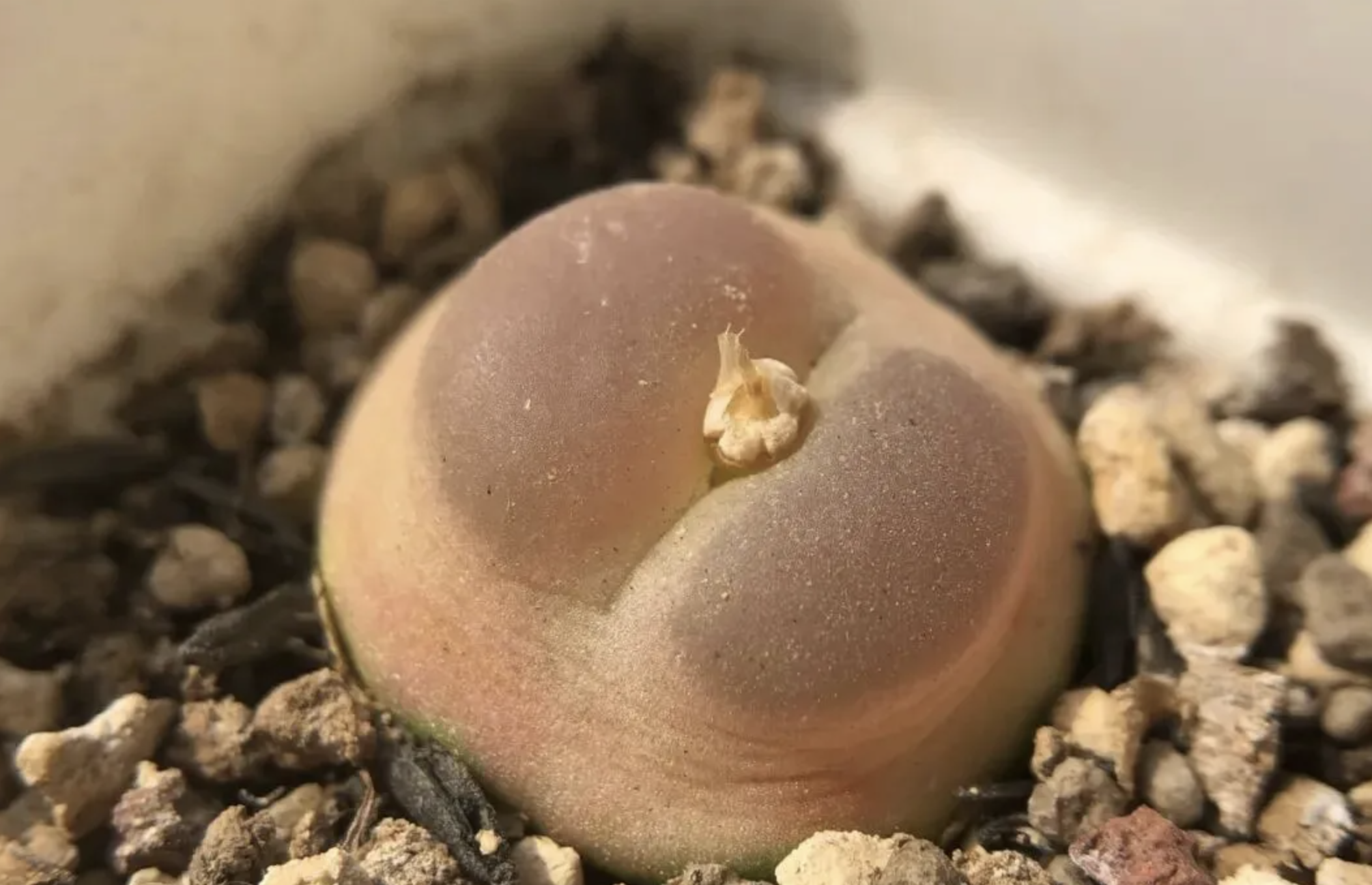
Conophytum ratum once became incredibly popular for its unique, UFO-like shape and the cute “butt” form created by its “humps.” Many succulent enthusiasts were drawn into the hobby because of this adorable species. The price of C. ratum peaked around 2021-2022 but decreased later due to mass propagation. Recently, however, its price seems to be rising again. This article will introduce how to identify C. ratum, its care requirements, and the story behind this fascinating plant.
Appearance and Characteristics
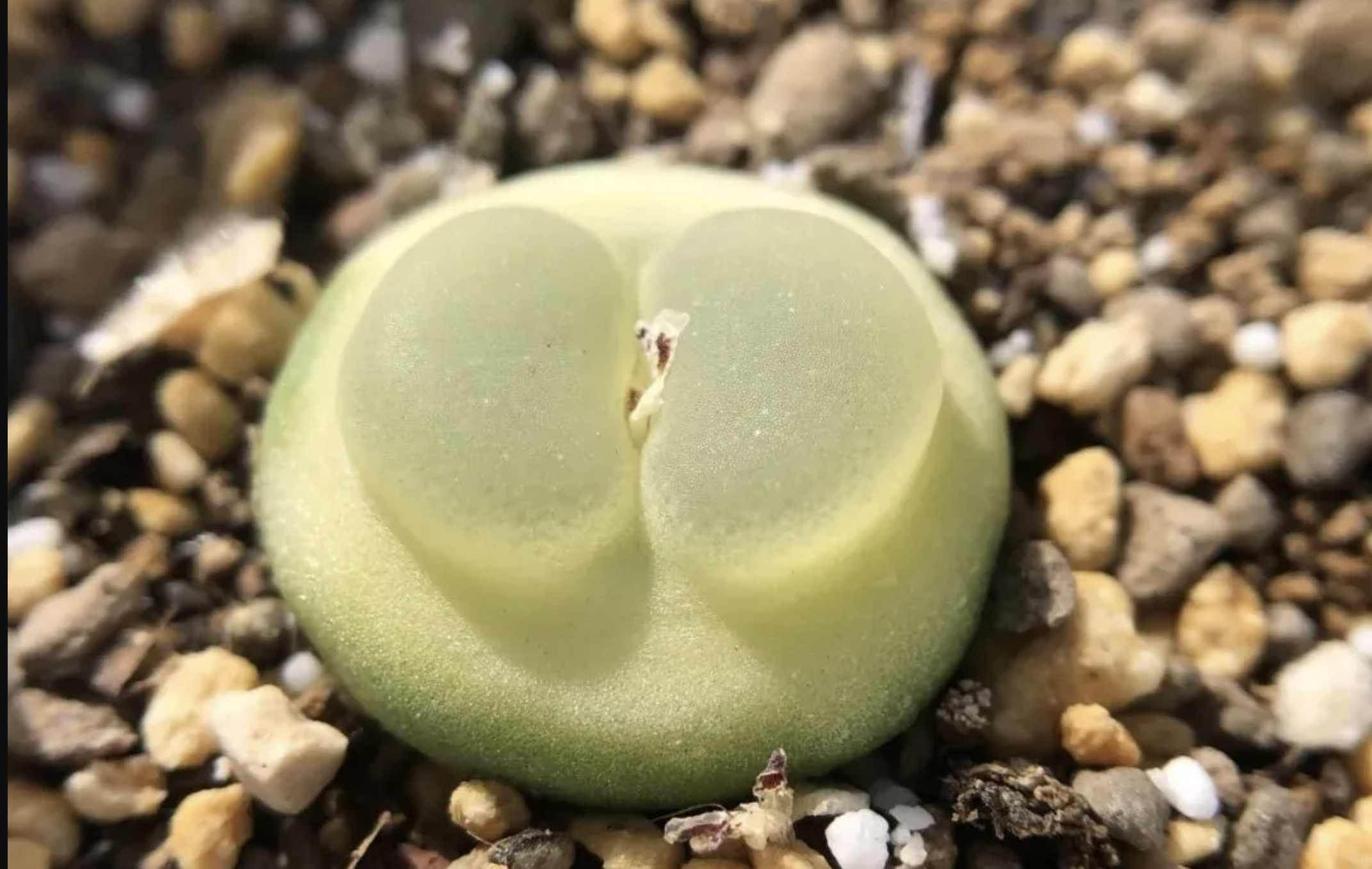
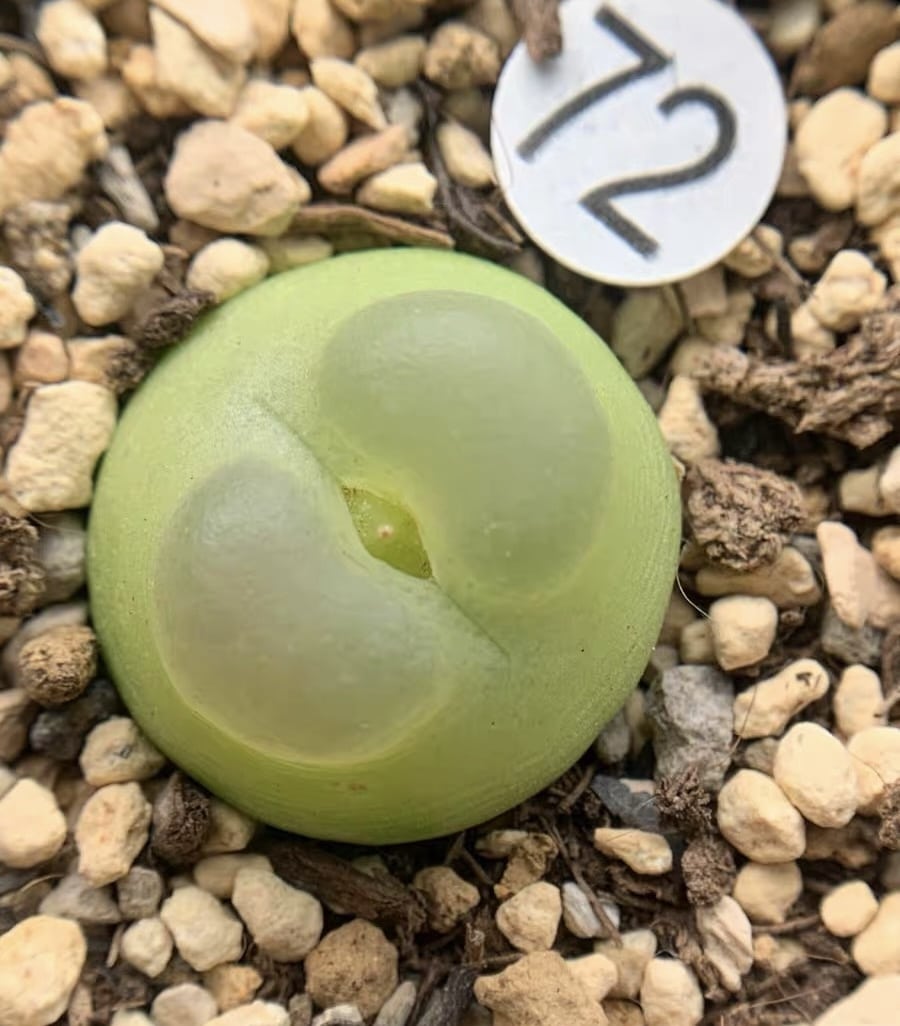
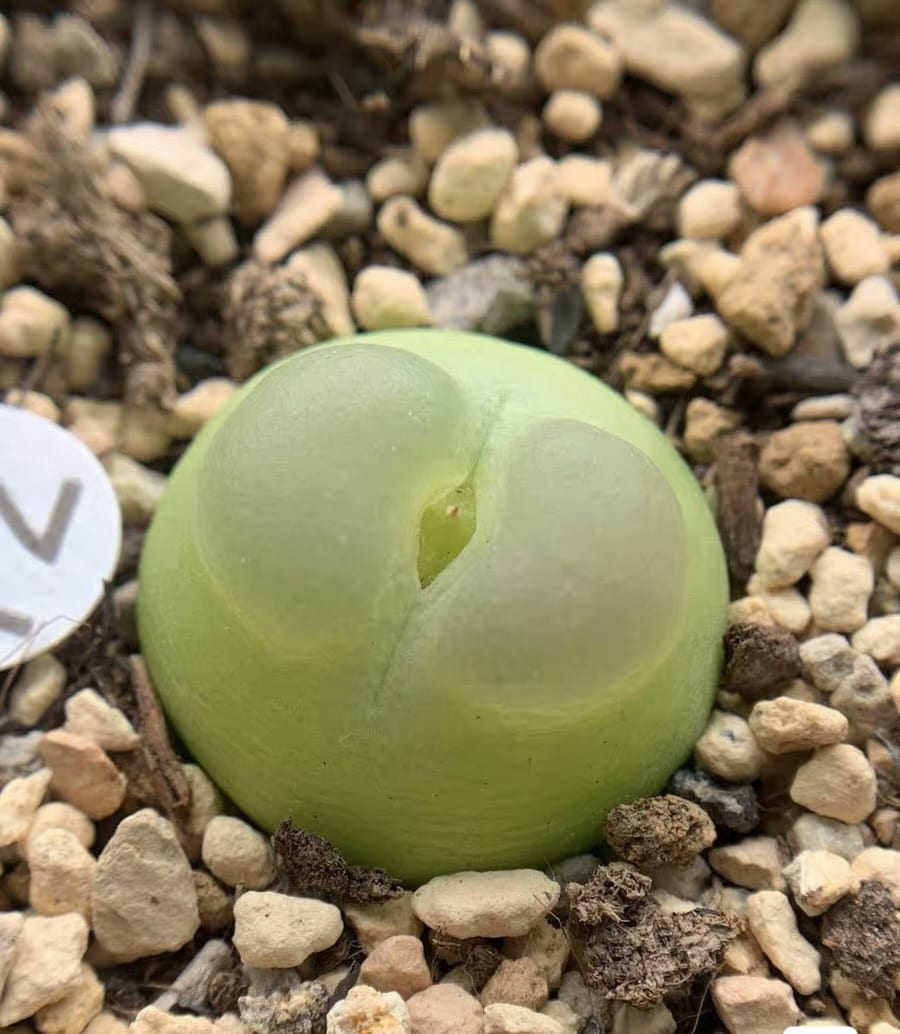
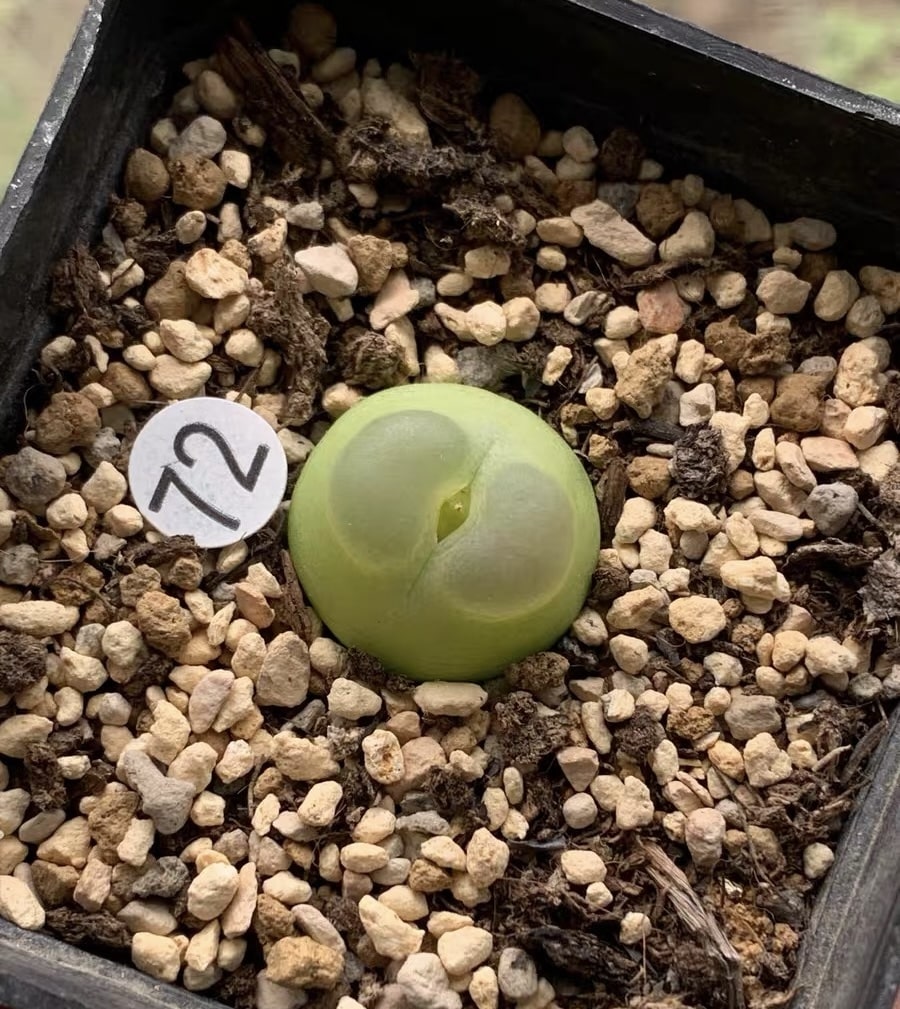
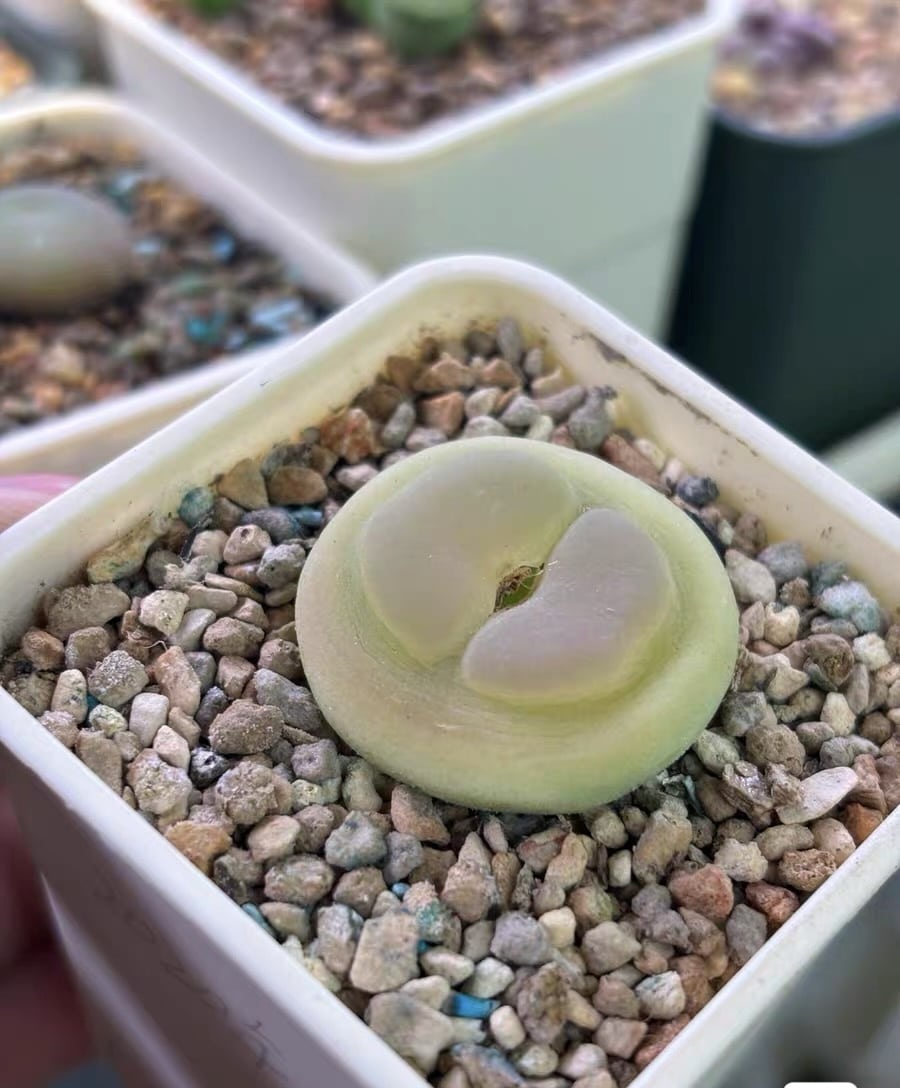
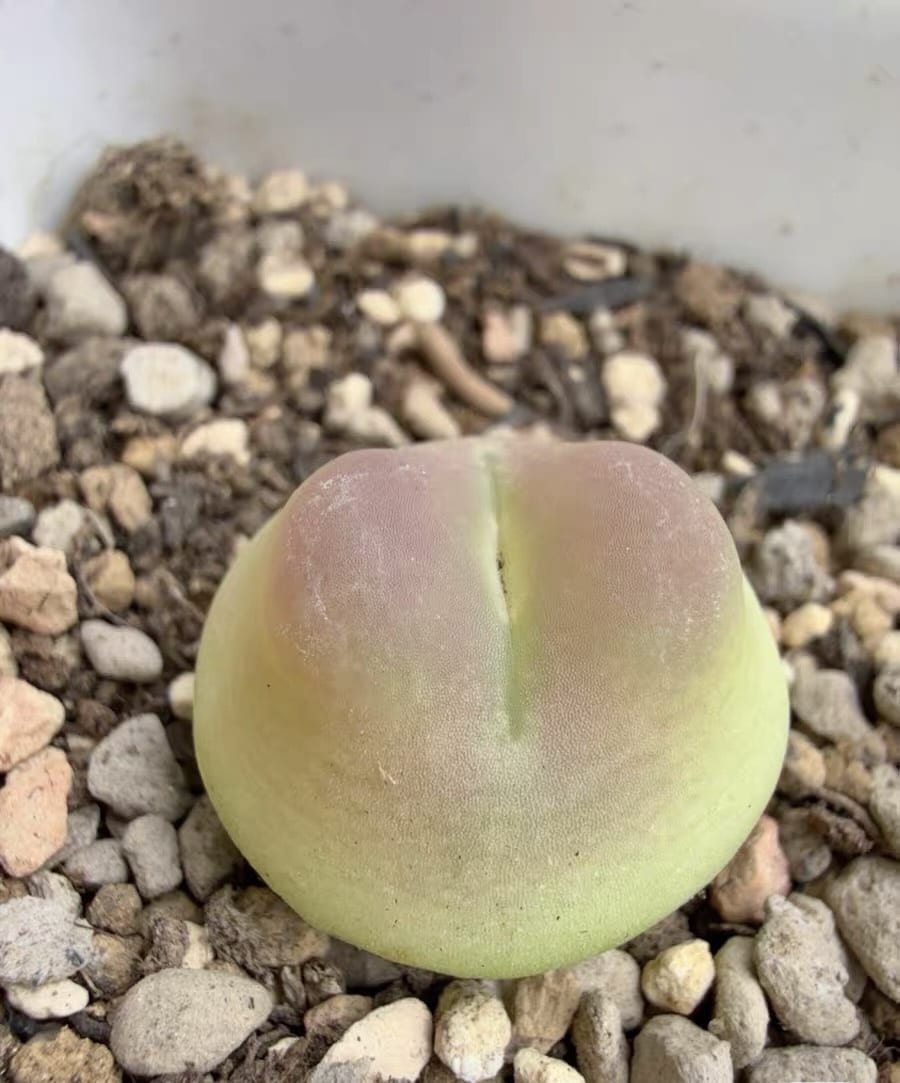
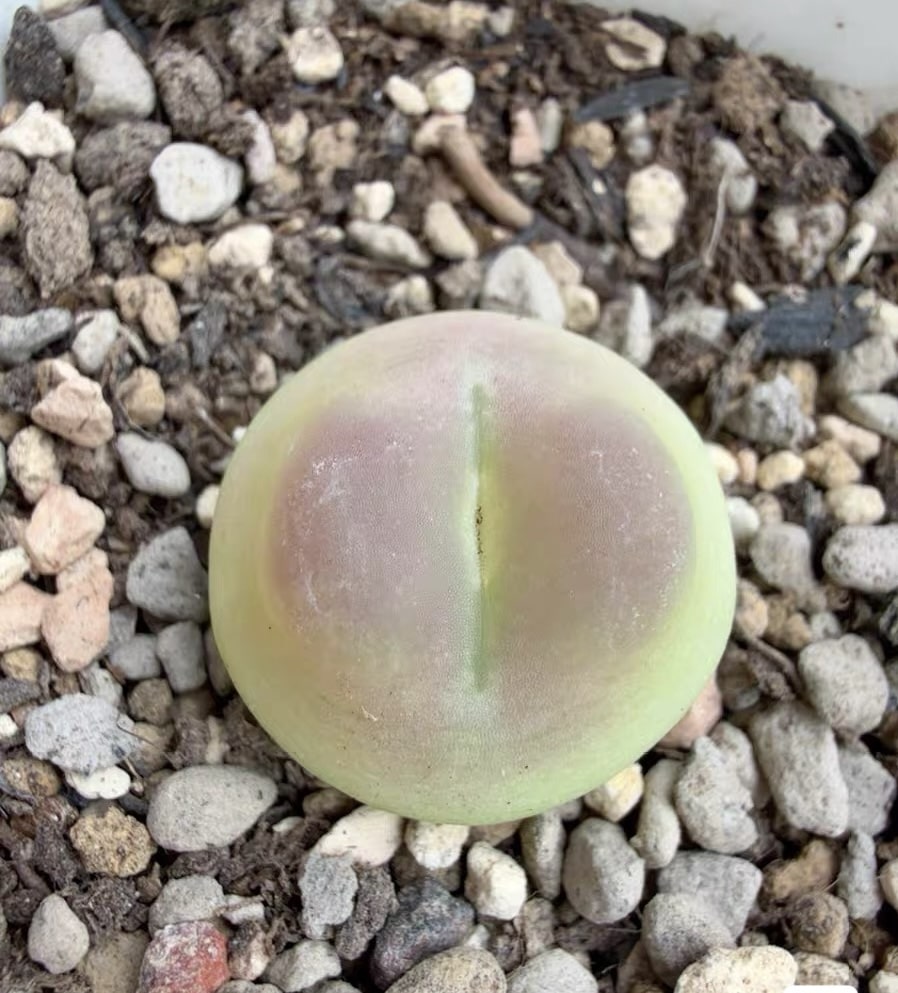
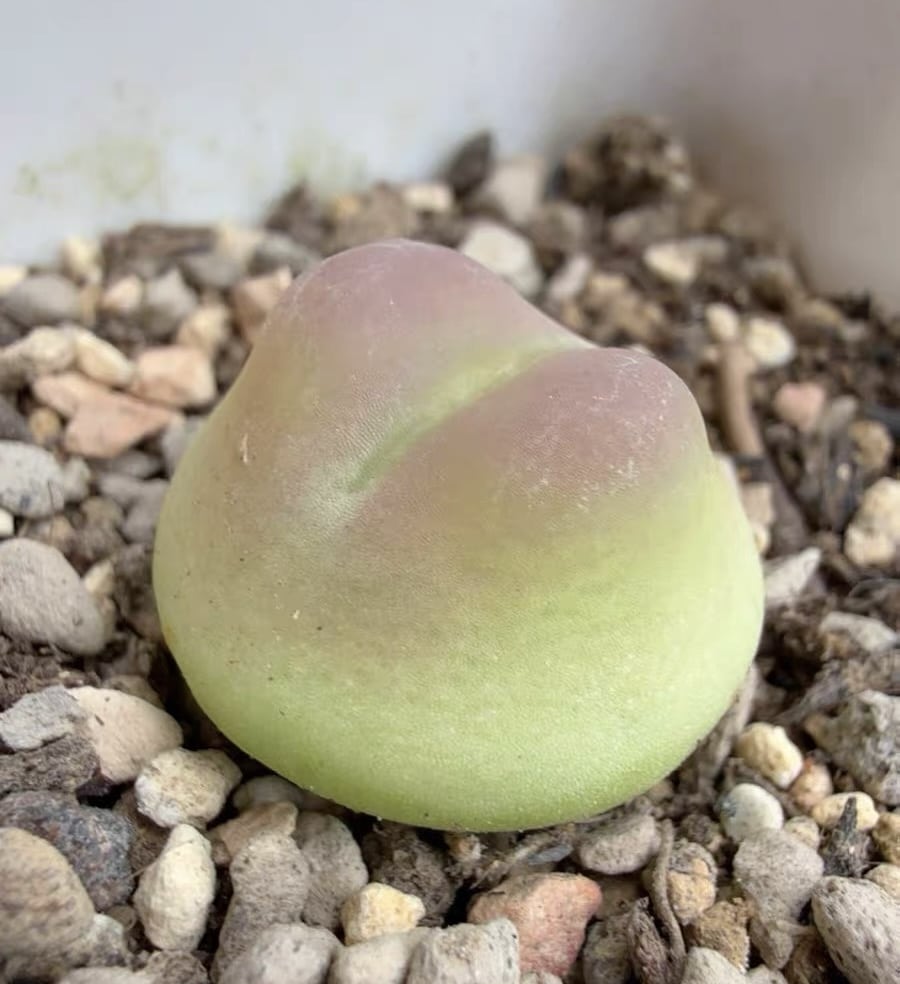
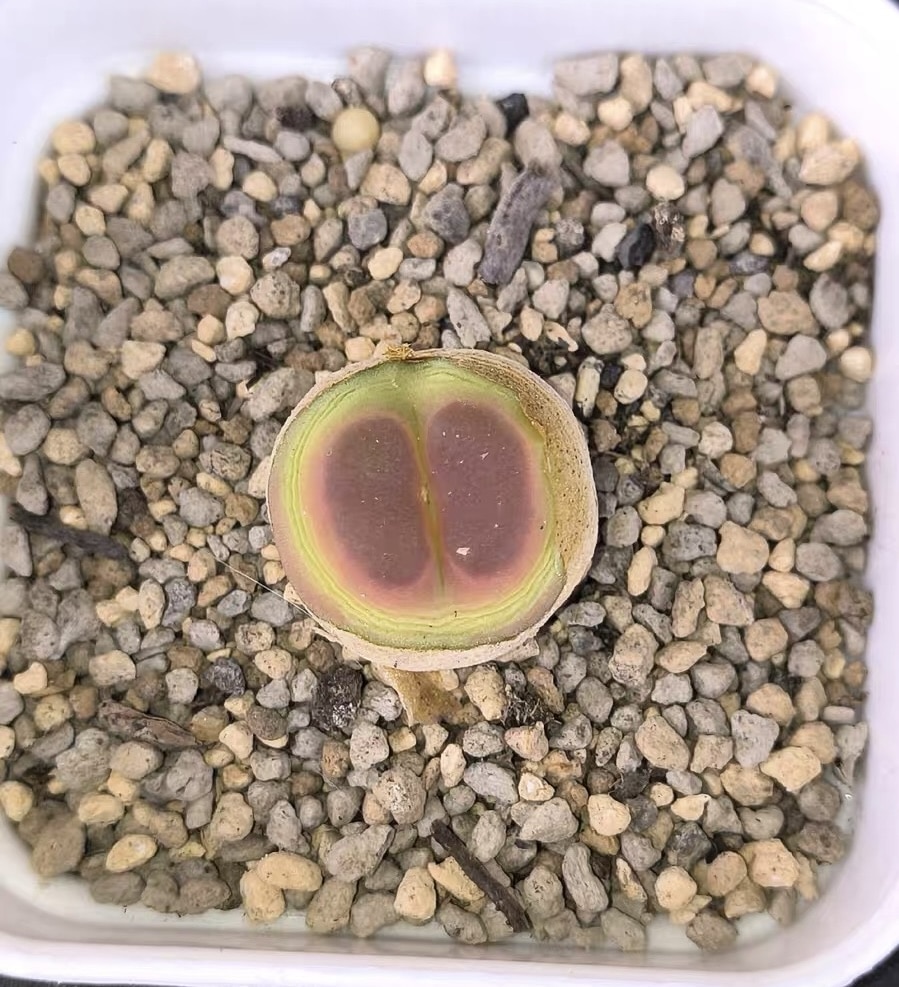
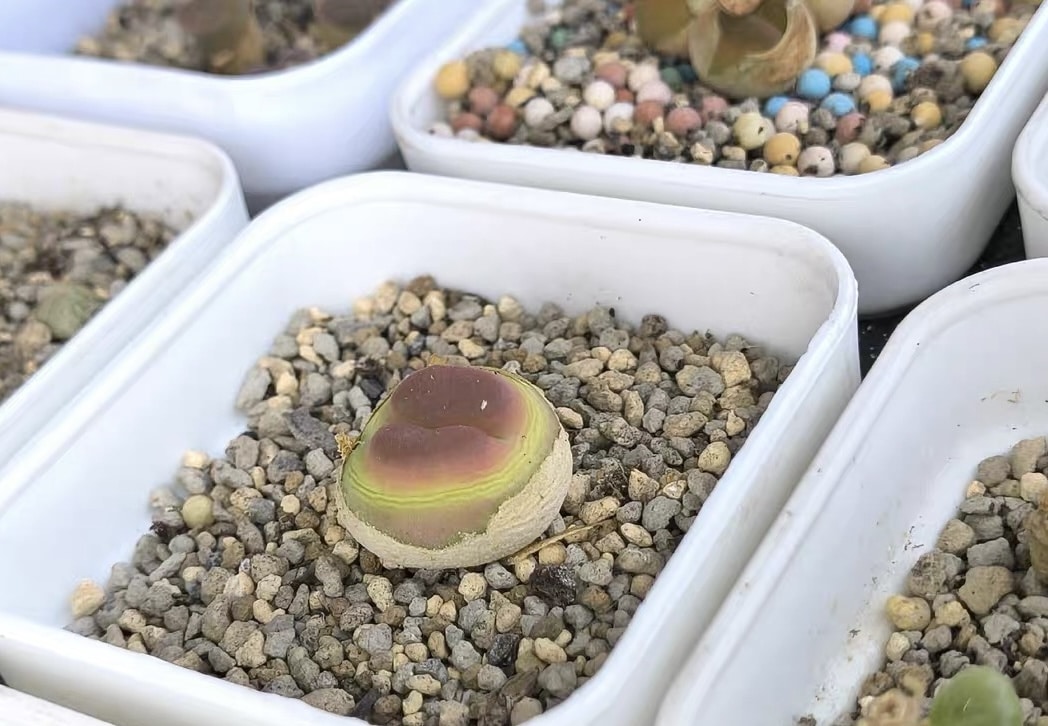
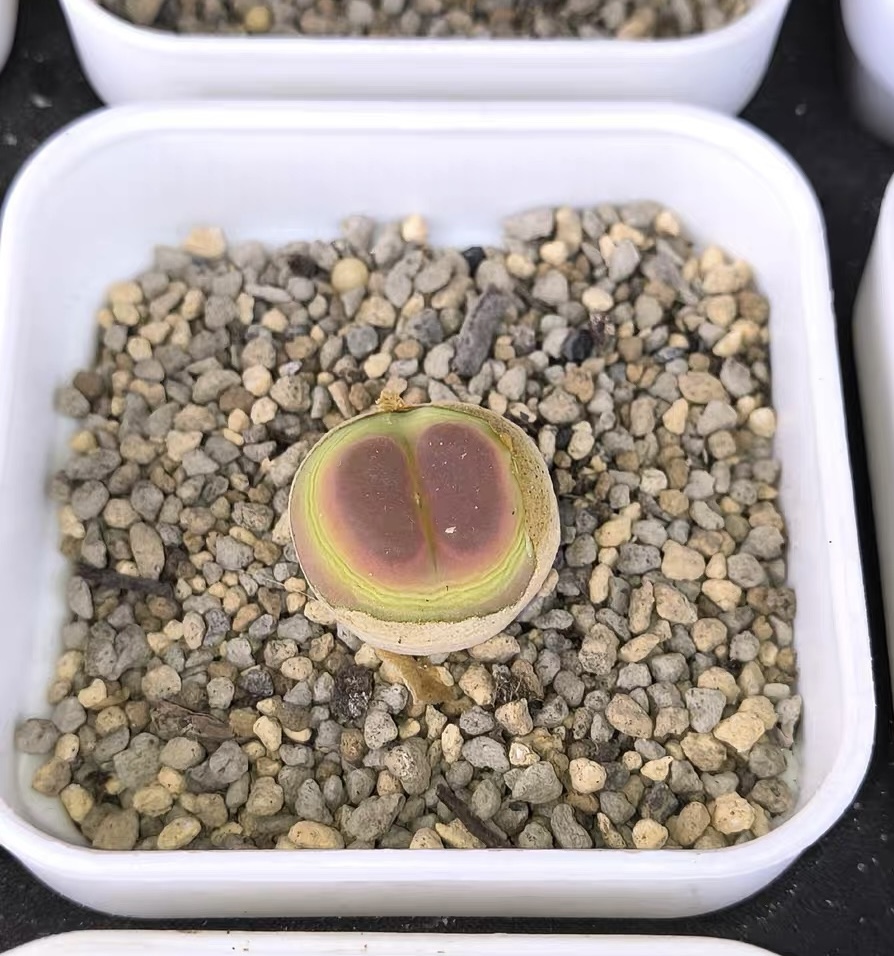
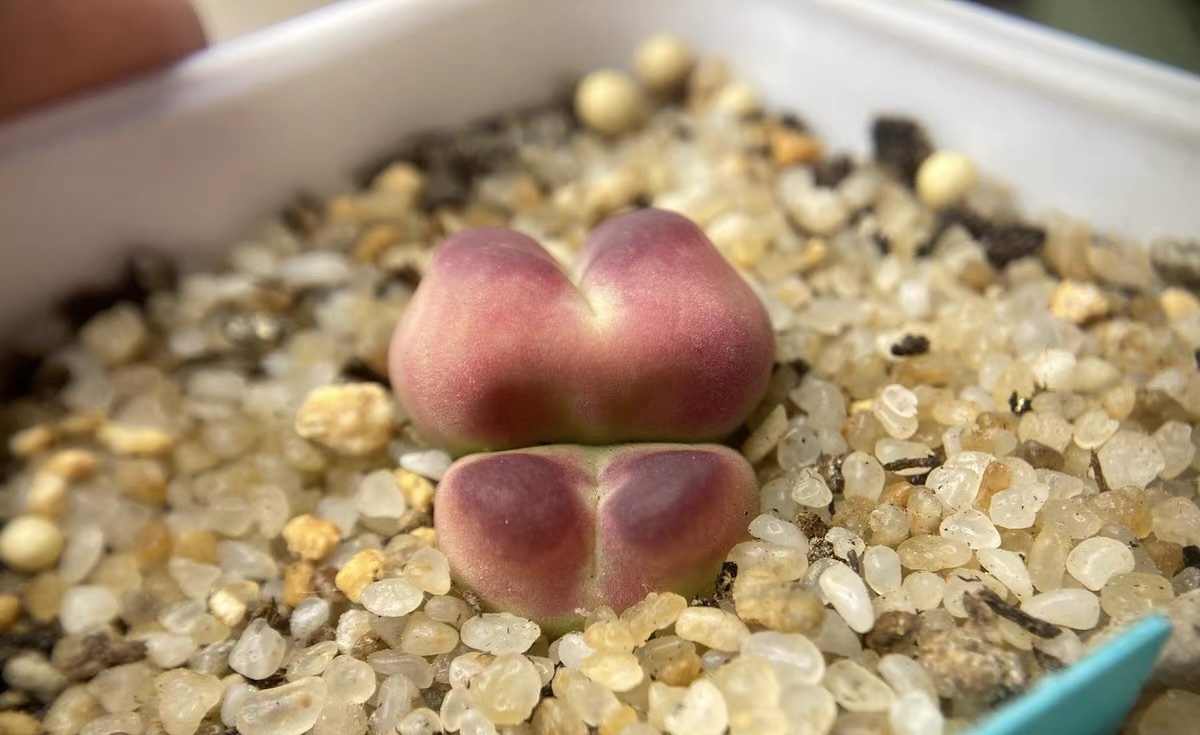
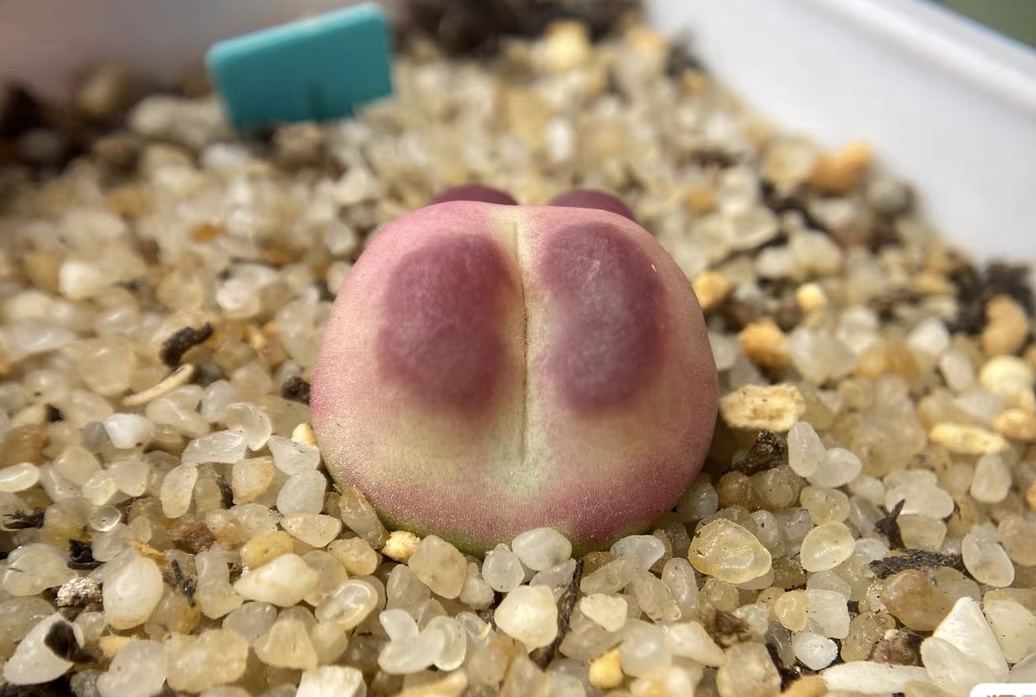
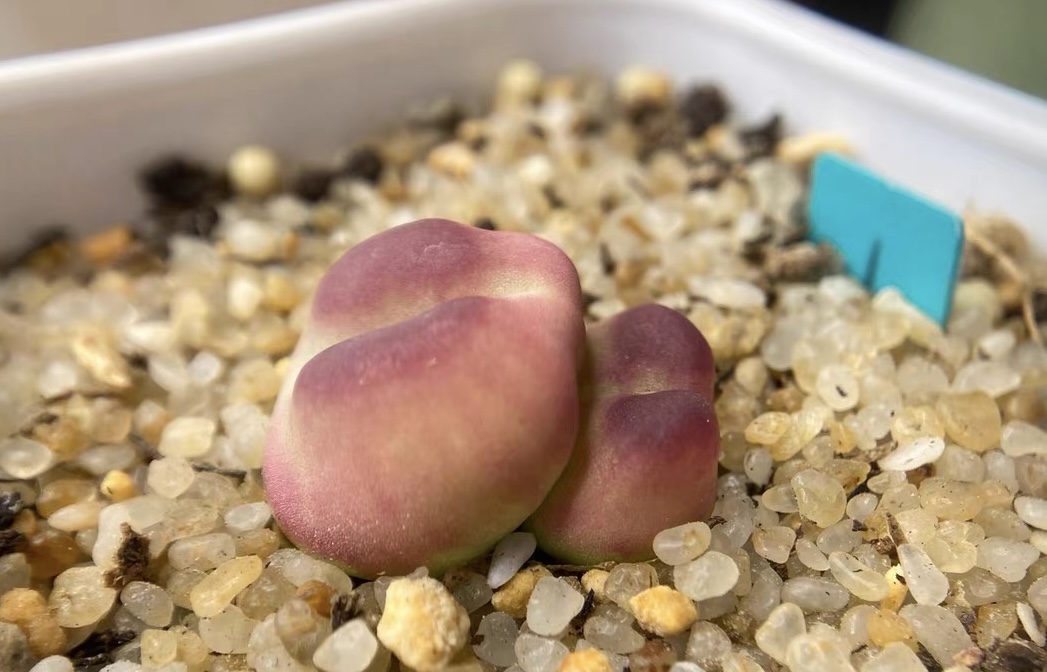
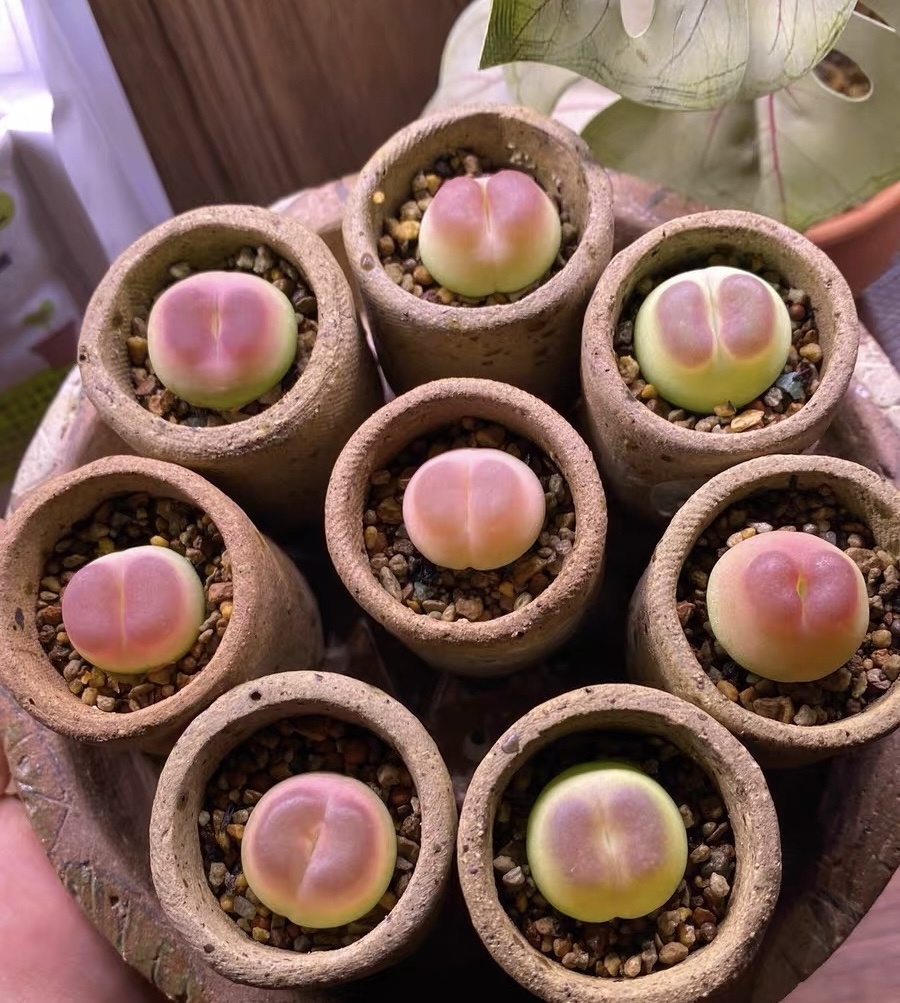
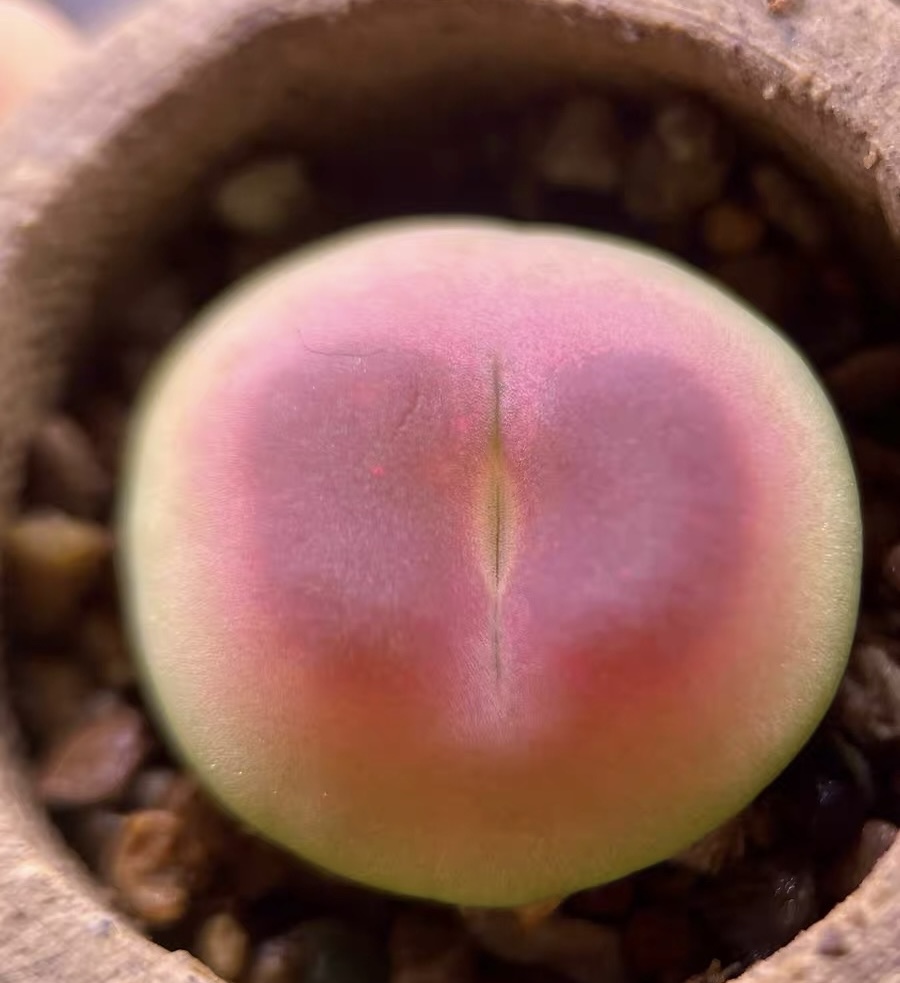
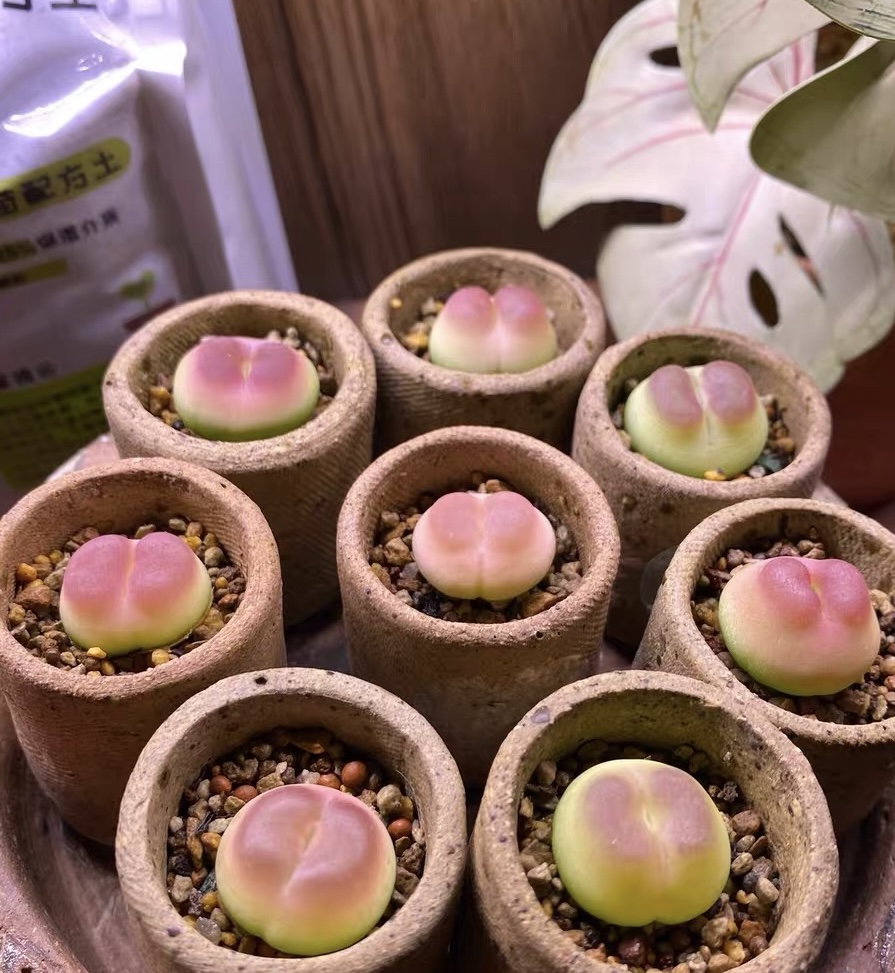
The C. ratum has a simple body shape, generally round or broadly oval, with a clear, kidney-shaped window. Mature plants typically measure 15-20mm long, 20-45mm wide, and 20-45mm tall. The body color is not uniform; the “window” part is usually emerald or dark green, while the area below the window is generally white with a hint of green. When in optimal condition, both parts can turn red or even a pinkish-purple. A closer look reveals many tiny, shiny, transparent bumps on the epidermis.
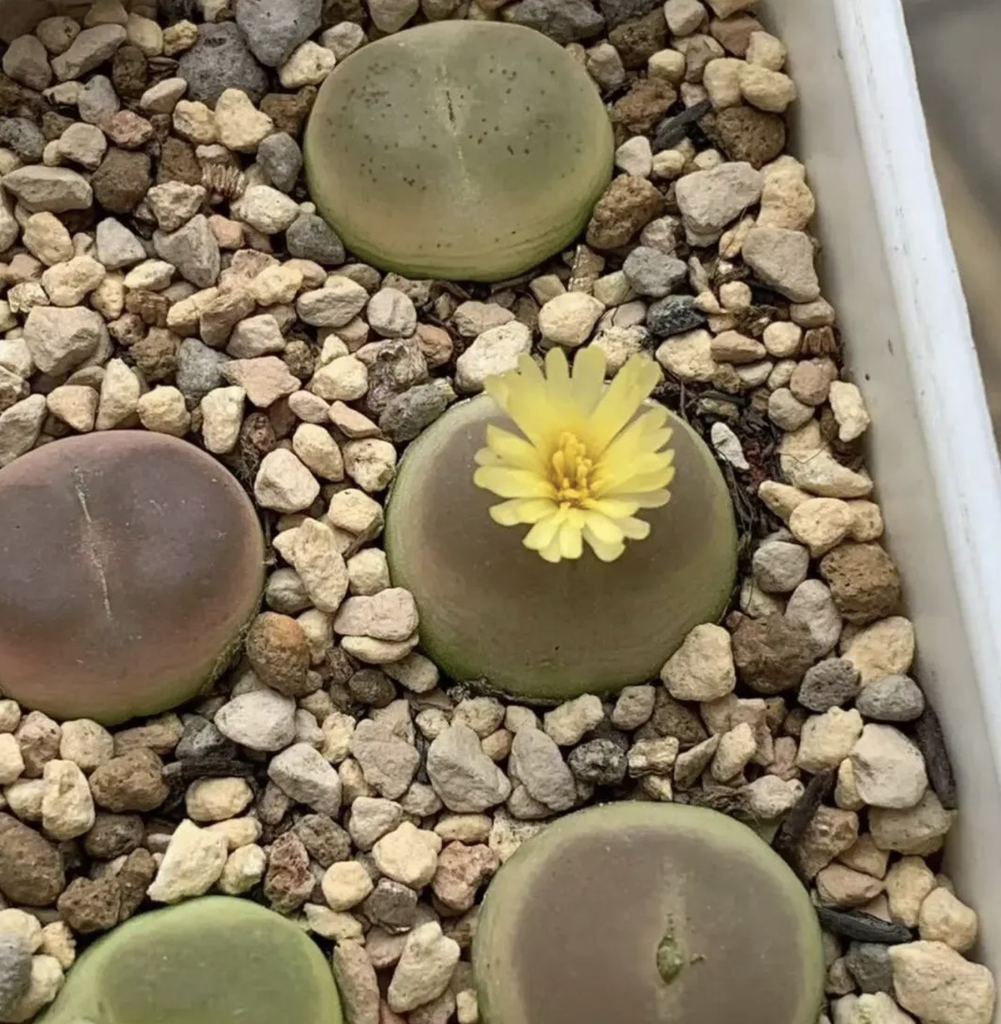
A yellow-flowered C. ratum variant, a result of environmental influence on flower color.
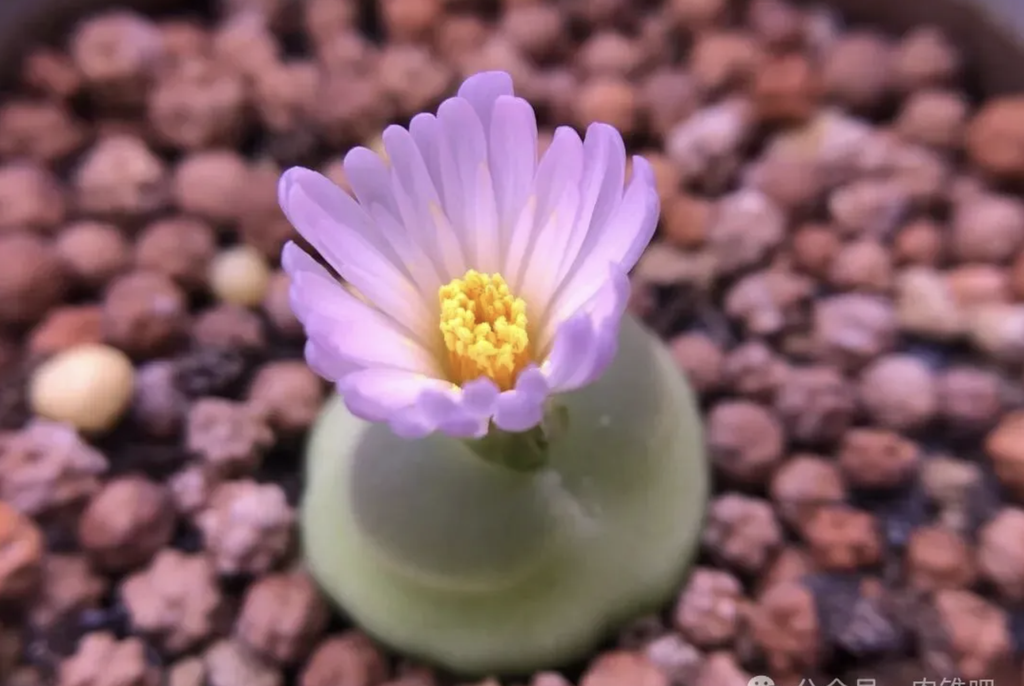
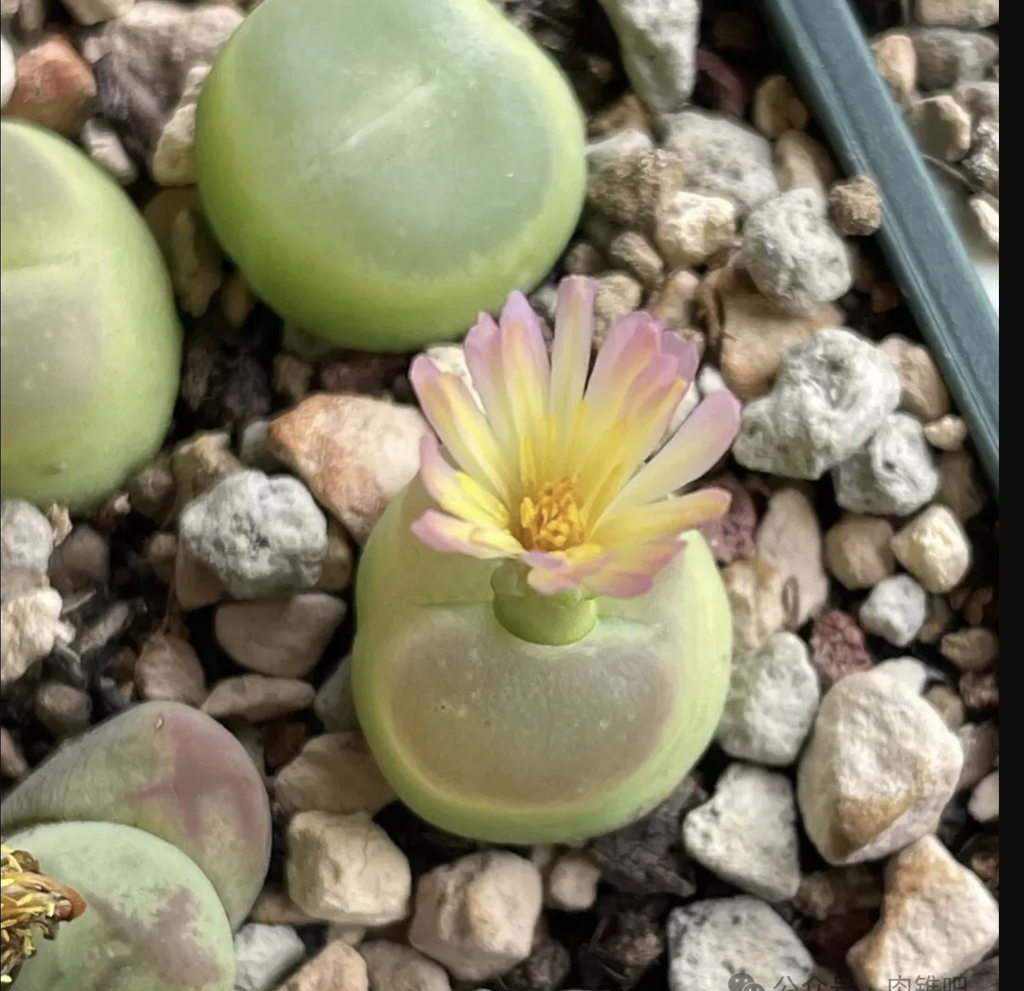
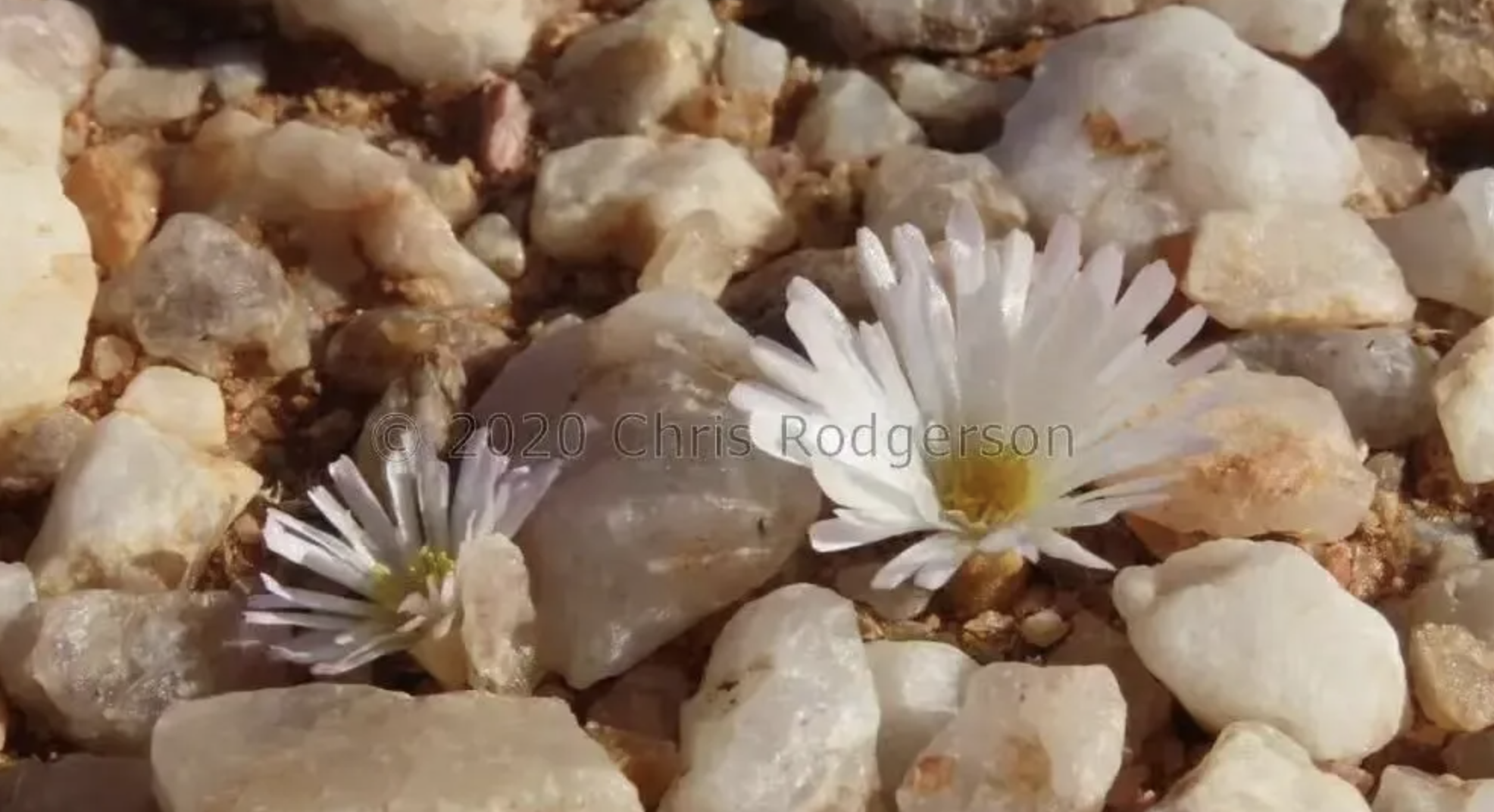
Flowers bloom in early autumn. They are diurnal (open during the day) with a light fragrance, typically opening around 2:00 PM. The flower shape is bowl-like, with a floral tube 3-5mm long, composed of 4-5 fleshy, membranous-edged sepals. Each flower has 40-55 petals, ranging in color from pale pink to white. Compared to other conophytums, C. ratum produces a significantly larger number of seeds. They are also easy to grow from seed, which is a major reason for their rapid price drop in recent years.
A unique re-flowering C. ratum with a partial color mutation within its petals!
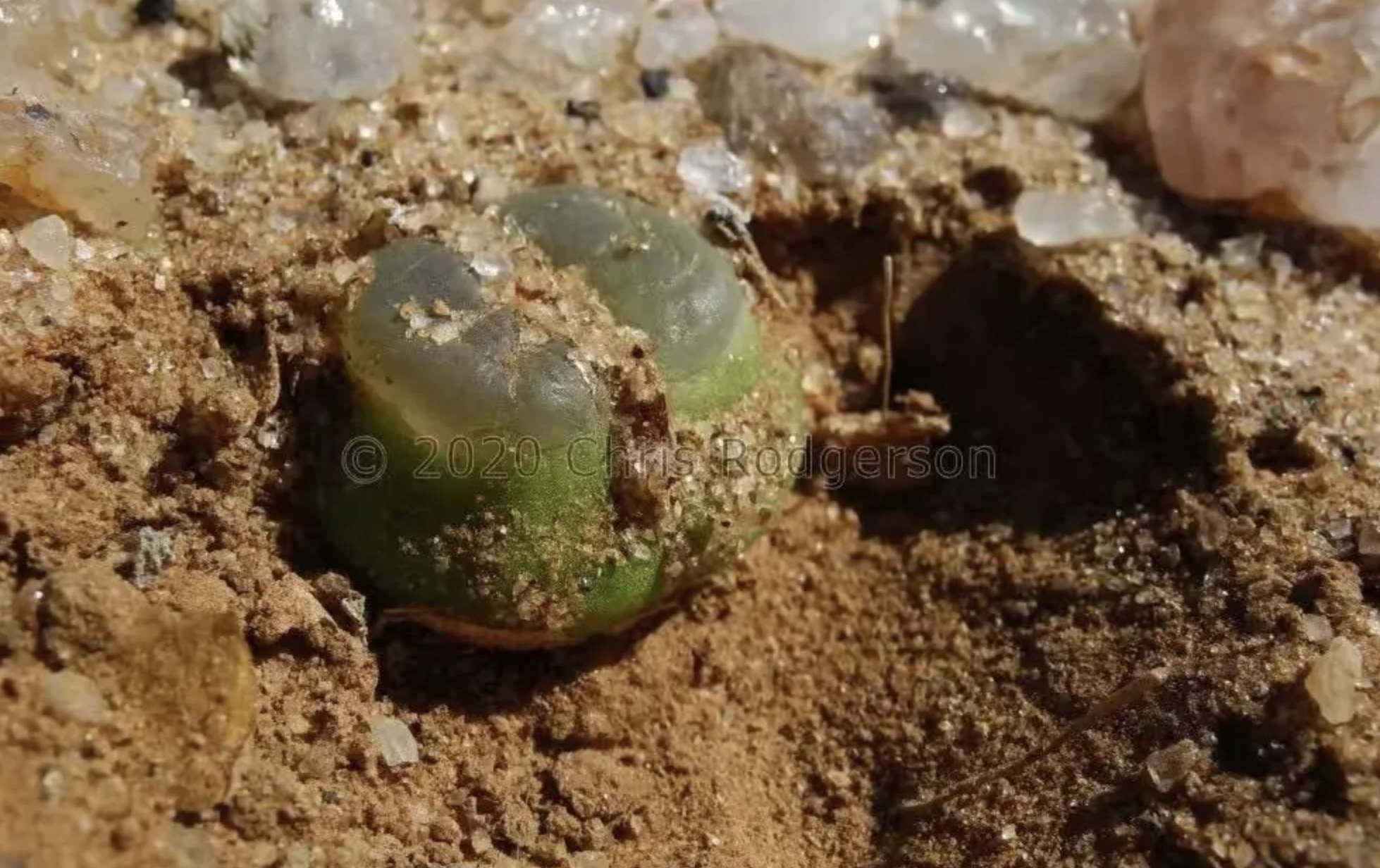
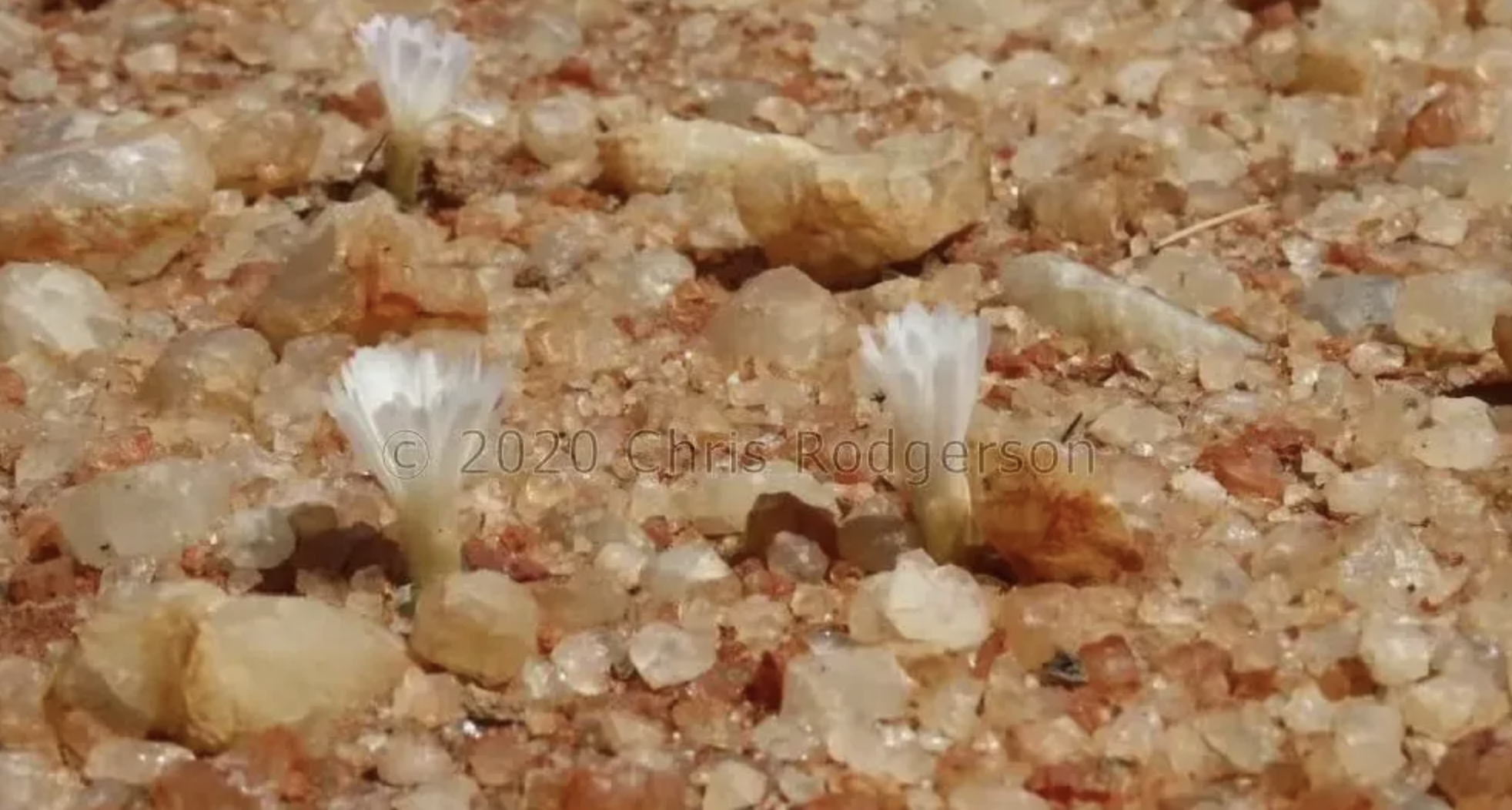
Like other species in the Section Cheshire-Half (semi-translucent conophytums), C. ratum has a common drawback: it is extremely slow to form clusters (split heads) . In their natural habitat, most individuals grow as single heads. They thrive in soft soil layers, with most of the plant body retracted underground, leaving only the window exposed to sunlight. This growth strategy not only reduces water loss through evaporation but also allows them to perfectly mimic the quartzite rocks on the soil surface.
A C. ratum nestled comfortably in soft, sandy soil.
A plant completely covered by quartzite, extremely difficult to spot outside of its flowering season.
Image Source (www.conophytum.com)
Interestingly, the scientific name Conophytum ratum was famously dubbed “the stupidest name” by Steven Hammer because the namers couldn’t find a suitable word for it at the time. The species was first discovered by R. Primo in 1936 near Aggeneys, but it was mistakenly identified as Conophytum pillansii (now known as C. subfenestratum). Primo’s collected plants soon died and were forgotten, causing the species to be overlooked by researchers at the time. It was rediscovered around 1965 by Herkie Horn.
Cultivation and Care
C. ratum has a robust root system and is generally easy to root, with few cases of failure due to root issues. It is also highly drought-tolerant. However, because this species stores a lot of water, the plant body becomes very firm after watering. This firmness, combined with pressure from sharp-edged, hard mineral particles in the soil, can create tiny wounds. These micro-wounds provide an entry point for bacteria and fungi, leading to the dreaded “rotten butt” problem. Therefore, it is highly recommended to use soft, rounded mineral particles in the potting mix and avoid sharp-edged, hard materials like volcanic rock, green zeolite, or coarse river sand.
While C. ratum can tolerate and actually needs stronger light to suppress etiolation (stretching) after watering, it still cannot endure long periods of direct sunlight!!! Watering amounts should be adjusted based on environmental temperature. For novice growers, it is advisable to water sparingly and use the bottom-watering (soaking) method to reduce the risk of the plant becoming overly saturated and rotting.
Identification and Distinction
C. ratum is most often confused with Conophytum mauhanii ssp. latum (often referred to as “O泡” in the Chinese community).
The main differences lie in their texture and body shape. C. mauhanii ssp. latum tends to be more cylindrical overall. In terms of texture, C. ratum has a glossy, oily sheen, and its window is generally clearer than that of C. mauhanii ssp. latum. Regarding body color, C. mauhanii ssp. latum will turn an orange-yellow color under strong light, especially on the window surface, whereas C. ratum will turn pink or red. Due to individual variations and environmental influences, these identification methods are not absolute. Beginner growers are advised to purchase plants that are four years or older with clear characteristics, or buy from well-known, reputable sellers.
On Field Numbers and Variants
Several common field numbers are available on the market:
- MG1473.19 / Japanese Import : C. ratum Japanese import model, ex Horn. This variant originates from the plants collected by Herkie Horn (mentioned earlier), whose descendants were propagated in Japan.
- SH1200 / MG1473.18: C. ratum SW Namies SH1200.
- MSG2245: C. ratum Onder Namies.
- MG1449.19 / EF534 / “King” Raden : C. ratum Onder Namies, Namakwa SA. flat green blobs.
The author believes that the four variants listed above (1-4) are virtually identical, differing only in their collection origin and location.
- SH2606 / Purple-skinned Raden / Small-form Raden: C. ratum Top of Gamsberg.
- PD / TS928 / Small-form Raden: C. ratum Top of Gamsberg.
Both of these variants (5 and 6) come from the same locality: the top area of Gamsberg. The soil structure in this region differs from other C. ratum habitats, containing more and harder quartzite. This may be the reason these two forms generally have a smaller maximum size compared to the other four mentioned.
However, in essence, these different field numbers show little to no significant difference. In fact, the body color of all these variants can turn red. Growers need not get overly caught up in chasing specific “number” labels.
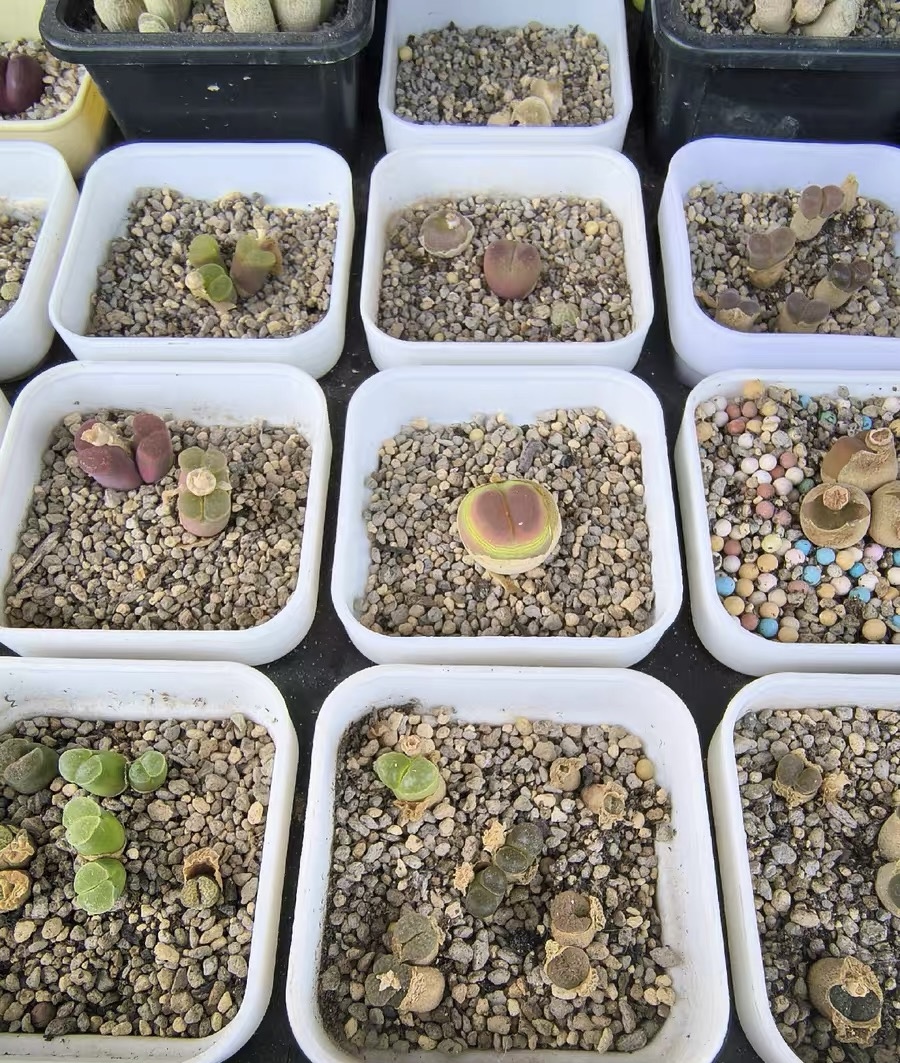
Stunning Specimens in Cultivation
Conclusion
Conophytum ratum has certainly become a common sight in many succulent collections. Yet, its significant contribution to the popularity of the Conophytum genus and its immense potential for horticultural selection and hybridization are undeniable.