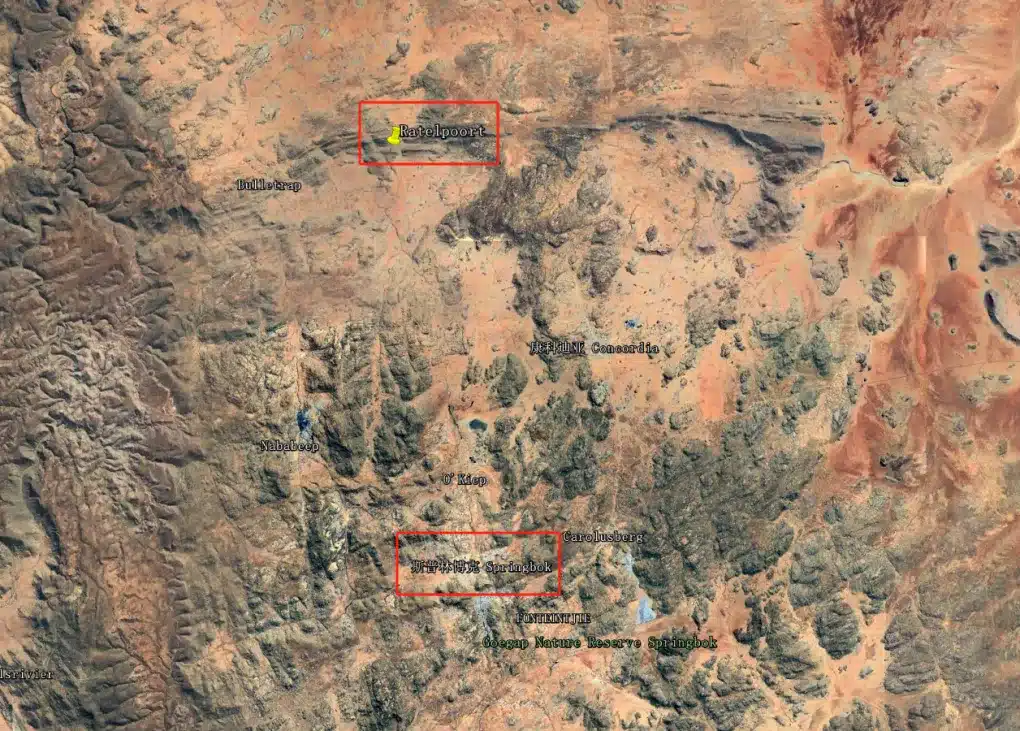
Conophytum regale is found exclusively in the Ratelpoort area, north of Springbok in South Africa’s Northern Cape Province, where it grows in rock crevices and does not require very high light intensity.
Under normal conditions, I have observed that plants grown in greenhouses generally show poorer condition and smaller “eyes” compared to those grown indoors. Even with shading measures, greenhouse light intensity often exceeds 50,000 lux. In contrast, indoor grow-light illuminance typically ranges between 12,000 and 18,000 lux, providing a more suitable lighting environment for this species. However, if the goal is to develop the desirable red “big eyes,” the illuminance needs to be adjusted to 20,000–30,000 lux. Although indoor light intensity is relatively lower, the longer photoperiod combined with adequate water supply makes the translucent leaf-fissure windows more pronounced.


II. Key Cultivation and Lighting Requirements
- Lighting Needs:
- This species does not require very high illuminance. Indoor cultivation (12,000–18,000 lux) generally produces better plant condition and larger “eyes” than greenhouse cultivation (often exceeding 50,000 lux).
- To develop the desirable red “big eyes”, adjust illuminance to 20,000–30,000 lux.
- Although indoor lighting provides lower intensity, extended photoperiods combined with adequate watering can enhance the prominence of the translucent leaf-fissure windows.
- Flowering and Sheathing (Molting):
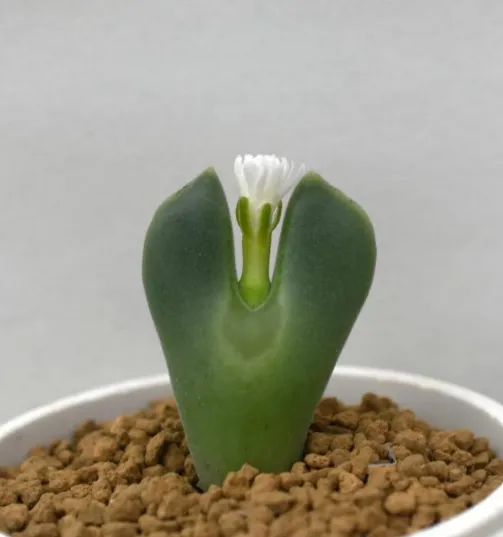
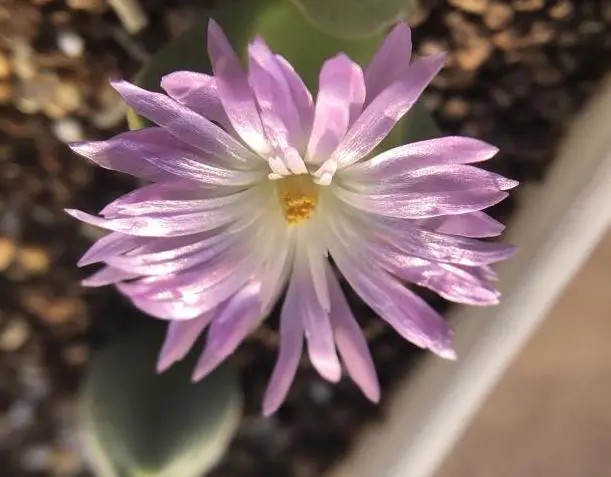
- Flowers appear during the daytime in late autumn to early winter, making it a late bloomer compared to most Conophytum species. Flower color is typically pink-purple, with rare white-flower variants.
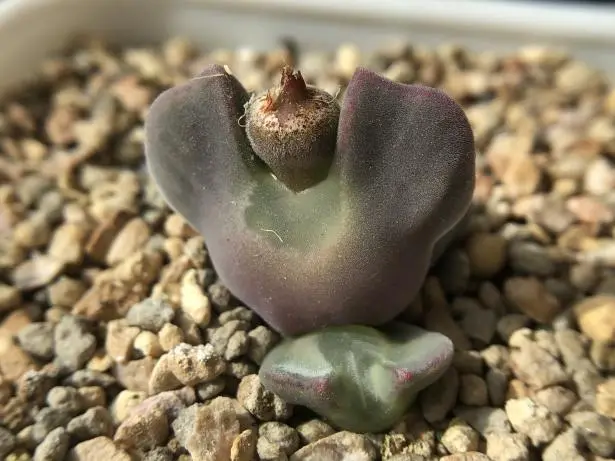
- “Eye” size pattern: generally small just after sheathing, reaching maximum size before sheathing in winter to spring.
- Sowing and Seedling Care:
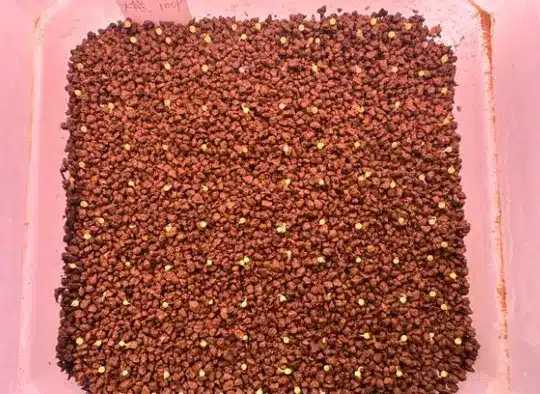
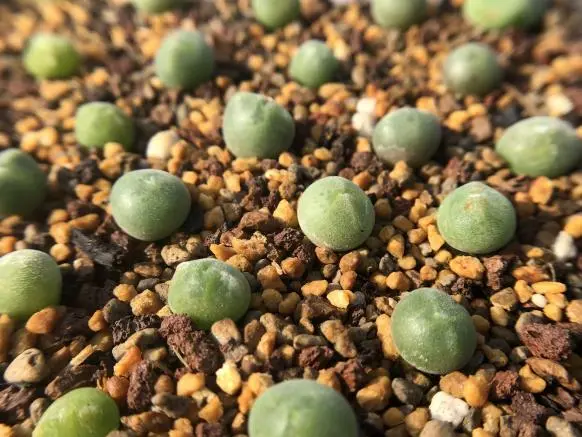
- Optimal germination temperature: 15–20°C. Seeds typically germinate within 24 hours, with the majority sprouting within 72 hours (average seed length: 0.65 mm). Spot-sowing is convenient.
- After germination, maintain illuminance at 5,000–6,000 lux with a photoperiod of 8–14 hours (adjust based on personal experience).
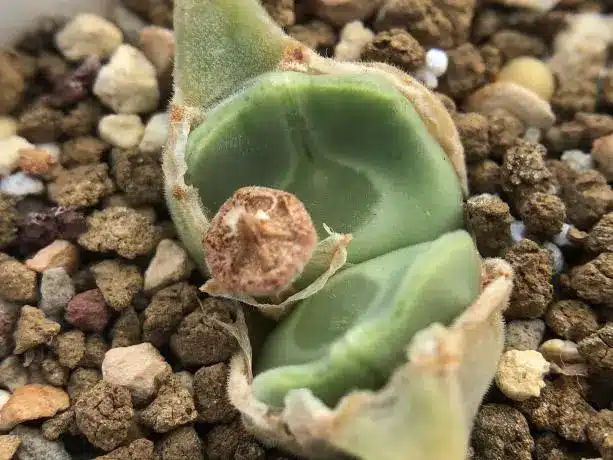
- Growth stages: first sheathing produces a small purple, short-haired globe; with good care, the second sheathing reveals distinct “ears” and “eyes”; some plants reach maturity and flower after the third sheathing.
III. Collection Number Breakdown
| Collection Number | Description | Notes |
|---|---|---|
| SB793 | Most common collection number | Widely available in the market |
| SH84.1 | Hammer’s collection number, rare | Reportedly about 1.5 times larger than SB793 in size (per Thomas’s sales list) |
| Unnumbered | Collected by individuals (e.g., Norbert) without official numbering | Includes the famous “Angenis Eye” (C. lydiae, commonly known as Anienis’ Eye), collected south of Anienis at Steneberg |