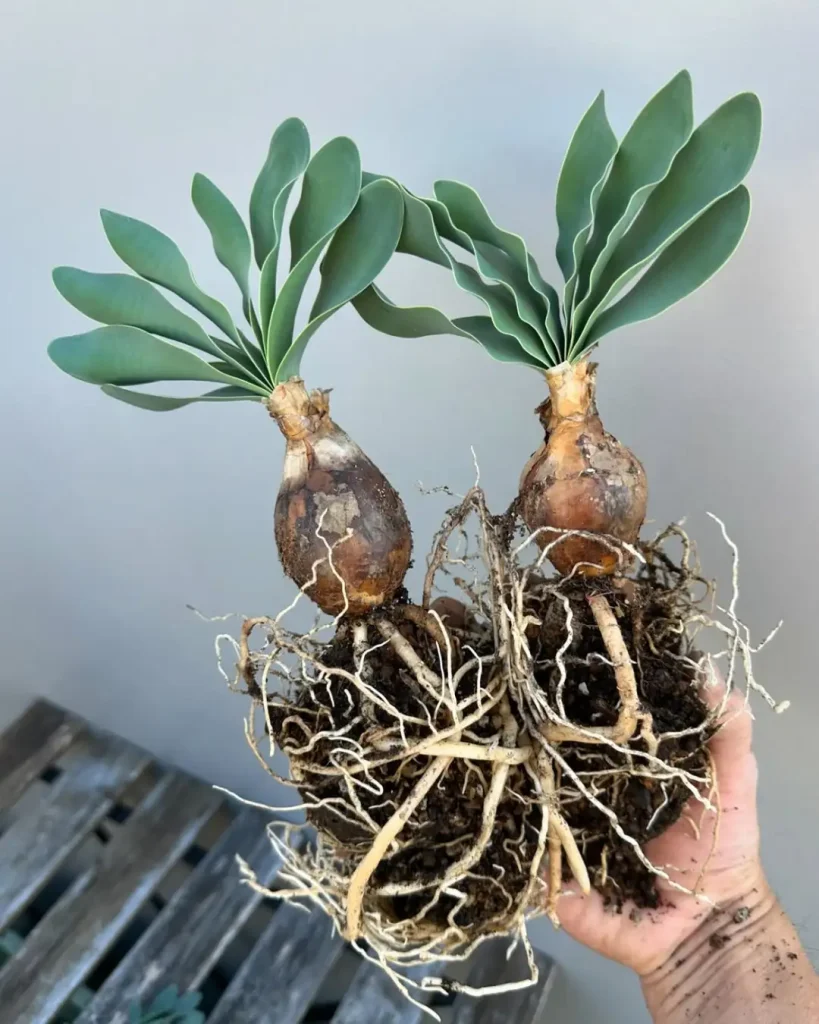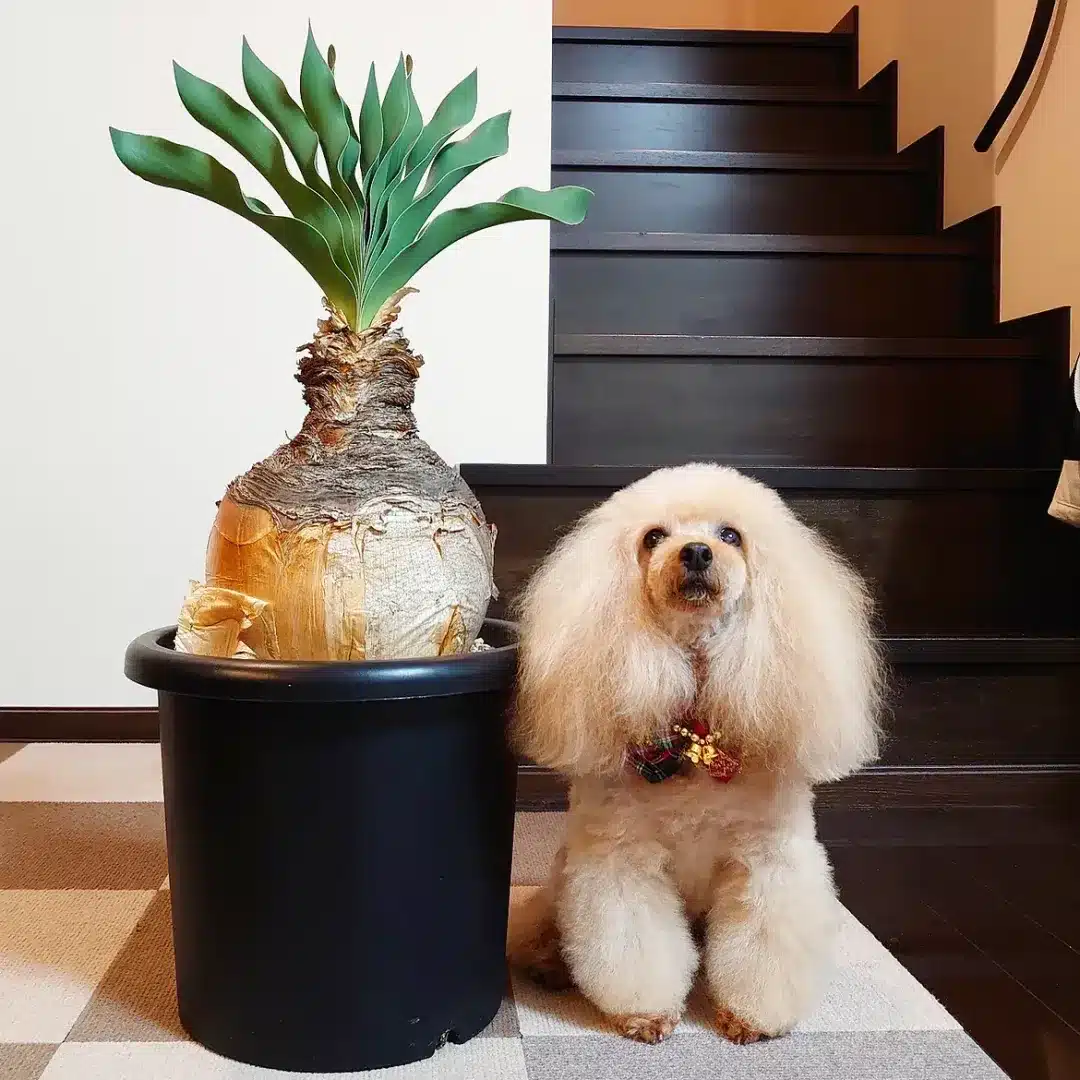
“Ever seen a plant that looks like an onion worth a fortune? Discover Boophone haemanthoides (Giant Phoenix Egg), a rare and slow-growing South African caudex plant treasured by collectors.”
I. Introduction: An Expensive “Fake Onion”
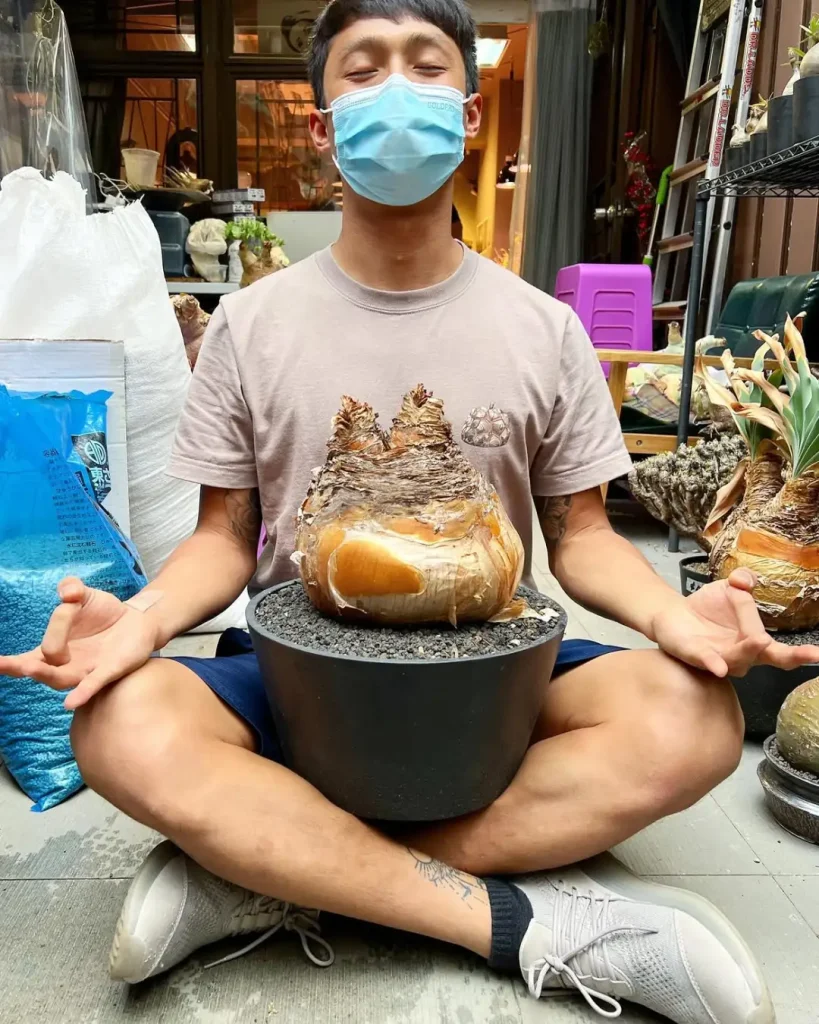
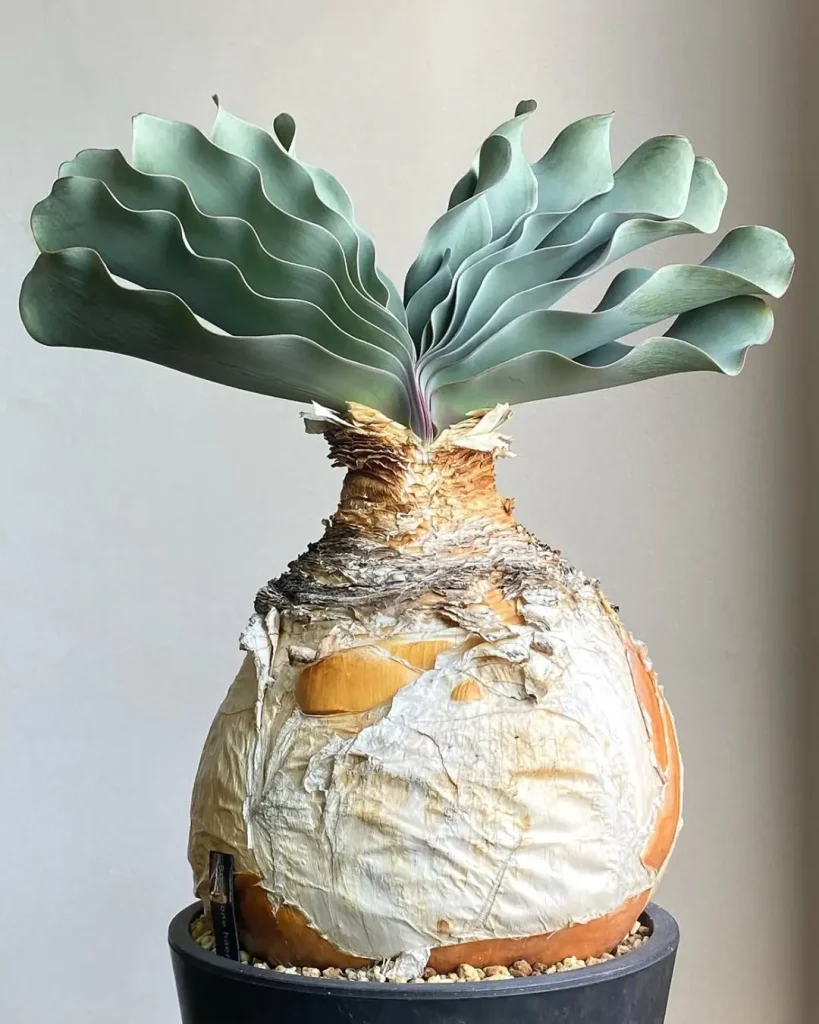
Blogger rickyfuxx got his hands on something that looks like an onion – round, oversized, with layer upon layer of dry skin that can be peeled off.
But don’t mistake it for an ordinary onion. The price of this single one is enough to buy over a thousand jin of real onions!
It is Boophone haemanthoides, commonly known as the Namaqua century plant or Cape century plant, with the Chinese name “Ju Feng Zhi Luan” (Giant Phoenix Egg).
The first time you see a Giant Phoenix Egg, nine times out of ten you’ll mistake it for something else – it looks just like a giant onion bulb.
But seasoned caudex plant enthusiasts know very well that this unremarkable-looking “fake onion” is a ceiling-level rarity in the caudex plant community.
Without further ado, let’s dive right in.
II. Botanical Characteristics and Native Habitat
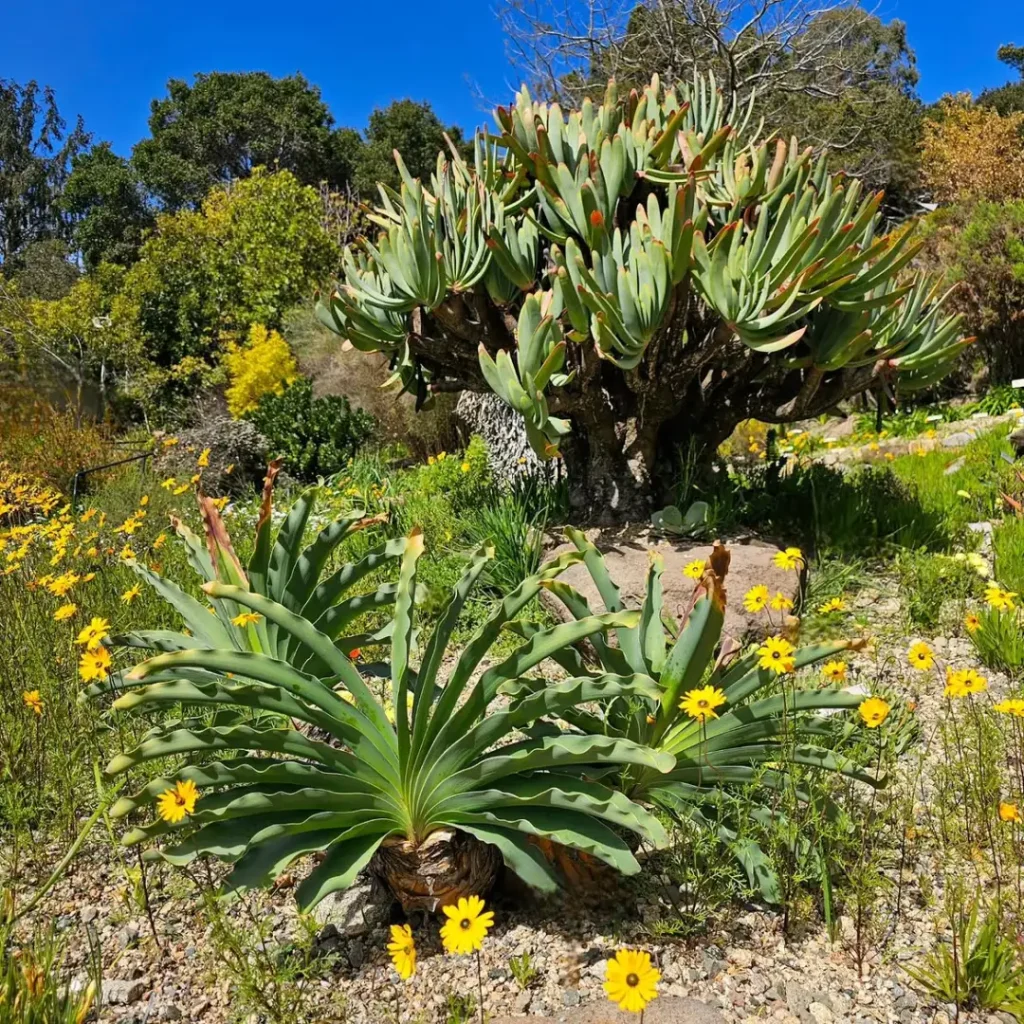
The Giant Phoenix Egg belongs to the genus Boophone in the Amaryllidaceae family. It is native to the sandy plains and limestone areas of South Africa’s Cape Province and Namaqualand.
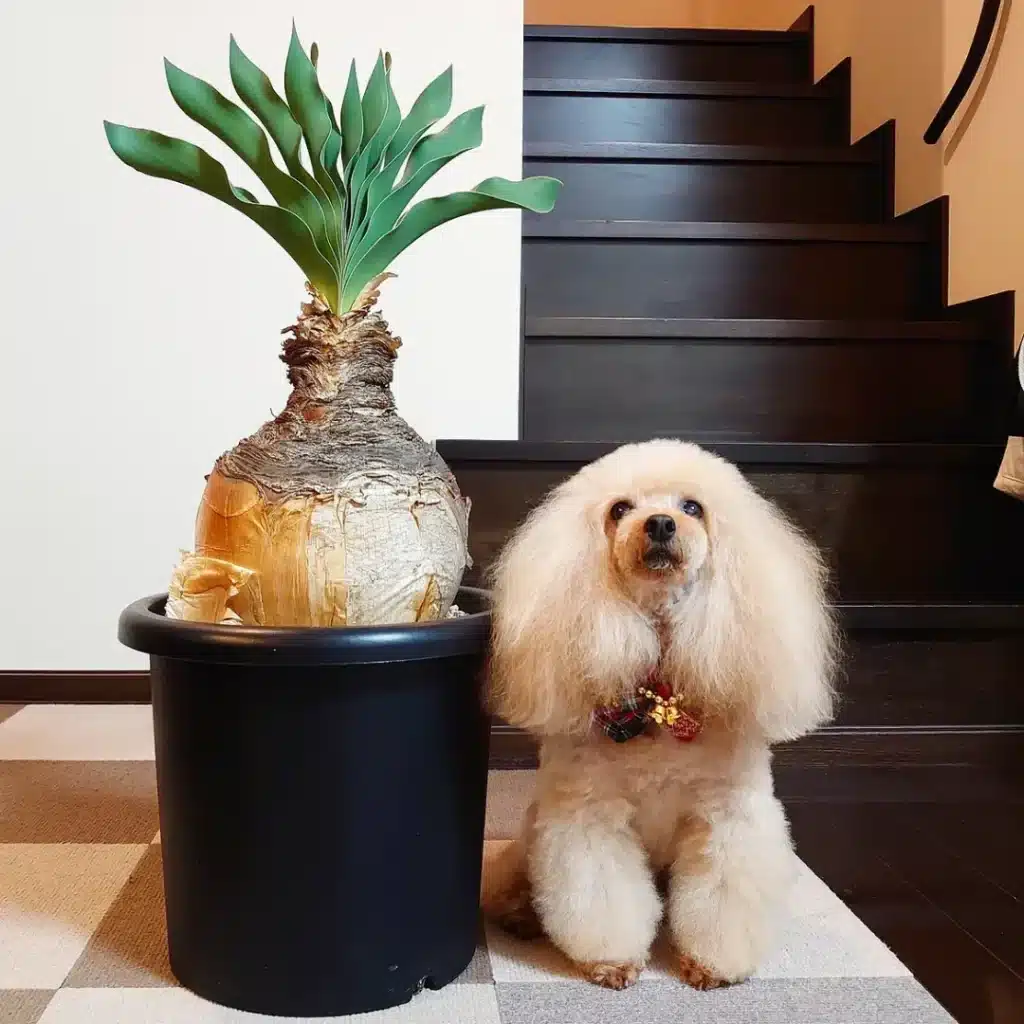
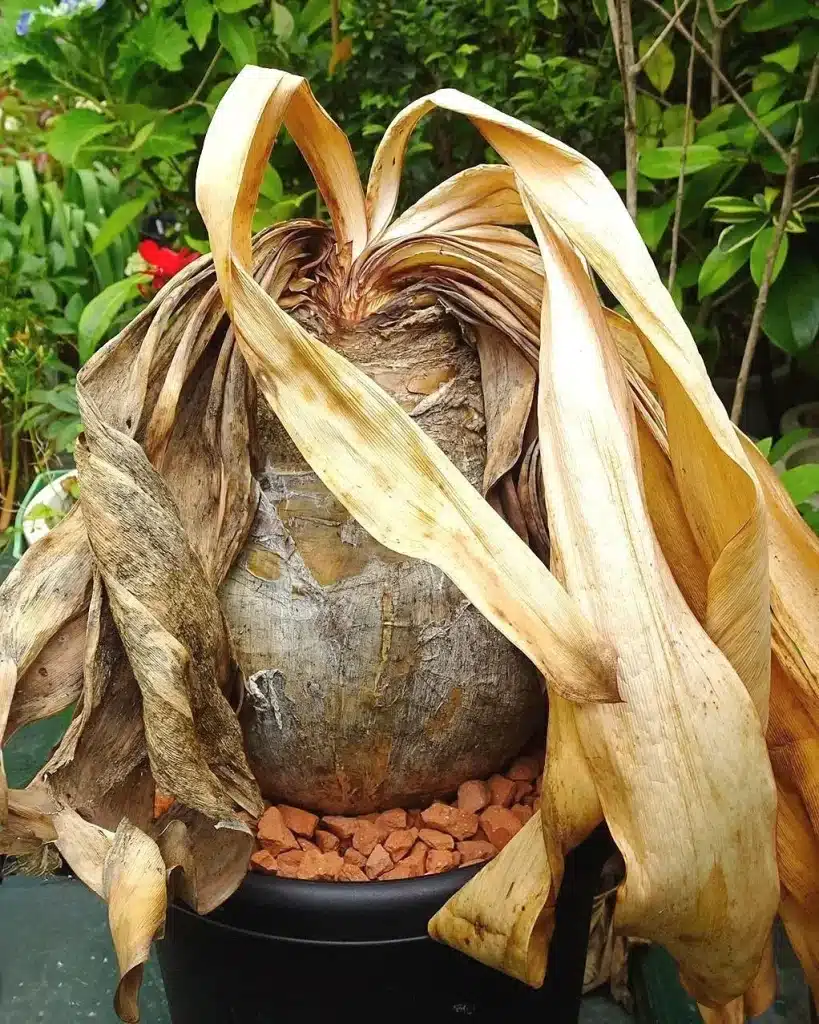
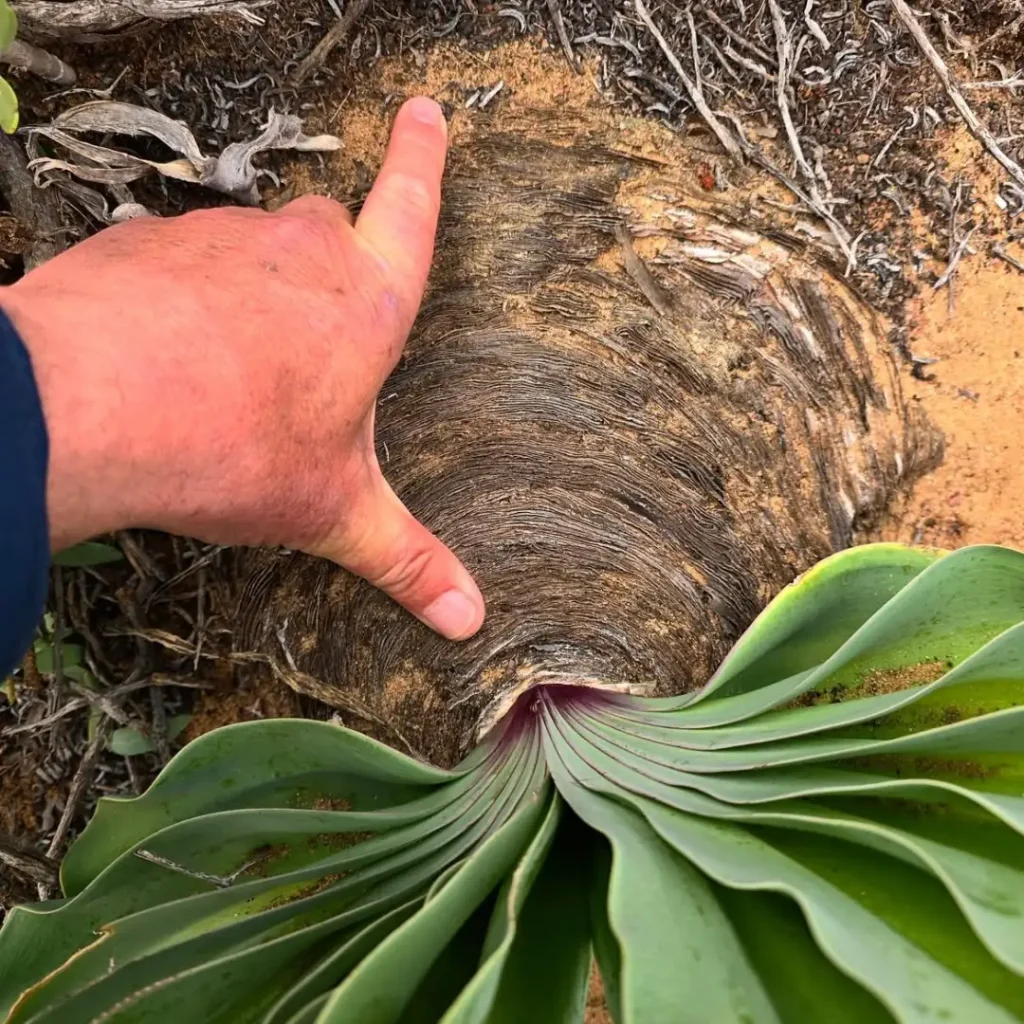
In the wild, large mother plants can reach 15 to 20 centimeters in diameter. The bulb is wrapped in layer upon layer of dried, withered old skin – marks accumulated over decades of growth. This also serves as a natural protective layer against drought, effectively locking in moisture and helping the plant withstand the scorching sun and prolonged dry spells of the South African desert.
What’s most astonishing is how slowly it grows. A well-formed, large Giant Phoenix Egg has lived for at least a hundred years – which is exactly why it’s called a “century plant.”
III. Ornamental Value
Leaves (Best Viewing Period: Autumn–Winter Growing Season)
The most beautiful part, however, has to be the leaves.
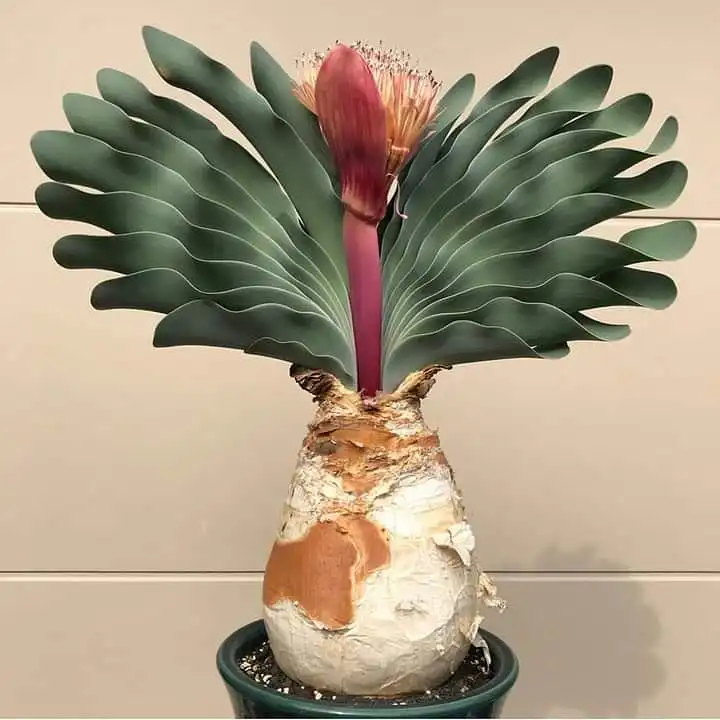
During the autumn–winter growing season, over a dozen thick, strap-shaped leaves emerge from the top of the bulb, neatly spreading out like a fan. The leaves are an elegant grayish-green, with naturally wavy, curled edges – a particularly exquisite and uncommon shape.
Place one in your living room, balcony, or greenhouse, and the entire space instantly elevates in style. And growing such a beautiful plant gives you a quiet sense of pride.
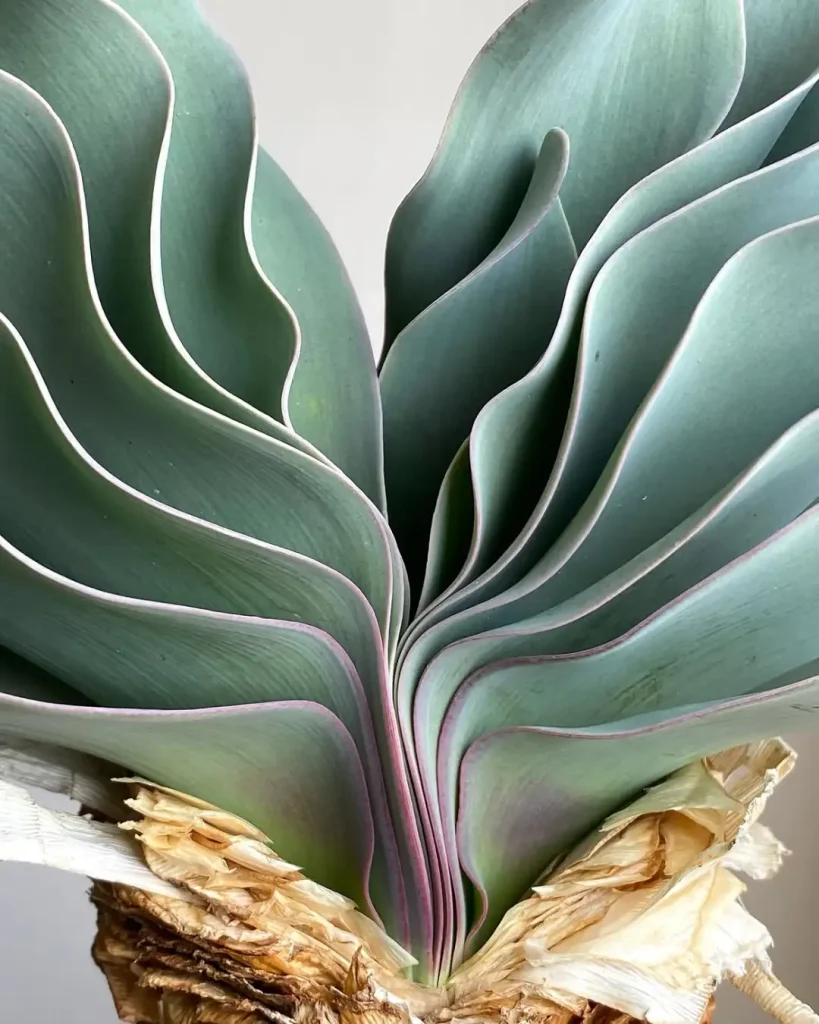
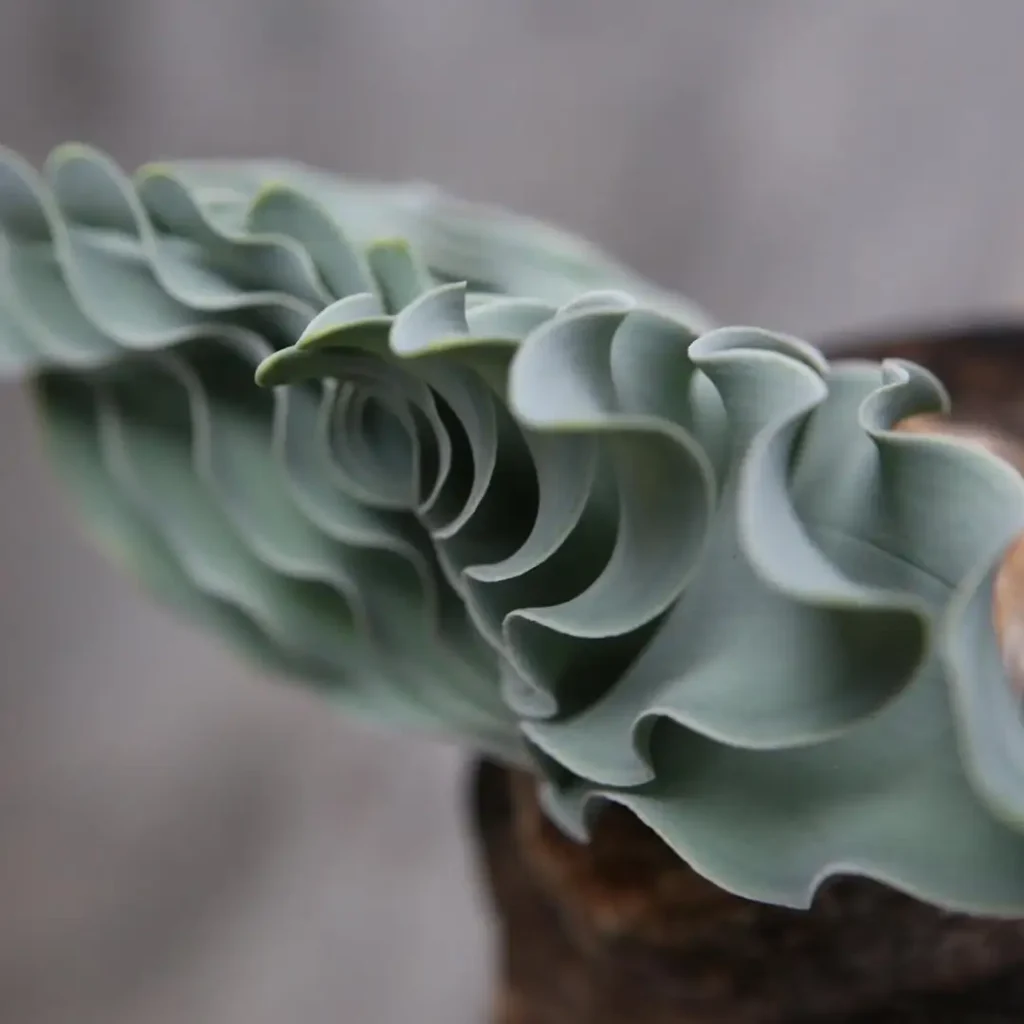
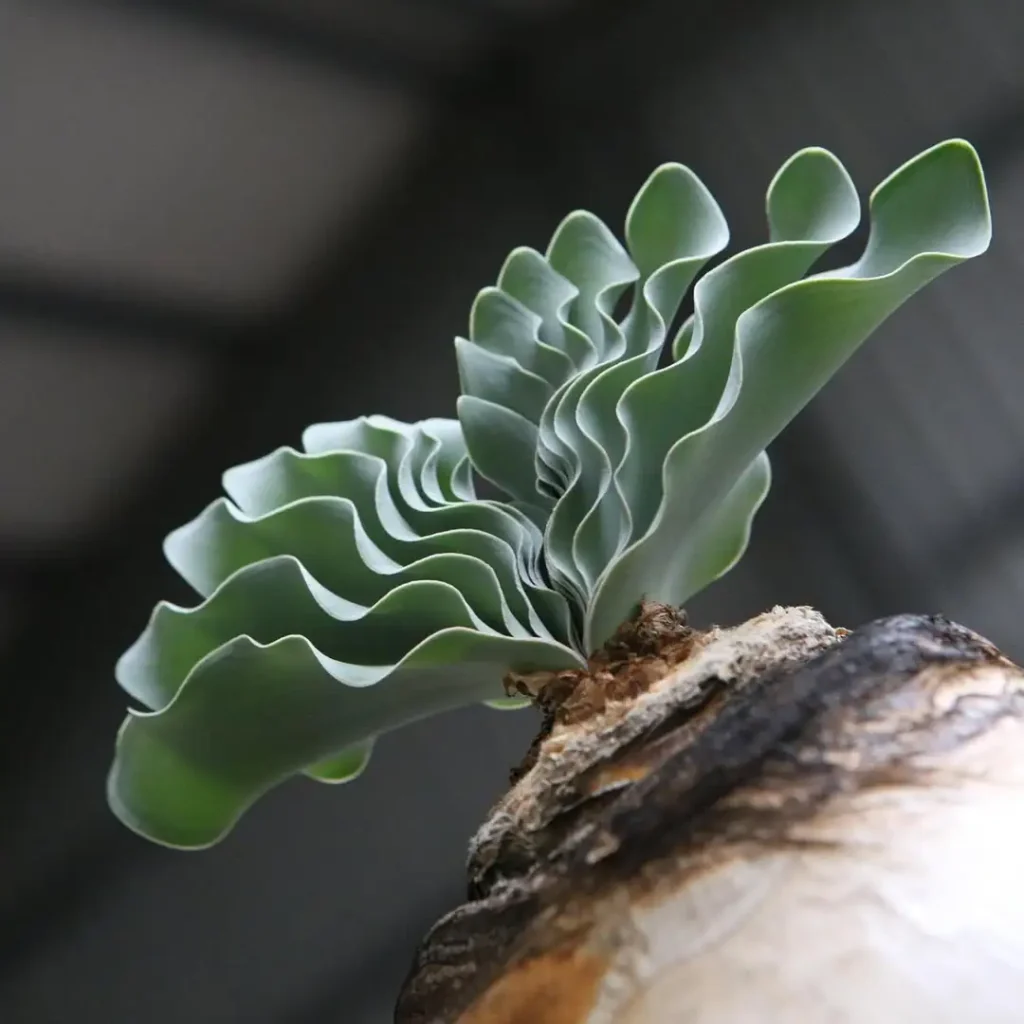
Flowers (Flowering Characteristics)
The flowers of the Giant Phoenix Egg are highly distinctive. It is one of the rare caudex plants that bloom during the summer dormancy period.
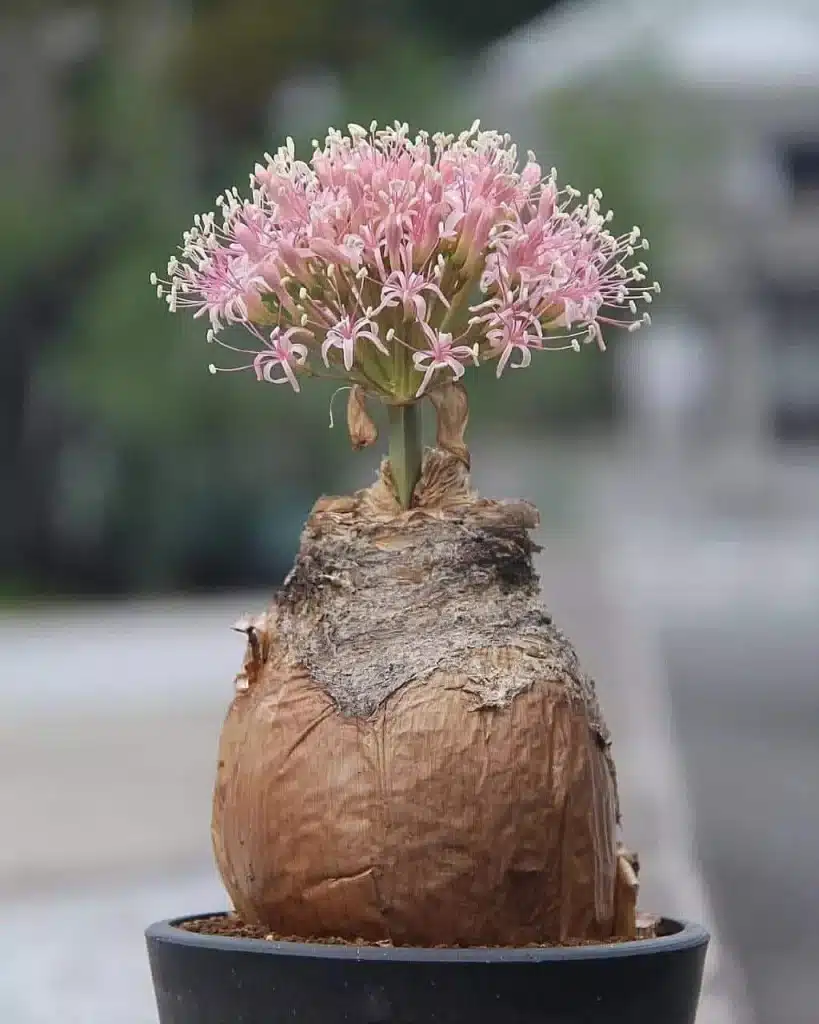
At that time, the leaves turn yellow, soften, and eventually drop off completely, leaving only the bare, onion-like bulb.
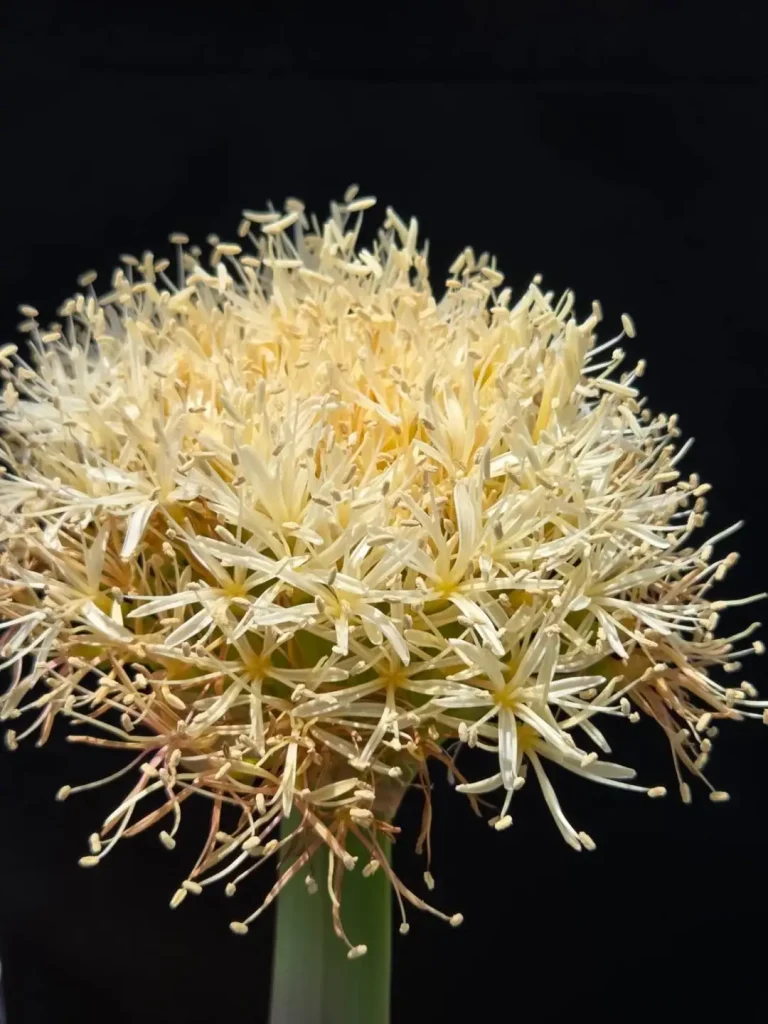
Then, one day out of the blue, these mature, robust plants will push out a flattened flower stalk from the top, bursting into a densely clustered umbel inflorescence.
The petals start off creamy white or pale yellow, and may gradually turn into a soft pink hue later on.
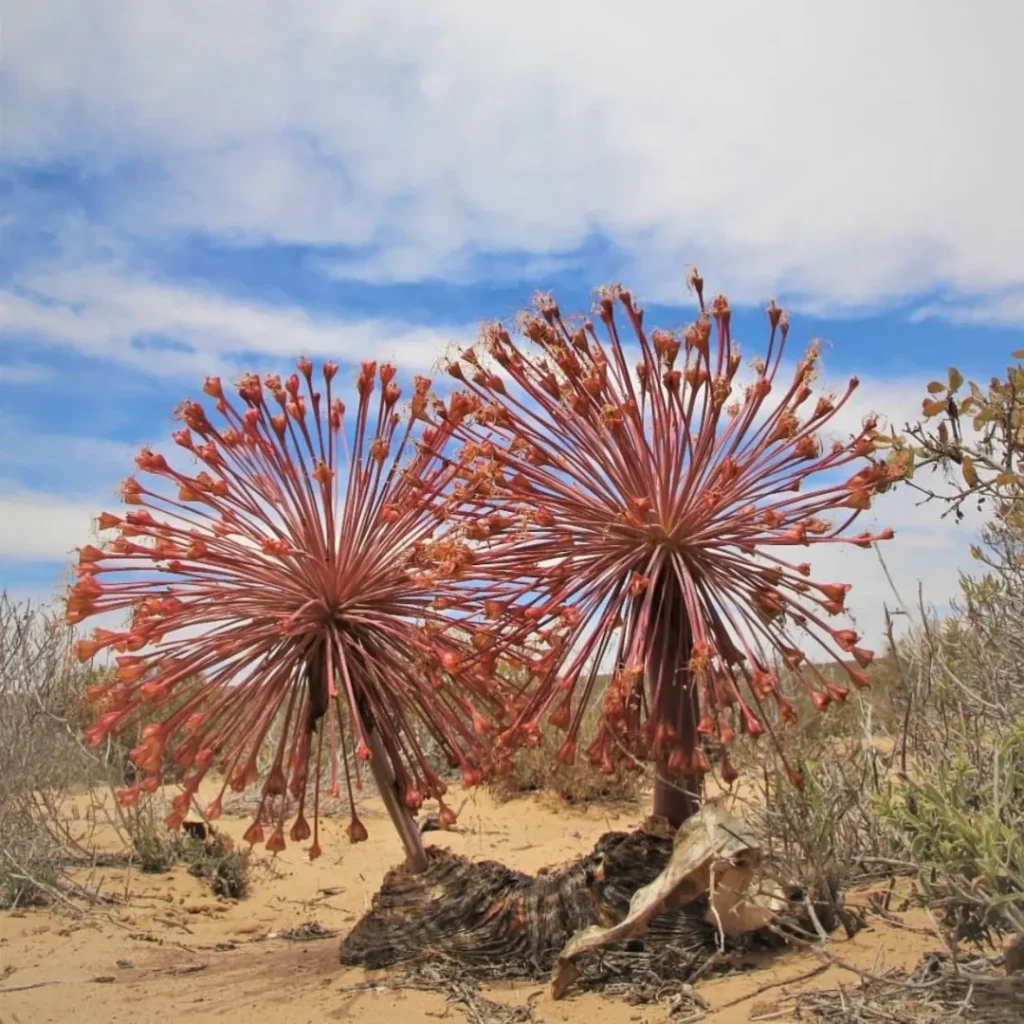
In contrast to the shy, understated look of cultivated flower buds, wild flower buds explode open like a full-blown Ferris wheel.
Moreover, in horticultural cultivation, some regions have temperature-controlled indoor environments without significant heat peaks, so the plants don’t drop their leaves and enter dormancy. When the flowering season arrives, you get to see flowers and leaves coexisting in perfect harmony.
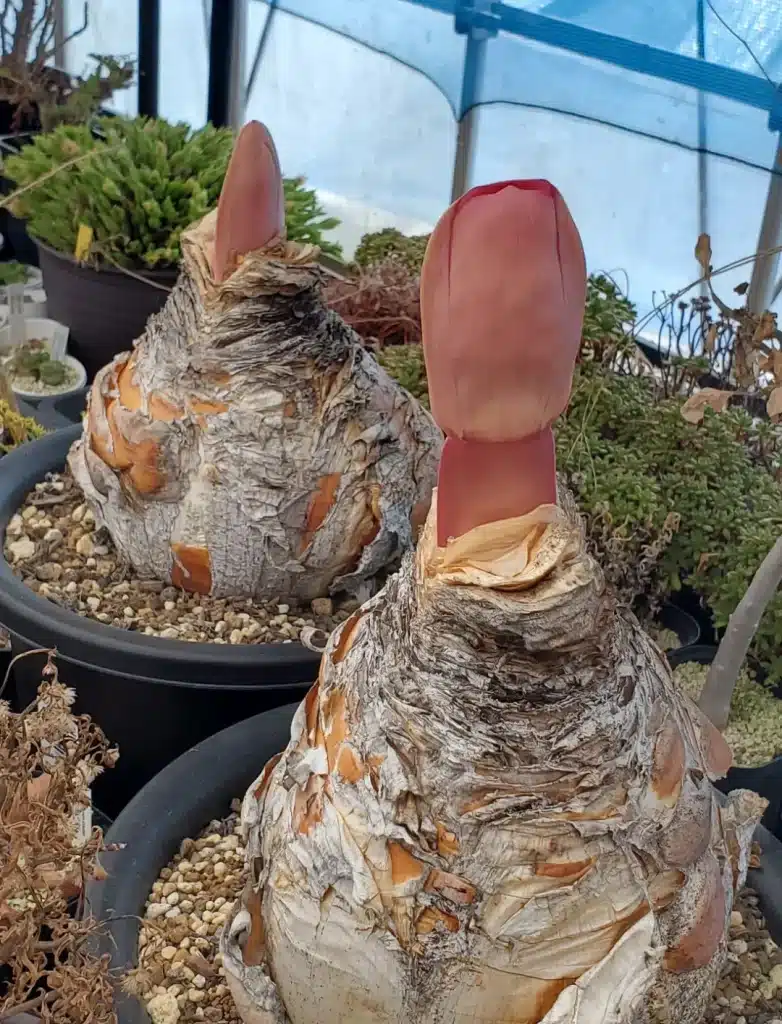
IV. Propagation and Growth Rate
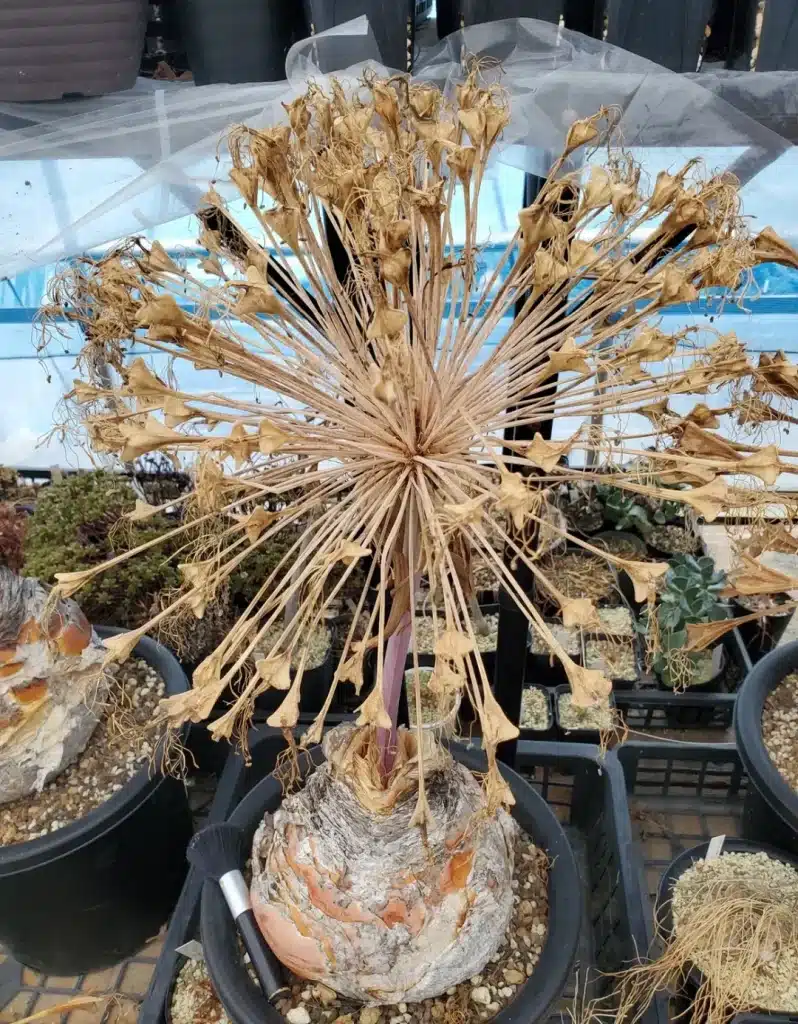
I initially thought that with such densely packed flower buds, the number of seeds it produces must be enormous.
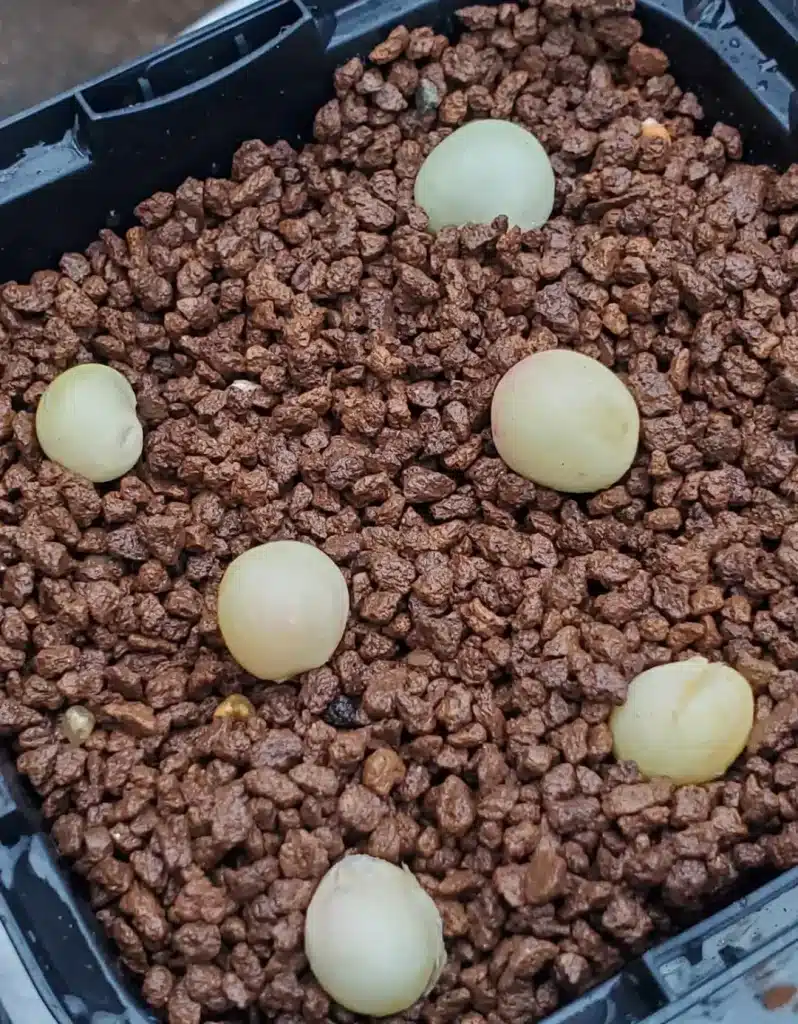
But blogger t_a_m_a_e said that his Giant Phoenix Egg only yielded 13 seeds. He had initially estimated only about 10, so getting 3 extra was a pleasant surprise.
These shiny, lotus-seed-like things are the seeds after the husks have split open.
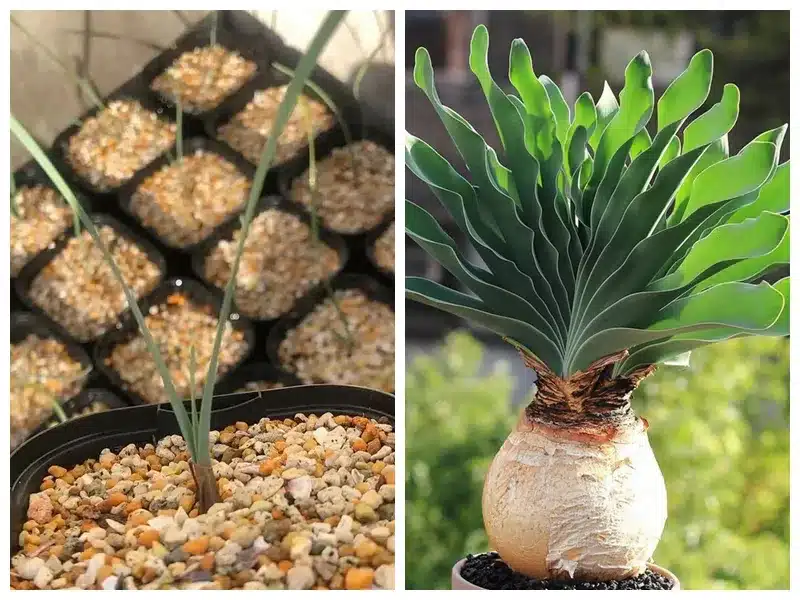
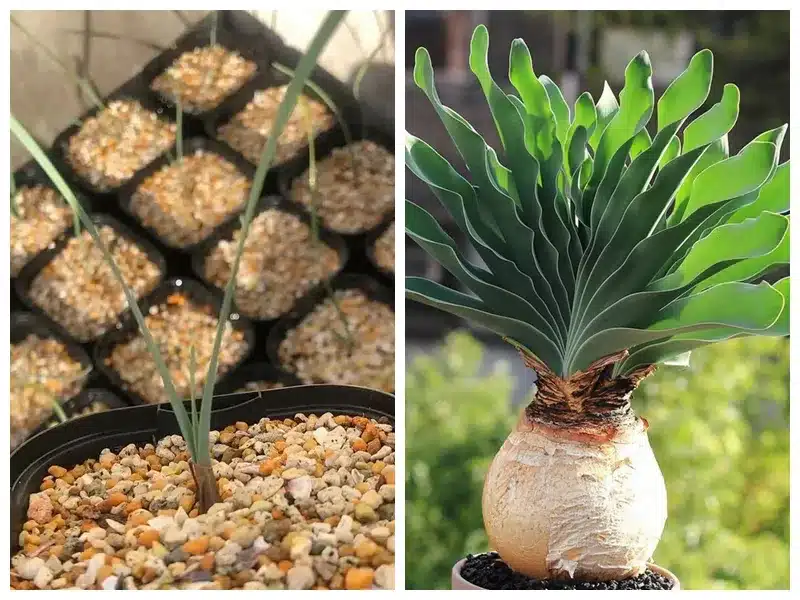
Guess how many years it takes to go from the tiny seedling on the left to a mother bulb as large as the one on the right?
No wonder it’s called a century plant – it’s an heirloom plant that can be passed down through generations, comparable to Aztekium ritteri (cactus) and Welwitschia mirabilis.
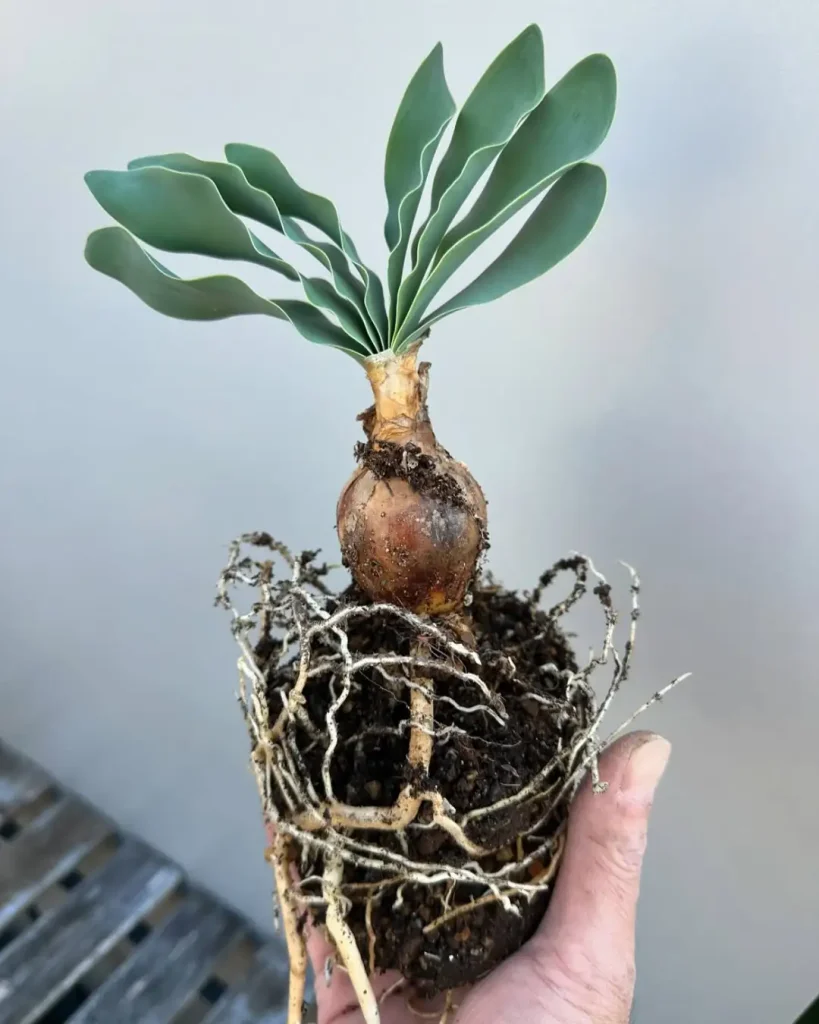
At the seedling stage, the bulb is very small and must be completely buried in the soil. It cannot withstand sustained high temperatures and intense sun exposure during summer.
If you peel off that yellow skin, the inside is white and tender, looking exactly like a Chinese scallion bulb (jiaotou).
It takes years and years of careful cultivation to develop the short, plump bulb that everyone dreams of.