Introduction
Conophytums grow in western South Africa and southwestern Namibia. This region has a Mediterranean climate with winter rainfall and dry summers. Therefore, Conophytums in the wild grow in winter, and this characteristic is retained in cultivation.
Their cultivation is significantly different from cacti. It is recommended to grow them separately from cacti in the greenhouse, alongside other winter-growing plants (such as Cheiridopsis, Tylecodon, Bulbine, etc.).
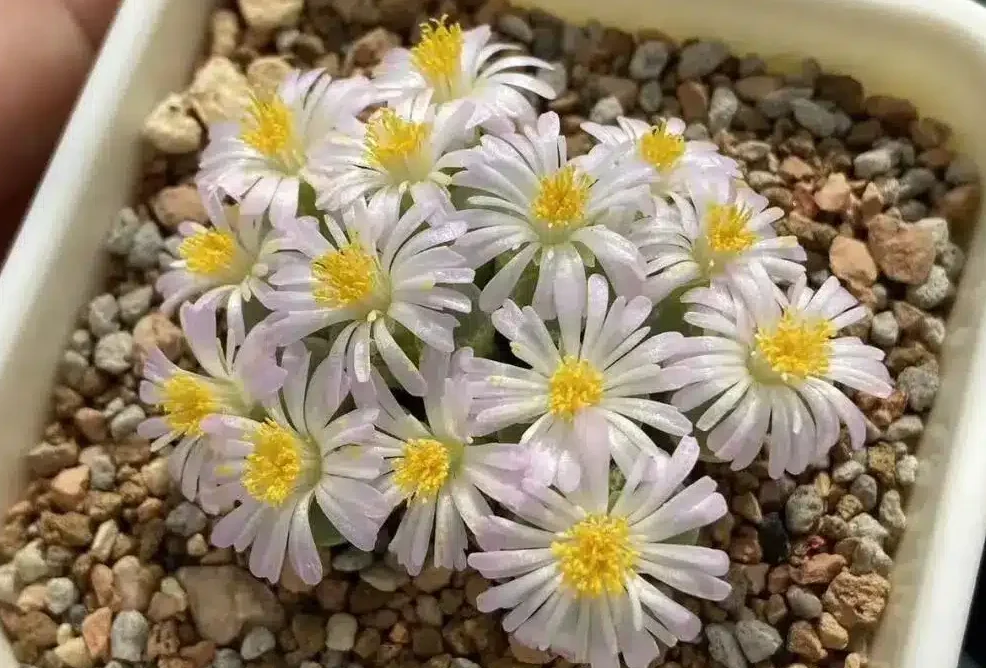
Please note: This guide is based on the author’s experience in Northern Europe (UK). Adjustments will be necessary for different climates.
Watering
- Summer Dormancy: Conophytums are dormant in summer. During this period, old leaves dry up and form a papery sheath to protect the new leaves.
- Resuming Watering (Late July): Resume watering at the end of July. Initially, they need a relatively large amount of water – about once a week, depending on the weather. During this time, new leaves grow rapidly, breaking through the old sheaths, and most species also flower.
- Autumn to Winter: As autumn arrives and temperatures cool, gradually reduce watering frequency. By December and January, water only every 3 to 4 weeks. Whether to increase frequency depends on light conditions: you can water a bit more if there is plenty of sunshine, and reduce it during prolonged overcast periods.
- “Indicator Plant” Trick: Some species (such as Conophytum bilobum – “pigeon egg”) wrinkle noticeably when thirsty. They can serve as an indicator for whether the entire batch of plants needs water.
- Late Winter to Spring: Around mid-February, conditions begin to improve; gradually increase watering frequency as new leaves are forming inside the plants. Stop watering in early April, allowing the plants to enter dormancy.
- Summer Management: The author gives no water at all in summer. However, some growers give a light misting to small-headed species.
- Important Warning: Misting or spraying in summer can cause tannins to leach from the sheaths, leading to discoloration of the new heads.
- Fertilizing: The author prefers to grow mesembs compact and firm, so fertilizes much less than cacti. Apply a low-nitrogen liquid fertilizer (e.g., Chempak 8) once in early spring to support new leaf growth. If the plants have not been repotted, a second application can be given in autumn.

Light
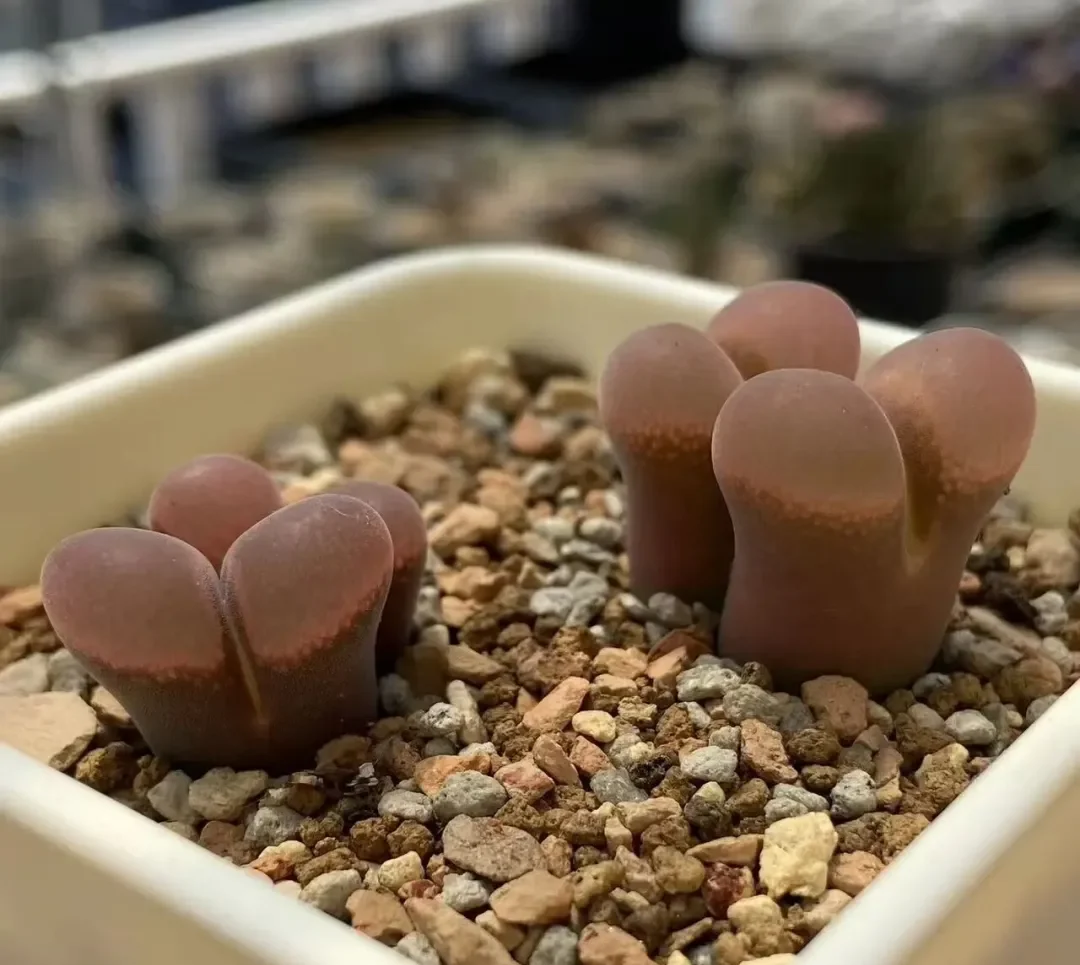
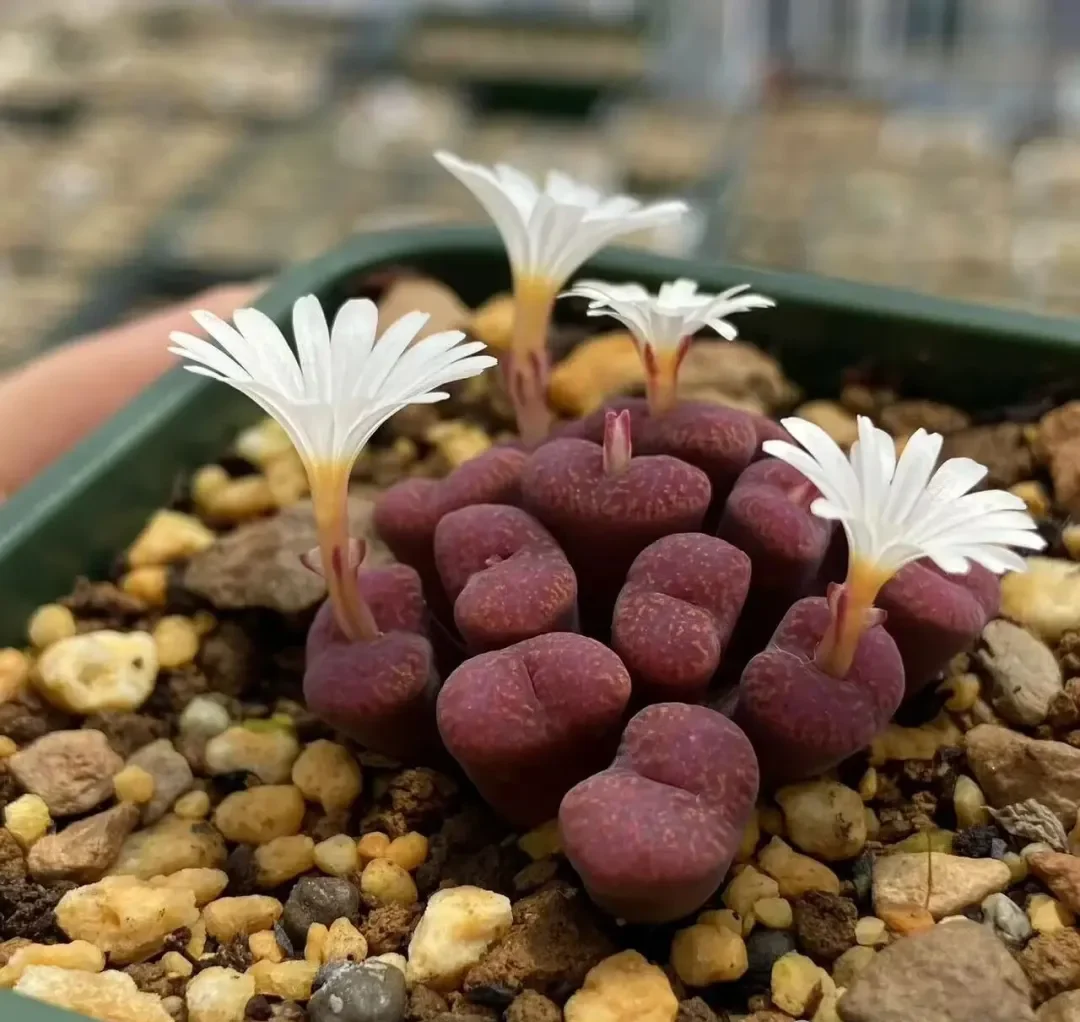
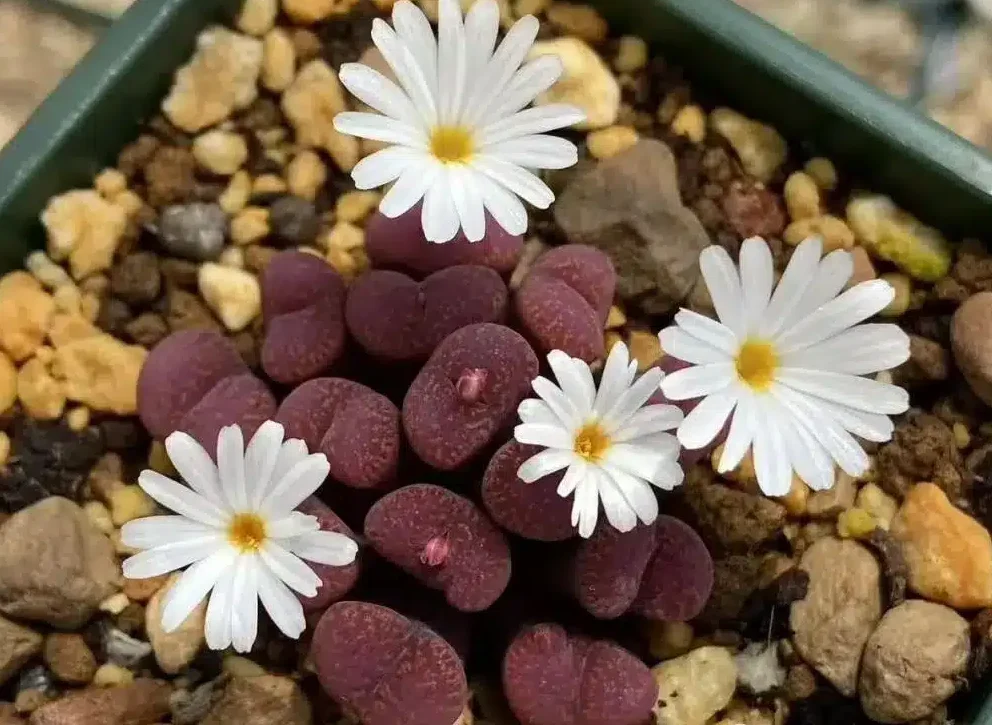
- Growing Season Needs: Many Conophytums are prized for their rich body colors, which require high light levels during the growing season. Place the plants in the brightest spot in the greenhouse during winter.
- Winter Challenge: Despite this, winter light in the UK is still insufficient, and plants may turn green and soft.
- Summer Risks & Solutions: In early May, rising temperatures and intense sunlight can easily scorch the plants – one of the most common cultivation problems. Often, growers only realize in autumn, when the plants resume growth, that the south-facing heads have died.
- Author’s Solution: In April, paint the greenhouse glass with white shade paint; remove it in September. For smaller collections, simply move the plants to a shaded area of the greenhouse during summer.
Temperature

- Cold Hardiness: In the wild, some high-altitude species can tolerate frost and snow, but these regions have much lower humidity than the UK.
- Cultivation Advice: In the UK, you can try growing some species (e.g., the Kamiesberg Conophytum pellucidum, which does well at Wisley Alpine House) in an unheated greenhouse, but generally, a frost-free environment is recommended.
- Specific Guidance: The author’s greenhouse does not drop below 30°F (approximately -1°C) in winter. In summer, good ventilation is essential, and temperatures should be kept ideally below 40°C.
Pots and Growing Medium

- Pot Choice: The author consistently uses plastic pots, as small terracotta pots dry out too quickly. For pots over 9cm in diameter, use shallow pans rather than deep pots, because Conophytums are mostly shallow-rooted. Very small plants are best grown several to a pot to avoid wasting medium.
- Standard Mix (Author’s Recipe): A mix of equal parts John Innes No. 2 (sterilized loam-based compost) and 4mm quartz sand. In essence, any loam-based, well-draining mix will work.
- Repotting: Ideally, repot every two years, but the author has had healthy plants that went many years without repotting. The best time is early in the growing season, particularly July to August, at the start of growth. However, repotting can be done at any time during the growing season. In practice, roots establish more easily in winter than in autumn.
Pests and Diseases
- Main Pest: This genus has relatively few pests and diseases, though root mealybugs can appear. As a preventive measure, water once in autumn with a systemic insecticide containing imidacloprid.
- Thrips: Western flower thrips are often found in flowers but are generally harmless. A contact insecticide applied during the growing season offers some control.
- Other Pests: Snails and leaf-roller caterpillars may nibble on plants; they are best caught by night patrol.
- Hygiene: Remove old sheaths to improve plant hygiene and appearance. After new heads emerge, peel away any remaining old leaves. Uncleaned dead flowers can encourage Botrytis (grey mould).
Propagation by Cuttings
- Why Propagate: Plants older than 15 years tend to lose vigor and benefit from division. You can also take offsets from the edge of a clump to propagate desirable individuals.
- Procedure: Usually, unpot the entire plant for division.
- Best Timing: September to October, after the leaves have fully developed in autumn, is ideal. However, the author has also had success in February.
- Cutting Requirements: Use cuttings of one or two heads with 1-2mm of stem attached.
- Rooting Method: No need for callusing, bottom heat, or a propagator. Insert directly into a suitable mix.
- Recommended Mix: 2 parts John Innes No. 2 + 1 part 4mm quartz sand + 1 part perlite.
- Aftercare: Place in the greenhouse, manage together with other Conophytums, and water normally. Roots usually form within 1-2 months.
Seed Propagation
- Seed Sources: Recommended sources include Mesa Garden in New Mexico, USA, and the Mesemb Study Group in the UK.
- Producing Your Own Seed: Usually requires two different clones to avoid inbreeding. Isolate flowers and hand-pollinate using a tool (the author uses the tip of a human hair; others use cat whiskers, cactus spines, or shade netting fibers). After flowering finishes, return plants to the bench. Seed capsules take a long time to mature – the author harvests them in August of the following year.
- Sowing Time:
- Wild Pattern: Seeds germinate in autumn when temperatures drop and rains arrive.
- Regional Recommendations: Autumn sowing works well in climates like California, Greece, or Spain. However, autumn sowing in the UK risks fungal attack, so the author compromises by sowing in January.
- Seedling Mix: 2 parts John Innes seed compost + 1 part 1mm quartz sand + 1 part perlite.
- Sowing Operation: Sow seeds on the surface. Sow 20–40 seeds in a 5cm pot, or 100 seeds in a 7cm pot. The author does not sterilize the mix or use fungicides.
- Germination Conditions: Germination temperature should not be too high: 15–20°C by day and 5–10°C at night. Use a low-wattage heat mat in a windowsill or greenhouse. Keep the mix moist; germination occurs within 1–2 weeks. Provide ventilation after germination.
- Seedling Care: Keep seedlings moist for a continuous 15-month period. To avoid summer heat, strong shade and cooling are essential. Cotyledons usually dry up in summer, after which true leaves appear.
- Subsequent Growth: The author moves seedlings to plug trays in November. Most plants can flower for the first time 21 months after sowing. Seedlings are fertilized more frequently than adult plants to promote rapid growth.
Nomenclature

Conophytums exhibit significant variation within species, and growers may wish to recognize superior variants. Some older Latin names (discarded by conservative botanists) are sometimes used informally as labels, often shown in single quotation marks.
Example: Conophytum ectypum ‘ tischleri ‘ indicates a yellow-flowered variant, whereas the typical Conophytum ectypum usually has pink flowers. The locality on a label also helps with identification: the ‘ tischleri ‘ from Aribies is pure green-bodied, while the one from Eselsfontein has dark networked markings on its surface.