Quick Summary: Conophytums are South African winter-growers. They require active watering in autumn-winter, strict water withholding during summer dormancy, and a sharp, well-draining soil mix (40% coarse grit, 40% fine grit, 20% organic).
Prologue: Discovering the Beauty of Conophytum
Perhaps it is the first ray of morning sunlight falling upon them, or maybe the moment water flows over their bodies—Conophytum plants decorate our lives with their dazzling colors and warm presence. When we are fortunate enough to step into this mist-filled garden, we seem to feel a subtle and intoxicating warmth. Sunlight, air, time—everything slows down. Their warmth is both nature’s heat and the miracle of life.
1. What is a Conophytum? (What’s Cono?)
- Name Origin: The Latin genus name Conophytum means “cone-shaped plant,” making the Chinese name “肉锥” (ròu zhuī, “fleshy cone”) very fitting. Enthusiasts often shorten it to “肉锥” or affectionately call them “little cones.” In English communication, they are commonly abbreviated as “cono” (singular) and “conos” (plural).
- Scientific Name Abbreviation: The genus is abbreviated as “C.” in Latin names. For example, Conophytum ratum (also known as “Ladeng” in Chinese) can be written as C. ratum. Botanical names are typically italicized, and the genus name is either capitalized or written entirely in uppercase.
- Native Habitat & Habits: Conophytums grow only in the Mediterranean climate zones of South Africa and southern Namibia, characterized by winter rainfall and hot, dry summers. In their natural habitat, they can survive droughts even in winter by relying on moisture from fog, mist, and morning dew. They grow on open desert plains, in rock crevices, in sandy depressions, and on mountaintops.
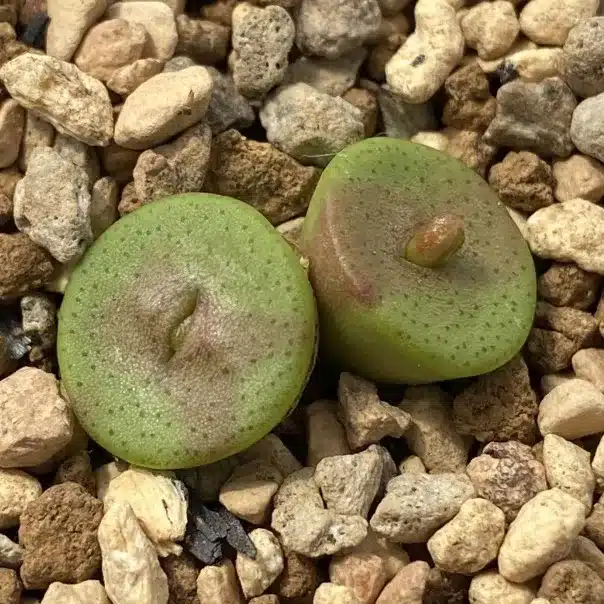
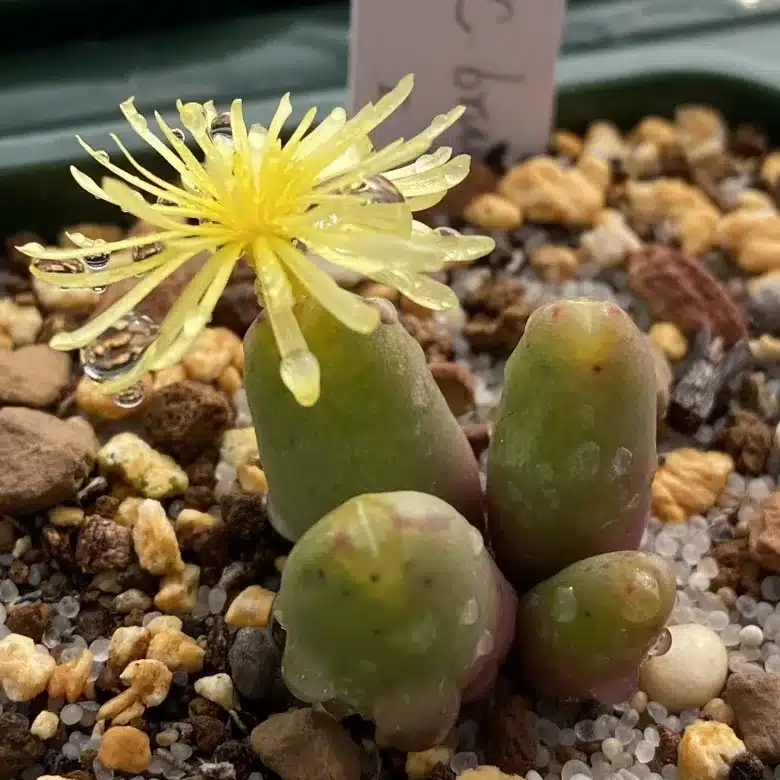
- Morphology & Species: They consist of a pair of fused leaves (often called heads or bodies). In most cases, they multiply by splitting and form clusters over time. Most Conophytums flower in autumn, but a few bloom in winter (e.g., Conophytum bruynsii, “Dinosaur Egg”) or late spring to early summer (e.g., Conophytum bachelorum, “Gold Coin Button,” “Cross Button”). Their sizes, shapes, and patterns vary greatly. The genus includes over 100 distinct species, and nearly 200 if subspecies and varieties are counted.
- (Images of C. bruynsii, C. youngii, and C. bachelorum are included in the original article with their scientific names.)
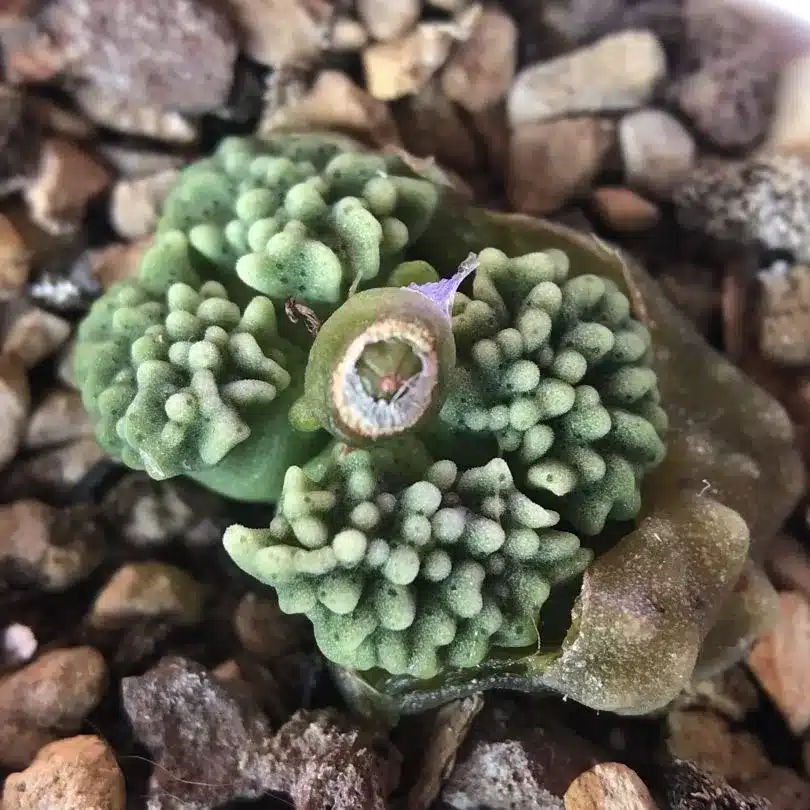
youngii
2. Growth Cycle of Conophytums (Respecting Plant Characteristics)
Understanding the specific growth cycles and habits of Conophytums is key to successful cultivation.
- Growing Season (Autumn–Winter): During this period, Conophytums actively grow new leaves and require more water. After watering, they plump up and feel firm to the touch. The plants will tell you they need water by wrinkling or becoming soft.
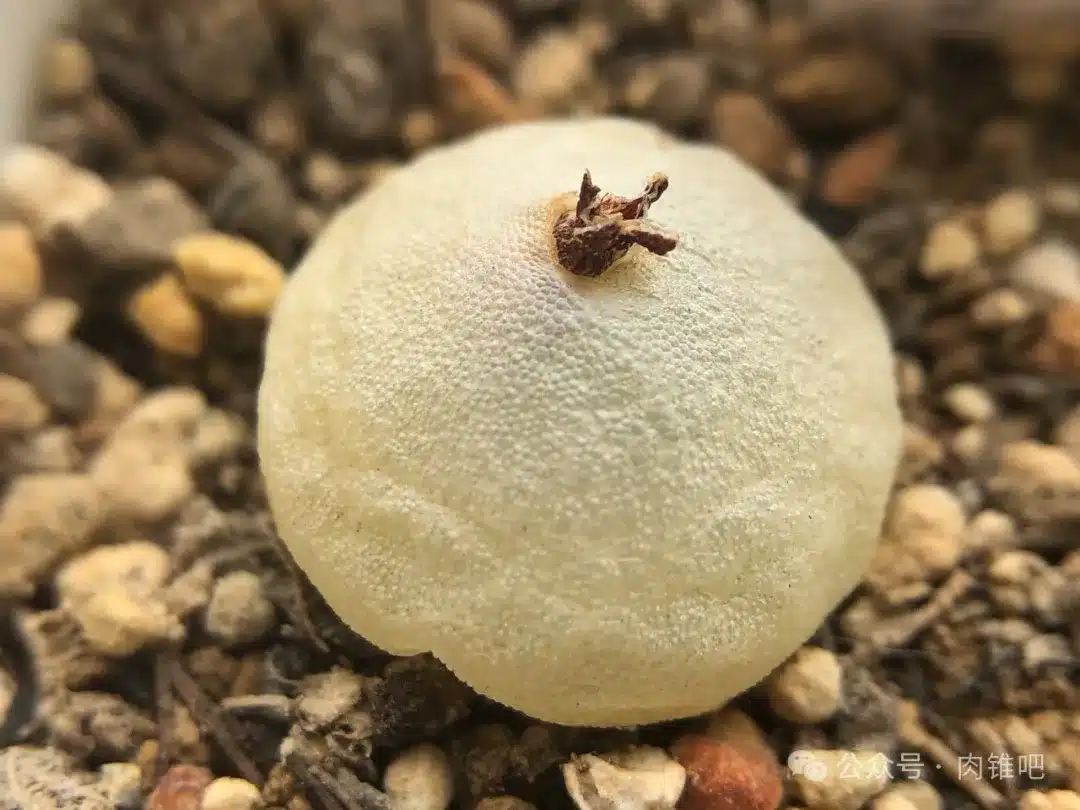
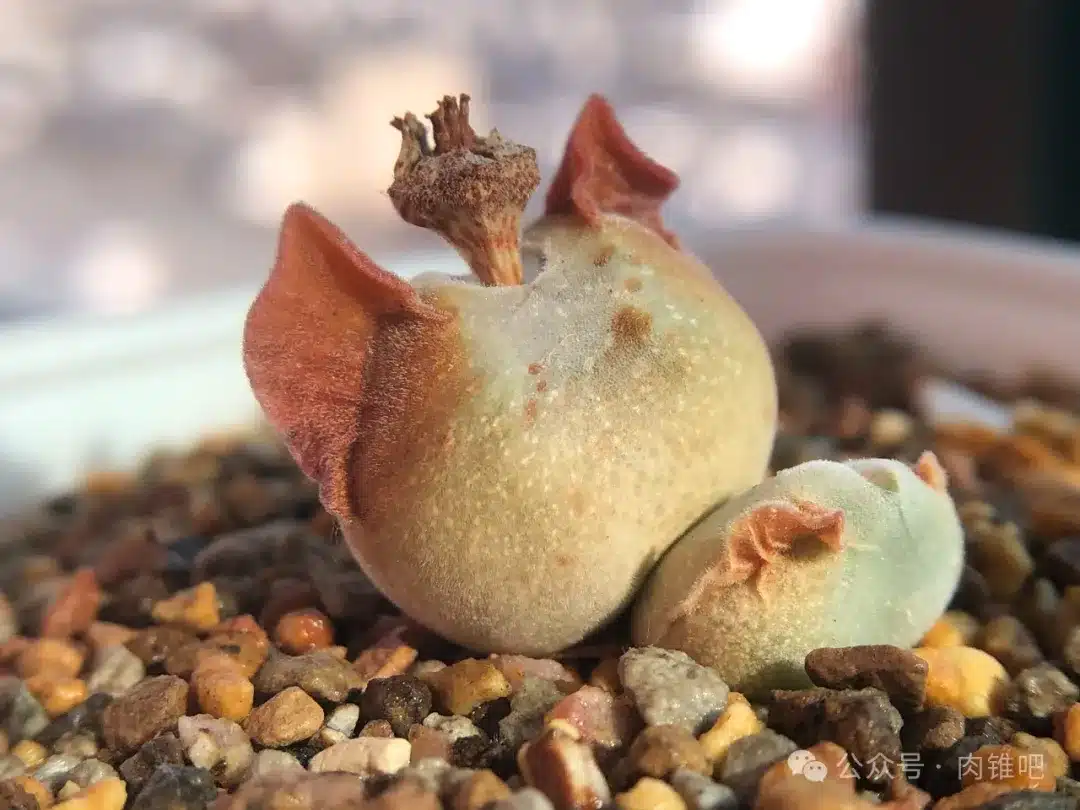
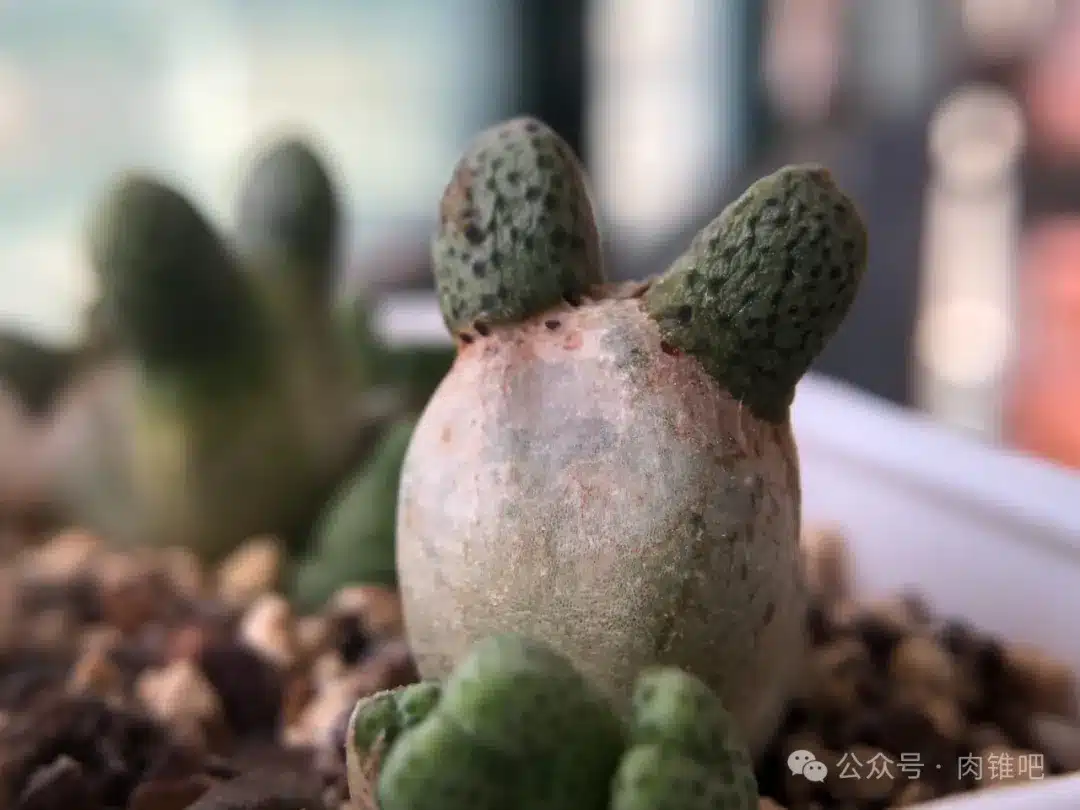
- Dormancy (Late Spring–Summer): This is their survival strategy in their native habitat. Old leaves wrinkle and change color to withstand intense heat and sun, indicating the onset of dormancy. During dormancy, they require very little or no water. This is because Conophytums are “short-day” plants—they need plenty of water during their growing season but very little during dormancy.
- Critical Reminder: A common mistake is watering plants too early before summer ends. Some species (e.g., Conophytum cubicum, Conophytum hians) shed their old sheaths earlier than others, but this does not mean they should be watered earlier. During dormancy, new leaves are quite happy inside their dry sheaths. Wait until the days become shorter and cooler, and the new leaves will usually emerge on their own when they are ready to receive water.
3. How to Grow Conophytums (Finding What Works for You)
- Environment & Light: Conophytums are adaptable and can thrive in greenhouses, on windowsills, or under indoor grow lights. Your local climate and personal micro-environment will affect the timing of growth, dormancy, and flowering, but the yearly cycle remains consistent. They need good light, especially during autumn–winter growth. In summer, if grown in natural sunlight, shade is essential—they can be scorched within hours if it’s too hot and sunny. Using a fan for air circulation helps lower leaf surface temperatures. Take measures to warm or cool plants when temperatures drop below 0°C or exceed 40°C. Growing under lights offers better control over light and temperature than natural sunlight.
- Soil Mix (Author’s Experience, for Reference): Soil composition is a topic of much debate, as it depends on your climate, environment, and personal watering habits. The key is balancing water retention, aeration/drainage, and stability. The right mix is what works for you.
- Author’s Mix (Used for balcony growing under lights in Zhengzhou, Henan):
- 40%: 3–6 mm granular materials (for aeration and stability)
- 40%: 1–3 mm granular materials (for stability and water retention)
- 20%: Peat moss and rice husk charcoal (within 5% for organic matter and short-term water retention)
- Additionally: Slow-release fertilizer and systemic insecticide (e.g., “Xiaobaiyao”) are mixed in.
- Recommended Granular Materials: Lava rock, diatomite, pumice, and kanuma soil.
- Author’s Mix (Used for balcony growing under lights in Zhengzhou, Henan):
- Pots: Choose pots with good drainage that are convenient and durable. There is no need for overly large or deep pots—in nature, Conophytums often grow in shallow depressions where water floods briefly during rain and then dries quickly. Standard plastic pots (like square nursery pots) or ceramic pots are both fine.
4. Sowing Conophytum Seeds (A Joyful Endeavor)
- Sowing Time: The best time is autumn, followed by winter. The optimal temperature for germination and seedling growth is 10–20°C. Higher temperatures can reduce germination rates and increase seedling mortality (“melting”).
- Sowing Soil: Use granular materials smaller than 3 mm, as larger particles can hinder root establishment and cause stunted growth. A mix of 50–60% peat moss with small-grained materials is recommended. Add systemic insecticides (like “Xiaobaiyao” or “Xiaoziyao”) to prevent pests.
- Sowing Containers: Use disposable food containers (with holes poked in the bottom and lid for drainage and ventilation) or 7–10 cm square pots. Containers should be at least 7 cm deep, filled with 5–6 cm of soil (do not compact). The soil will settle naturally after bottom-watering, usually sinking by about 1 cm.
- Sowing Steps:
- Sterilize the prepared soil by soaking the pot in a potassium permanganate solution for 1 hour (or microwaving the moist soil for 5–10 minutes—exercise caution when using this method).
- Sow the seeds (most are about 0.5 mm in size).
- Seal the container (e.g., with a lid or plastic wrap). Seeds usually start germinating in about a week.
- After germination, water by bottom-soaking when the soil surface dries out, maintaining humidity and ventilation. Due to the tiny size of seedlings, avoid top-watering.
- Seedling Care: Keep the soil moist (but not waterlogged) during the first year. After the seedlings undergo their first shedding (exfoliation), allow the soil to dry for about a day before watering again. After one year, they can be treated as mature plants.
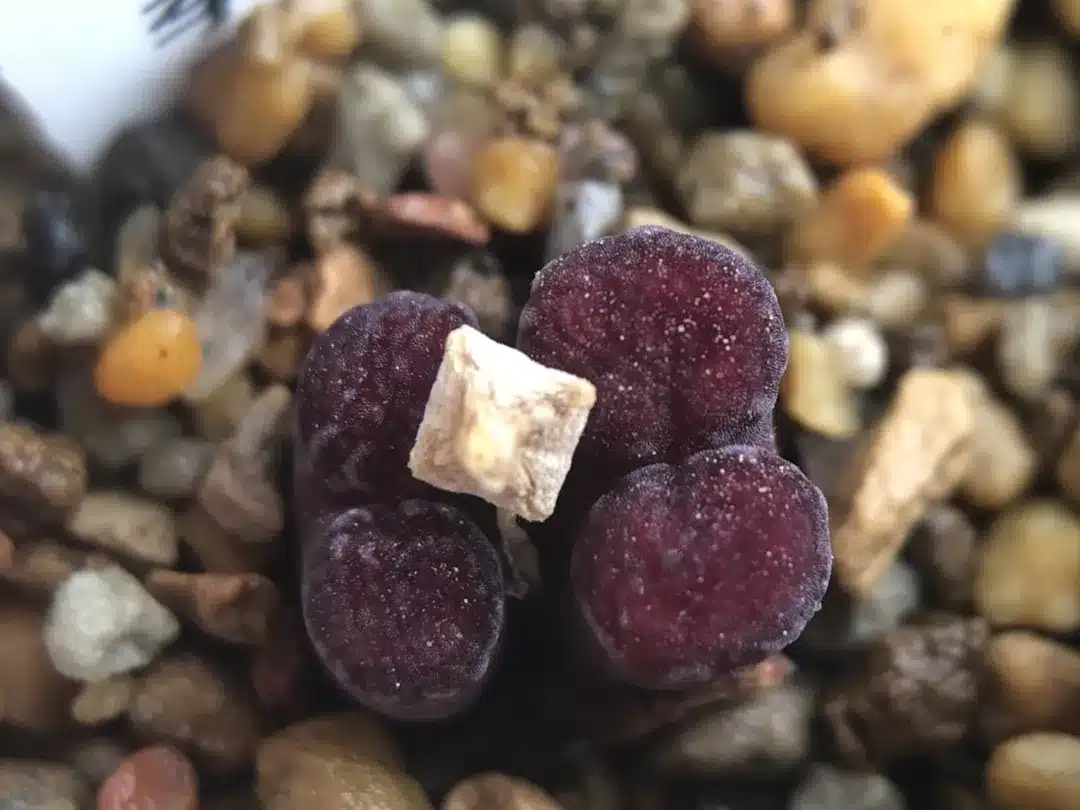
5. Propagation by Division (Doubling the Joy)
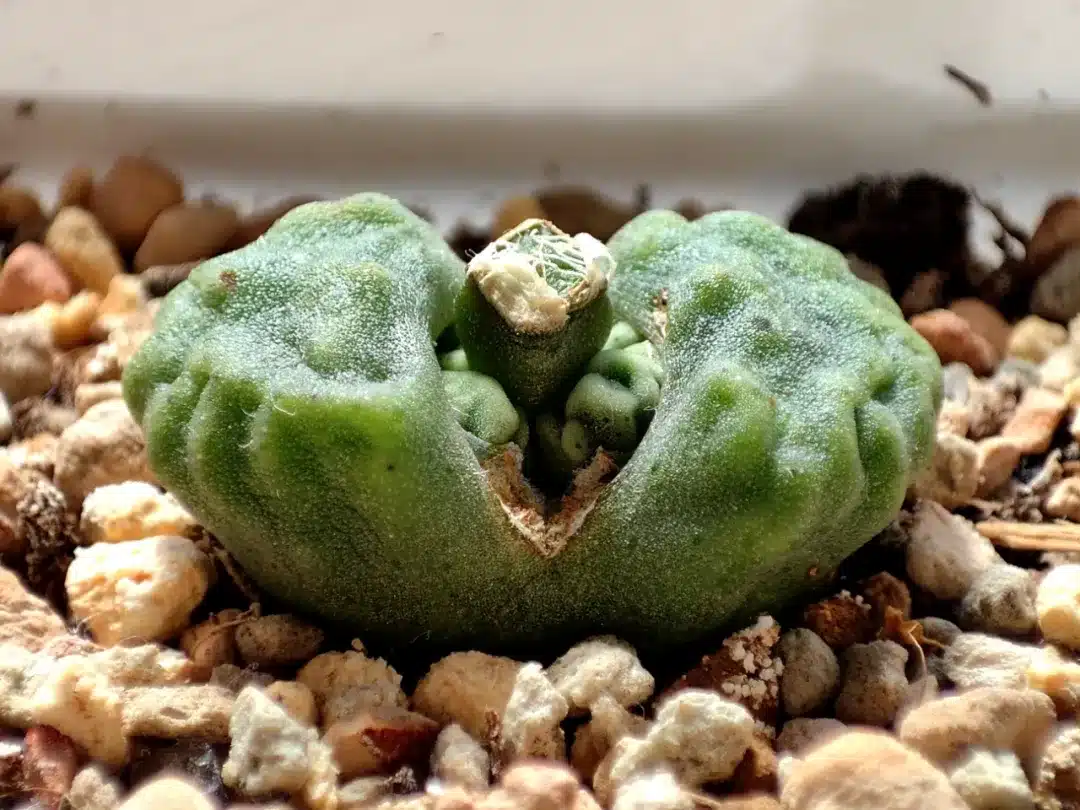
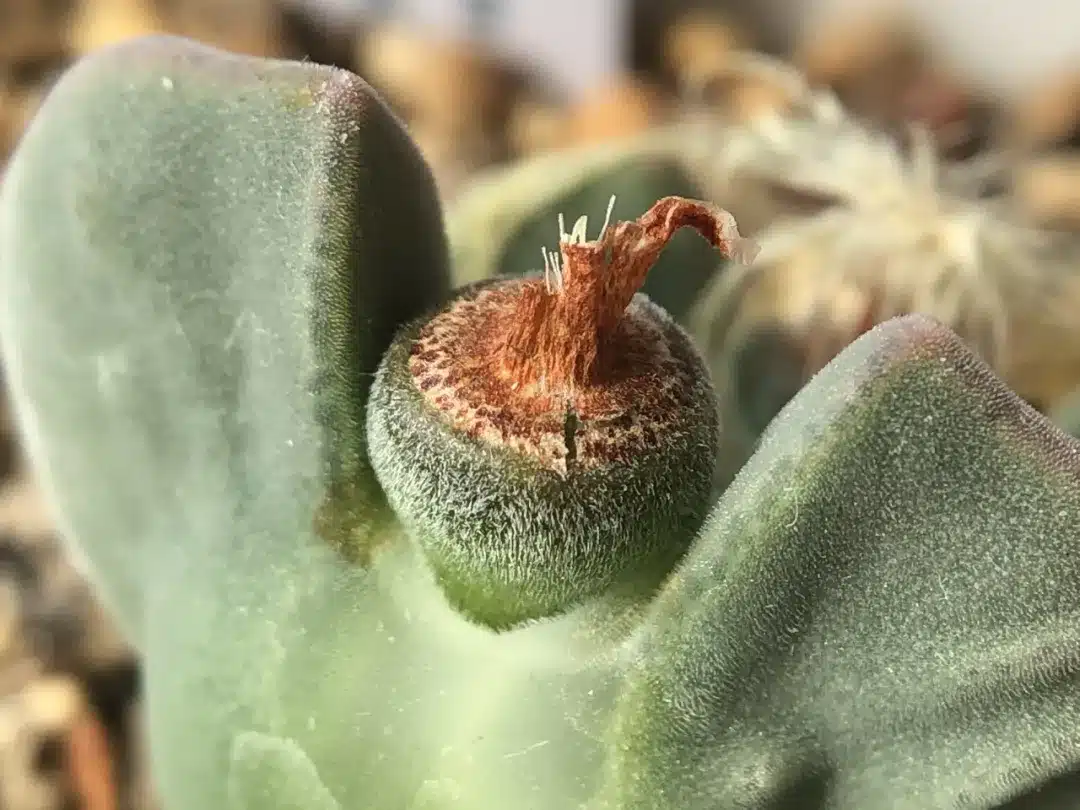
Division is a faster way to obtain new plants than sowing. As Conophytums age and form large clusters, they can be divided into smaller clumps of 1–4 heads for replanting—great for sharing with friends or selling online.
- Procedure: Cut below the heads, leaving 2–3 mm of hard, dry stem. Do not cut into the soft leaf tissue.
- Timing: Autumn is the ideal season for division.
- Rooting: Allow the cut surfaces to dry and callus for 3–7 days before planting in fresh soil. Keep the soil slightly moist and avoid strong direct sunlight until the plants are established (firmly rooted in the pot).
6. Common Pests and Diseases (Use Pesticides with Caution)
- Mealybugs / Root Mealybugs: Use buprofezin as a preventive spray. If root mealybugs are present, drench the soil or soak the pot in a diluted buprofezin solution twice, with a 10-day interval between treatments.
- Thrips: More troublesome, thrips feed on flowers and new leaf growth. They have strong pesticide resistance. Emamectin benzoate is a recommended insecticide for controlling thrips.
- Fungus Gnats (on seedlings): Fungus gnat larvae develop in moist soil and feed on young seedlings. Imidacloprid is usually effective; for severe infestations, use acetamiprid.
- Damping-off / Rot (on seedlings): A fungal disease that occurs when soil is too wet and ventilation is poor. Affected seedlings turn whitish, then translucent, and eventually die. Remove dead seedlings promptly to prevent fungal spread and improve ventilation.
- General Prevention: Apply systemic granular insecticides (e.g., “Xiaobaiyao”) in early spring and early autumn. Also, be mindful of snails, caterpillars, grasshoppers, birds, rodents, and household pets that may damage the plants.
7. Tips for Buying Conophytums (Avoiding Pitfalls)
- Channels & Risks: Most Conophytums are purchased online (e.g., Taobao, Xianyu, Douyin, Xiaohongshu). Physical flower markets rarely stock them, though some succulent exhibitions may offer them. Beware of sellers who misidentify species, sell unhealthy or chemically treated plants, or misuse popular names and collection numbers to make quick profits.
- Before Buying: Do your research. Check seller reputations on platforms like Baidu Tieba (Succulent Forum) and Xiaohongshu. Join enthusiast groups to see where others buy, what they buy, and seek advice. In short: Observe more, learn more, and buy less impulsively.
- Best Time to Buy: The autumn–winter growing season is ideal. Buying during dormancy may result in poor re-rooting. Consider asking the seller to ship the plant in its pot with soil.
- Recommendation: Growing from seed is highly recommended for the full experience. The article mentions several reputable domestic seed sellers (e.g., Daxiong, Jiangnan, Fire, Shenzi) with a good track record over the years.
- Important Appeal: To protect wild populations and biodiversity, do not purchase wild-collected Conophytum plants.
8. Final Thoughts: Love Them, Don’t Harm Them
With each passing year, new growth and old withering carry the passage of time and the cycle of life. Conophytums, with their unique growth habits, tell stories from the ancient African continent. Through caring for them, we develop a deeper appreciation for life and a respect for nature. In this small yet radiant world, we experience the joy and warmth of integrating life with nature.
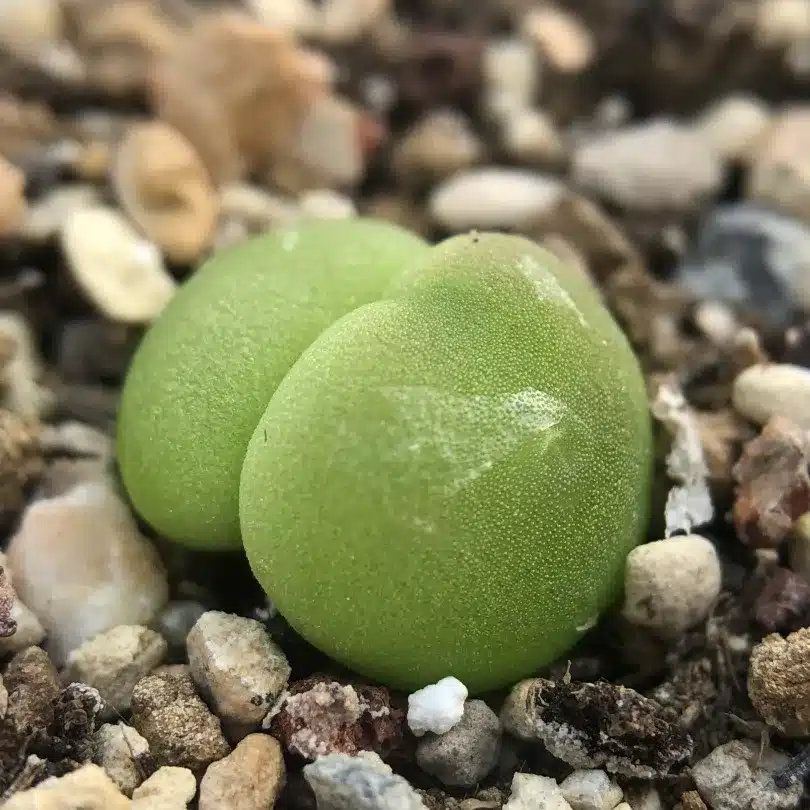
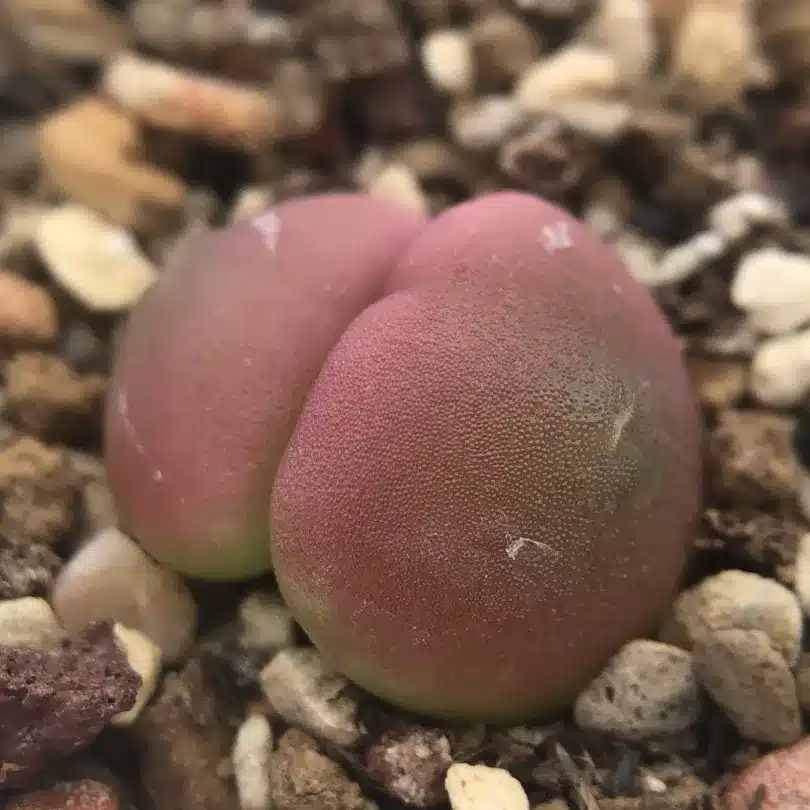
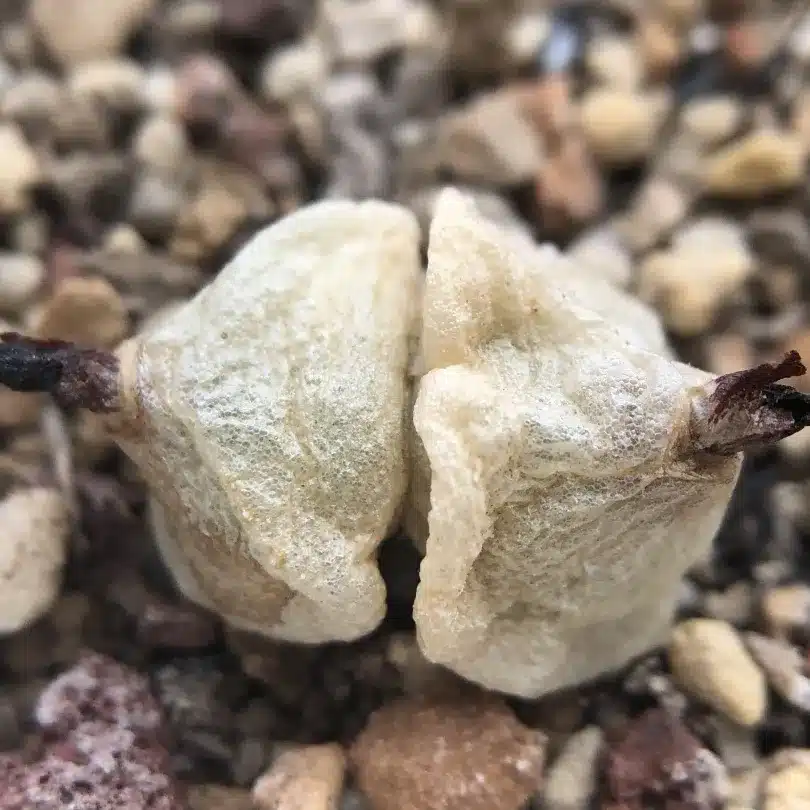
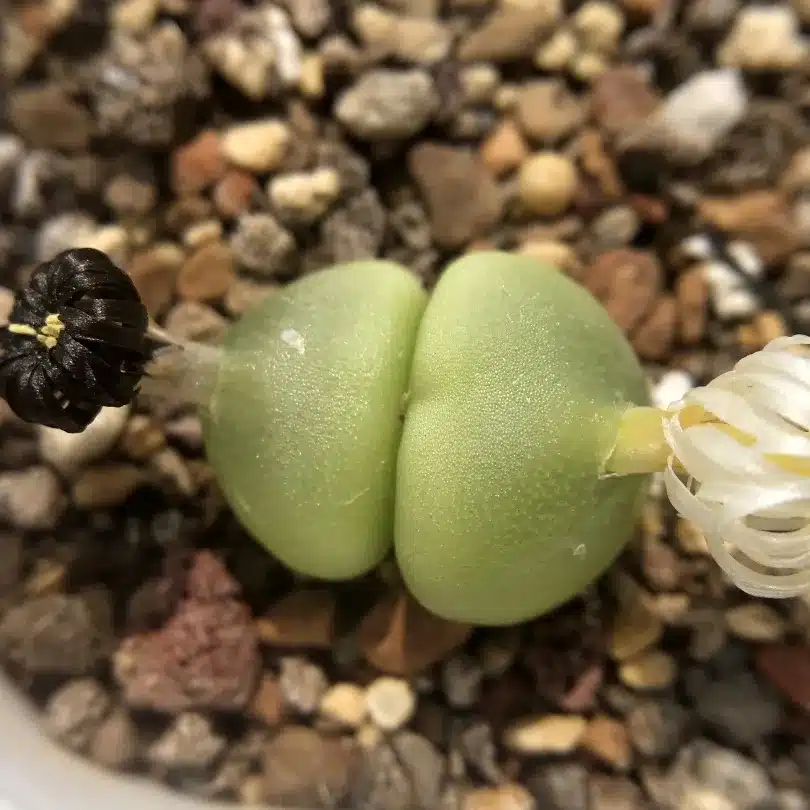
(The original article includes a series of photos showing a Conophytum hammeri specimen from April 2023 to May 2024, illustrating its seasonal changes.)
Let us approach Conophytums with reverence and continue exploring their wonders. Tend to them with care, enjoy nature, and let them bring more brilliance into our lives. May we dance together with Conophytums in nature’s rhythm, sensing life’s beauty and meaning.